
ArticleUpdated: September 6, 2026
The artist's dictionary: your guide in the world of creativity
In short
Short explanations of the terms that turn up in courses and job ads: albedo, ambient occlusion, bump, displace, emission and dozens more. For each one, what it means in practice and where you will meet it in the work.

2D artist (illustrator)
Digital art opens up an incredible variety of opportunities for the artist. However, new terms that require explanations often appear on this way. We have collected the most important concepts in one place so that you can always quickly find the necessary information and deepen your knowledge.
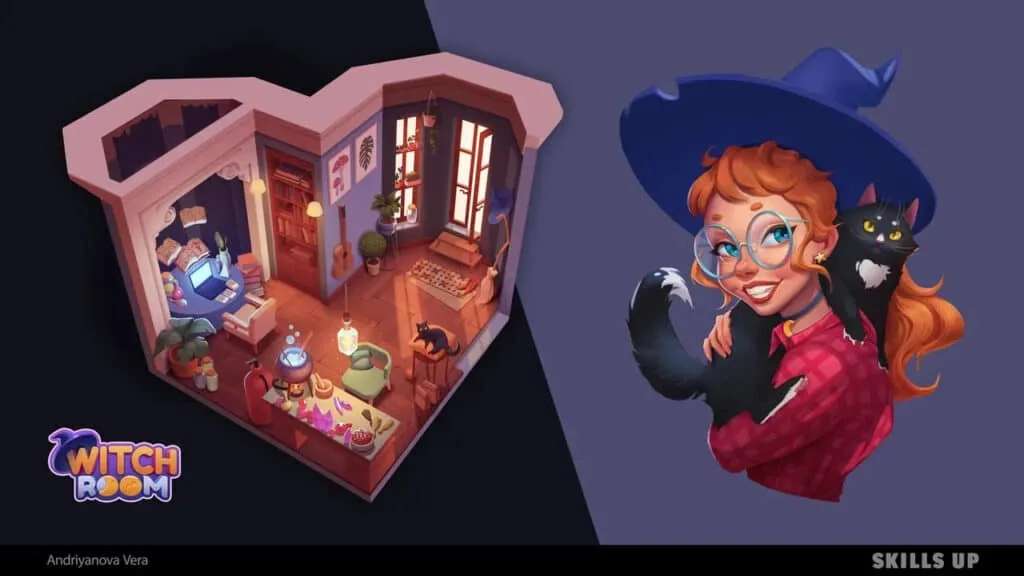
2D Drawing (2D Art)
This is an image created in two dimensions: width and height. Using the laws of perspective, chiaroscuro and anatomical knowledge, you can achieve a sense of depth and realism. Example: If you want to learn how to draw human figures, start by studying the basic proportions and move on to complex forms. Our drawing courses will be a great help.
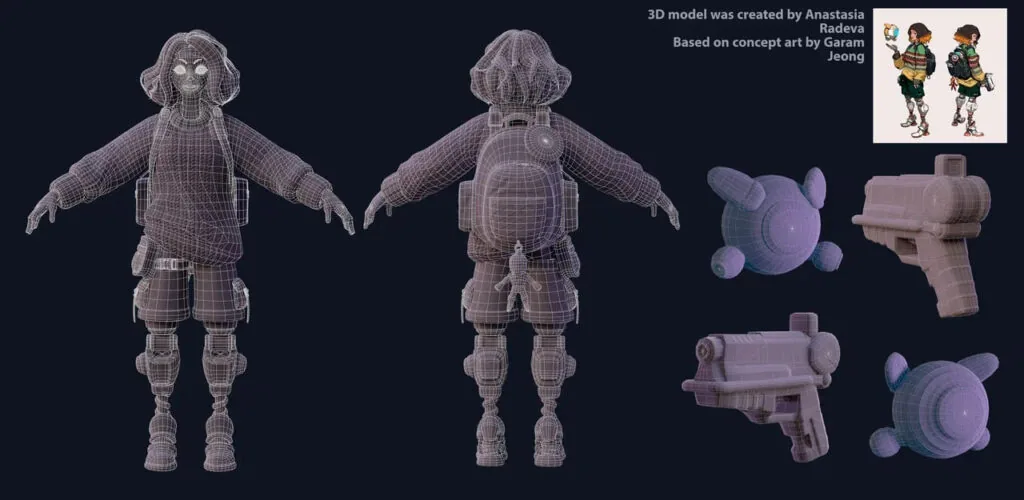
3D Modeling
Creating objects and scenes in three-dimensional space. This process is in demand in games, films, architecture and even manufacturing. Tip: For the first steps, basic exercises with simple shapes, such as cubes and spheres, are suitable. If you want to delve deeper into the topic, join the courses 3D graphics.
Absorption
A property of materials in 3D that determines how they absorb light. It helps to create effects for glass or water, adding depth and realism.Albedo (Diffuse Color)
The main color of an object that determines its appearance and the color of the reflected light. This parameter sets the basic color basis of the material.Ambient Occlusion (AO)
A method of adding shadows in places where objects touch, creating softness and realism of the scene. Most often used in architectural renders and product design.Bump
A texture map that visually creates the feeling of relief on the surface of an object without changing its geometry. Feature: Use Bump to simulate skin, fabric or a brick wall — it adds detail without increasing the complexity of the model.CG (Computer Graphics)
The general name for all types of digital art: 2D, 3D, matte painting, photobashing and much more. Tip: It is important for novice artists to try different directions to find their own. Our courses in digital painting will help you get started.
Displace
Related courses
All courses
A method of changing the geometry of an object using a texture map. Unlike Bump, Displace changes the shape of the model, affecting its silhouette.
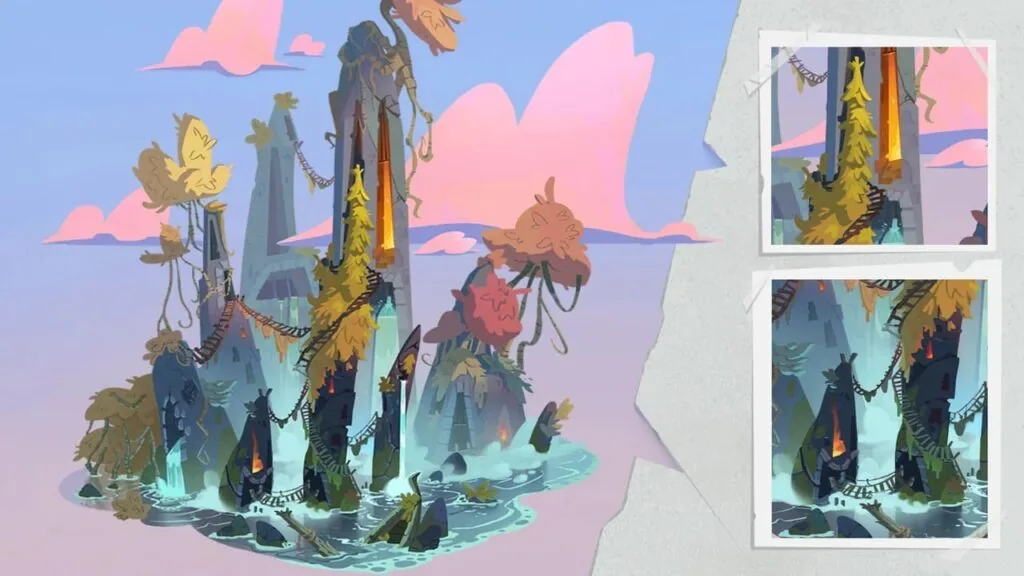
Digital painting
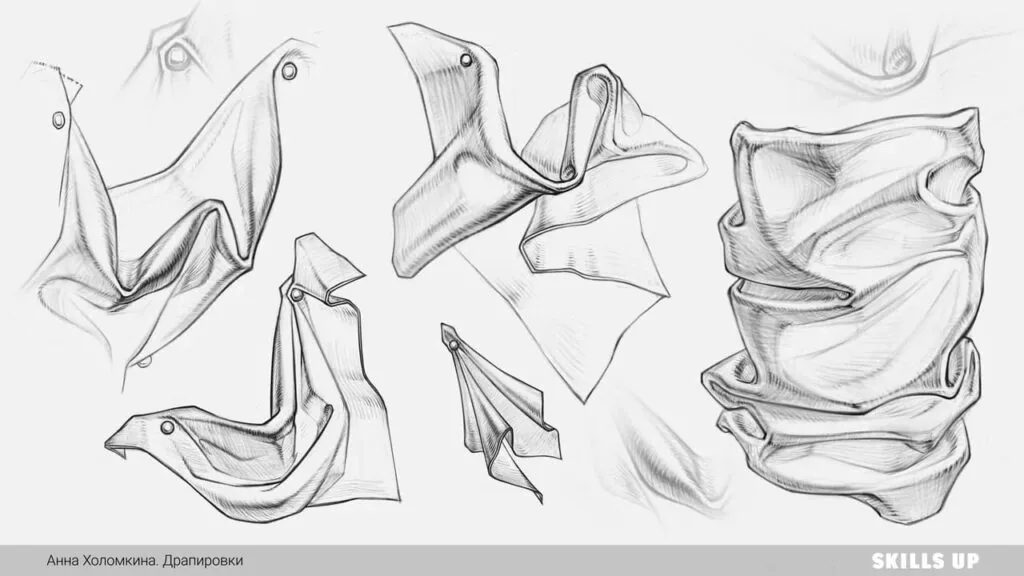
The art of creating paintings using digital tools. It is a combination of traditional techniques with the possibilities of modern technology.
Tip: Use brushes with different textures to add variety and depth to your work. More information in our article «Digital painting. Skills of a modern artist».
Emission
A parameter that adds a glow effect to an object. Used to create neon lights, magical effects and fantastic scenes.Face
A triangular or polygonal face that forms the surface of a 3D object. It is one of the basic building blocks of any model.GameDev
The process of creating a game: from development and design to market release. This is one of the most popular and creative branches of digital art.Normal Map
A texture map that adds fine details to the surface of an object without changing its geometry. Example: Normal Map is used to create the texture of fabric, wood or stone, saving system resources.PBR (Physically Based Rendering)
A technology based on physical laws that helps to create materials that realistically respond to light. Feature: Use PBR to make metal shine and skin look soft.Reflection and Refraction
- Reflection: Reflection of light from the surface.
- Refraction: Refraction of light when passing through transparent materials such as glass.
Subdivision Surface
A technology for smoothing models by dividing large polygons into smaller ones. It is often used to create organic forms.Translucency
The effect of translucency, which is often used for thin materials such as plant leaves.Z Depth
A depth map that displays the distance from the object to the camera. It is used to create aerial perspective and add depth to the scene.Anatomy for artists
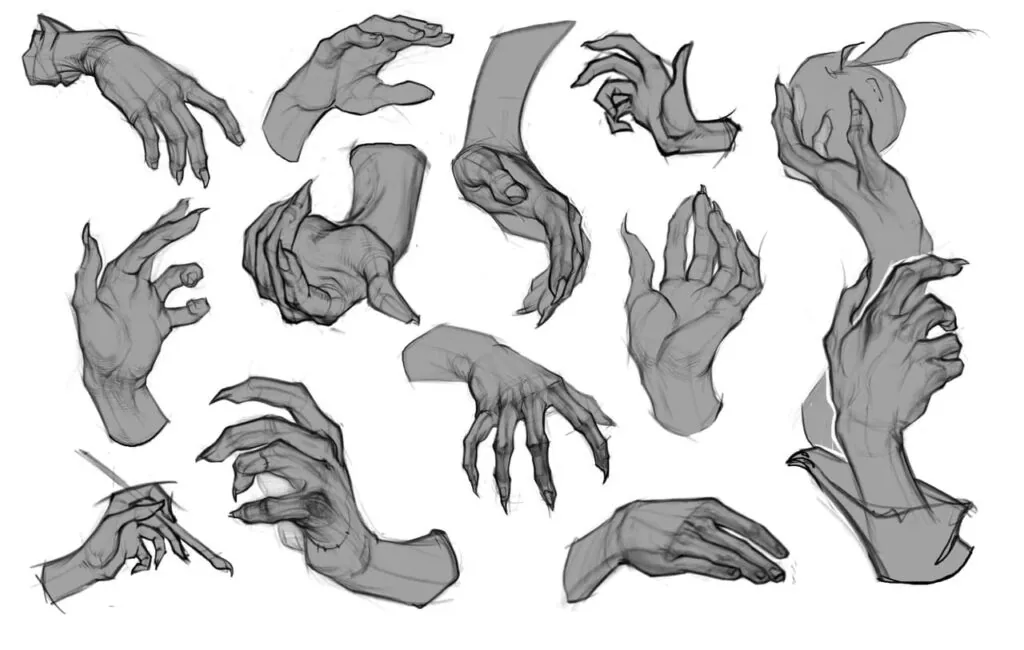
Knowledge of the structure of the human and animal body, which allows you to create realistic characters. Tip: Regularly practice sketches from nature and anatomical exercises.
Art block
Temporary creative stagnation. The best way to overcome it is to try a new style or technique. Feature: Make quick sketches or experiment with color to refresh your perception.Perspective
The principle of depicting the real world on a plane with visual distortions of the proportions of objects to convey their position in space. One of the key techniques for creating convincing images. More information in our article «perspective in drawing».Reference
Photos, drawings or other visual materials used for inspiration or clarification of details in the work. Feature: Create a folder with references for each project to speed up the work process.
Digital painting
The art of creating paintings using digital tools. It is a combination of traditional techniques with the possibilities of modern technology.
Tip: Use brushes with different textures to add variety and depth to your work. More information in our article «Digital painting. Skills of a modern artist».
Color theory
Information about the nature of color, primary, composite and complementary colors, basic characteristics of color, color contrasts, color mixing, color, color harmony, color language and color culture.
- Contrast: The difference between colors or their characteristics.
- Color wheel: Helps to choose harmonious combinations.
- Complementary colors: Enhance each other by being opposite on the color wheel.
More information in our article «Fundamentals of color theory».
Composition
The placement of elements in an image, determined by its content, character and purpose.
- Rule of thirds: Divides the image into parts for harmony.
- Golden section: Mathematically based structure.
- Focal point: The main area of attention of the viewer.
Study our useful article «Composition in drawing».
Conclusion
This dictionary is created so that you can easily find answers to your questions. Expand your knowledge, experiment with techniques and develop in your favorite direction. Remember: creativity knows no bounds, and each step of yours brings you closer to mastery!
- Contrast: The difference between colors or their characteristics.
- Color wheel: Helps to choose harmonious combinations.
- Complementary colors: Enhance each other by being opposite on the color wheel.
Composition
The placement of elements in an image, determined by its content, character and purpose.
- Rule of thirds: Divides the image into parts for harmony.
- Golden section: Mathematically based structure.
- Focal point: The main area of attention of the viewer.
Study our useful article «Composition in drawing».
Conclusion
This dictionary is created so that you can easily find answers to your questions. Expand your knowledge, experiment with techniques and develop in your favorite direction. Remember: creativity knows no bounds, and each step of yours brings you closer to mastery!
Related materials
Article
Digital painting. Skills of a modern artist
August 9, 2024
Article
Time management for an artist
September 18, 2023
Article
Concept artist: overview of the profession
April 2, 2024
Article
Who is a 2D artist, what is this profession?
February 6, 2024
Article
How to become a 3D artist in game development
January 17, 2024
Tutorial
How to draw a crystal. Step-by-step guide for artists
March 24, 2025