3 tips for a beginner character artist. How to draw emotions
An emotion reads from three points: the brows, the shape of the eyes and the line of the mouth. Animation deliberately exaggerates the expression so it registers in a single frame. Valeria Lugovaya shows where beginners lose the character and end up with a grimace instead.

Joy, испуг, inspiration, anger, surprise — all these emotions are the key to a person's character and state. And in the CG world, emotions are important for portraying characters; they help reveal personality and role in the plot, tell a story.
In cartoons, emotions are deliberately exaggerated to make them easy to read.
How to draw emotions authentically to emphasize the character's personality?
Three useful tips for начинающие artists from Valeria Lugova, author of the course Skills Up School Character Design in Animation.
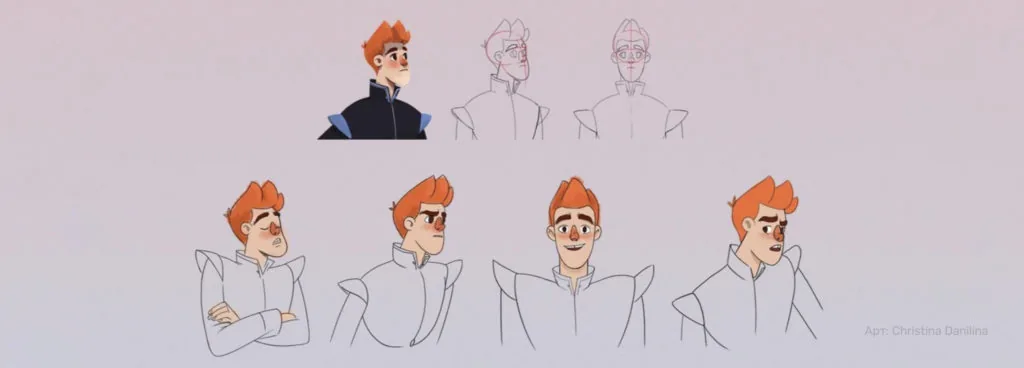
1. It is important not to lose the character's structure and facial features so that different emotions do not turn him into different characters. To do this, you need to draw a median line and horizontal vectors. They pass through the eyebrows, eyes, nose and mouth. And even if facial features are deformed by emotion, they should remain in their places.
Related courses
All courses
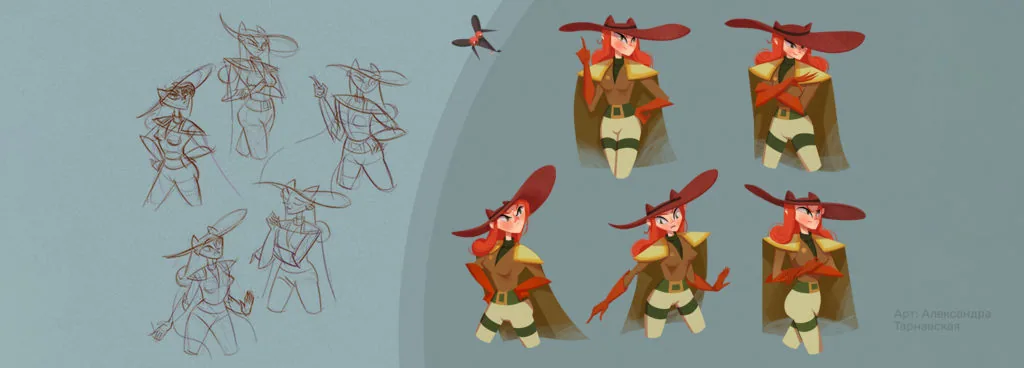
2. Eye design is very important! Eyes are the focal point on the face. If they have a super-complex shape, then it is difficult to make a natural emotion. Therefore, in animation, the design of the character's eyes has a simplified rounded shape, or leaf shape.
3. Do not spend a lot of time searching for photo references of emotions on the Internet. You definitely have a mirror and a camera (phone camera) — just give yourself freedom and make funny faces! And in the process, pay attention to a few points:
- What position do the extreme points of the mouth, eyebrows, eyes take (hint: for example, they move up when you're happy, and down when you're sad);
- How the eyelids work;
- How the emotion changes with different positions of the eyebrows.
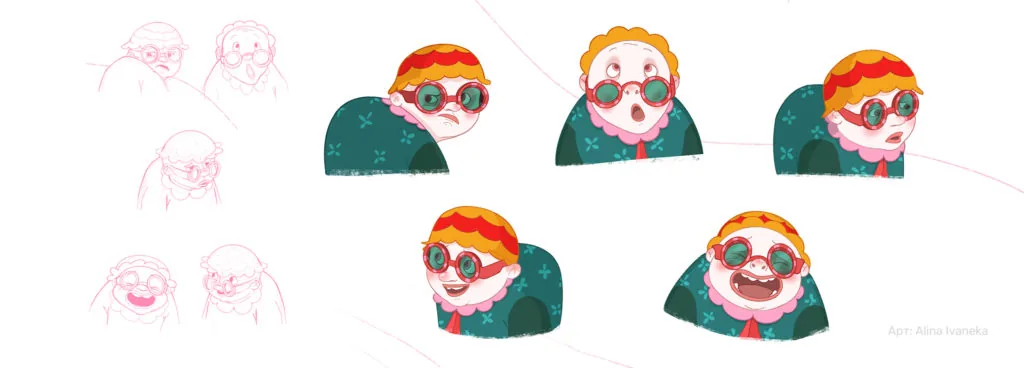
Admit it, when you read the last tip, did you frown, smile and move your eyebrows? That's what students of the online course Character Design in Animation do too, while working on a task on character emotions.
In addition to emotions, on the course, students study the language of forms, movement, gestures, analyze the symbolism of costumes, create a series of dynamic poses, learn how to twist the character. The knowledge gained in the course is needed not only for those who work in animation studios, but also for everyone who wants to create vivid characters for games, book illustrations, comics and personal projects.
You can find out more details, the nearest start date and sign up on the course page.
Related materials

5 tips for a budding environmental artist
3D for 2D illustration: A comprehensive guide for artists
The artist's dictionary: your guide in the world of creativity
Digital painting. Skills of a modern artist
Concept artist: overview of the profession