
ArticleUpdated: September 6, 2026
How to become a 3D artist in game development
In short
Ladislava Klyarovskaya walks the whole path of a 3D artist: choosing a direction and a style, the hard and soft skills you need, what to put in a portfolio and in what order, what the pay looks like, how to handle a test task and what to do with rejections.
Skills Up School
Online school of drawing and CG
A Practical Guide by 3D Artist on Characters by Ladislava Klyarovskaya
Contents:- Getting to Know the Author
- What This Article Is About
- Who Is a 3D Artist
- Choosing a Direction
- Choosing a Style
- Hard Skills
- Hard Skill Checklist
- Soft Skills
- Visual Style of Portfolio
- Portfolio Content
- About Money
- Test Task
- Rejections
- Misinformation
- Clear Goal Setting
- Conclusion
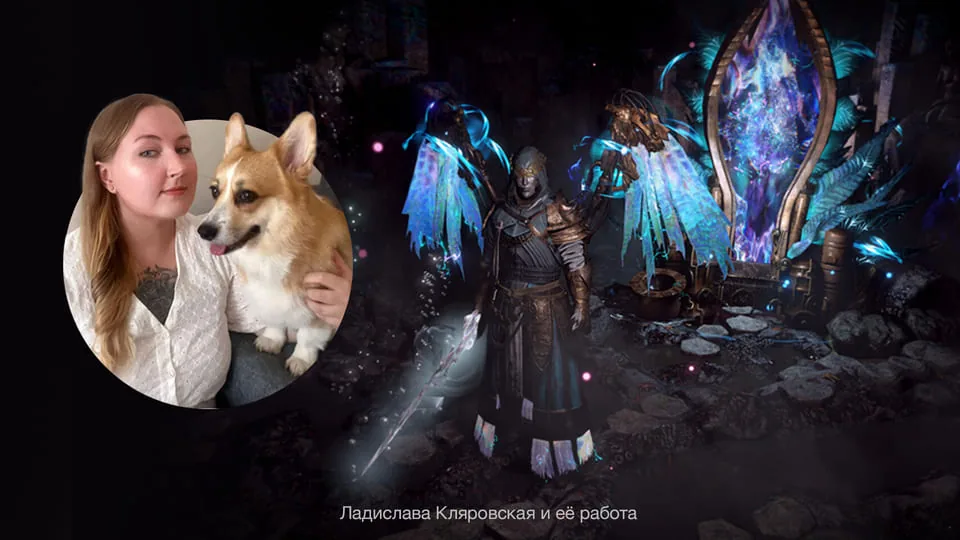
Getting to Know the Author
My name isLadislava Klyarovskaya, and I have been working as a 3D character artist in foreign and domestic gaming projects for more than five years. Now, besides teaching at our beloved school, I am an employee of the outsource studio Digital Forms. But I started from the same level as you are now. At some point, I realized that graphic design was no longer interesting to me, and decided to completely change my field of activity, knowing nothing about 3D graphics or creating game models: all my knowledge ended with the fact that the model consists of polygons, and the level of doubt in my own abilities reached 100%. Therefore, I, like no other, understand those who doubt, who got lost in a huge amount of information or after a series of failures have almost given up. Looking back, I can say for sure that diligence and the desire to do what you like will overcome everything.What This Article Is About
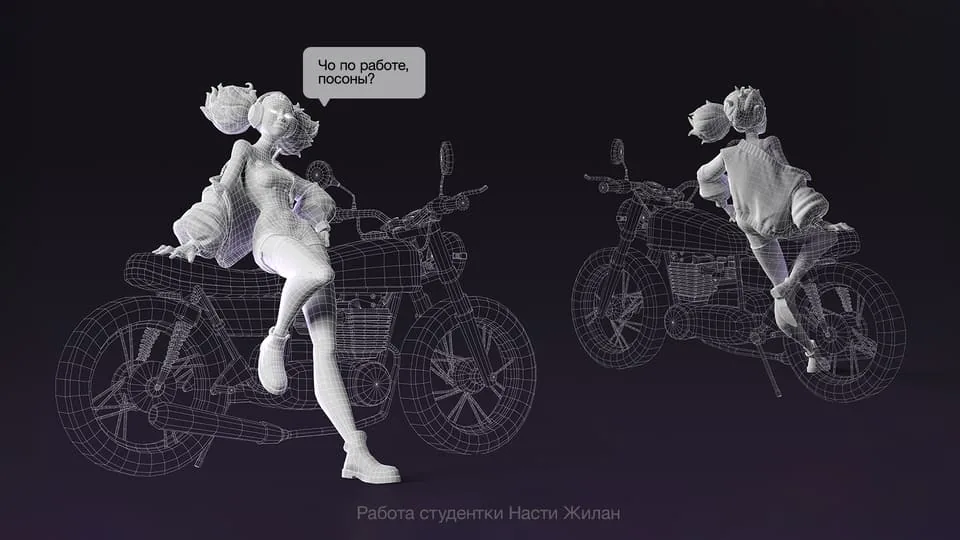 In the article, we will touch on many important topics and analyze them based on gaming 3D graphics—these rules work in the entire field of 3D modeling in one way or another. But, unlike more classical professions,there are practically no verified standards here.
Let's figure out how a beginner should start looking for work, how to prepare a portfolio, what to add to it, and what—not to add, how much to ask for your work and what to expect for a novice specialist in the gaming industry, how to complete test tasks and not fall into the trap of free work under the guise of technical specifications. In the end, we will talk about working with information, its contradictions, and why you should not panic ahead of time and always approach everything with a "cold" head.
In the article, we will touch on many important topics and analyze them based on gaming 3D graphics—these rules work in the entire field of 3D modeling in one way or another. But, unlike more classical professions,there are practically no verified standards here.
Let's figure out how a beginner should start looking for work, how to prepare a portfolio, what to add to it, and what—not to add, how much to ask for your work and what to expect for a novice specialist in the gaming industry, how to complete test tasks and not fall into the trap of free work under the guise of technical specifications. In the end, we will talk about working with information, its contradictions, and why you should not panic ahead of time and always approach everything with a "cold" head.
Who Is a 3D Artist
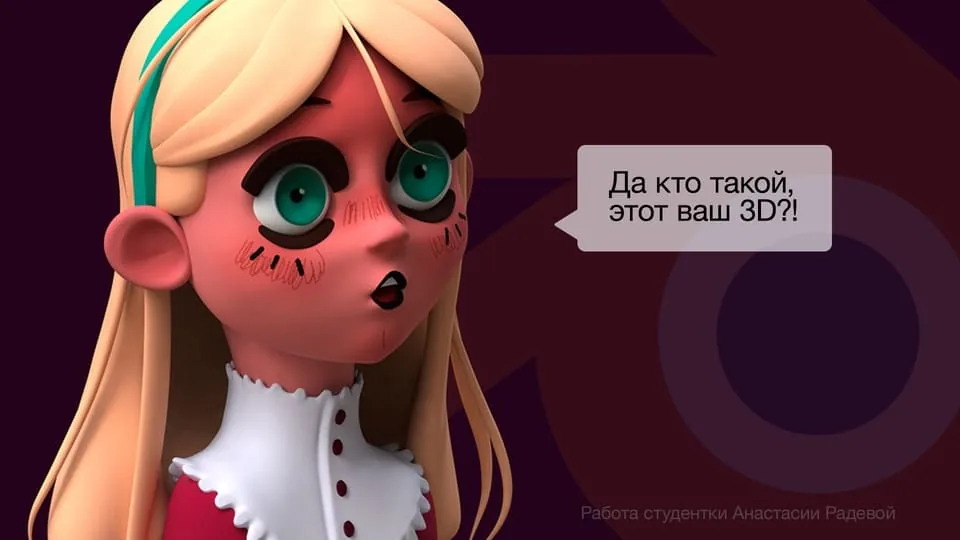 There are so many people who can call themselves 3D artists that it can be confusing already at the stage of searching for information about the chosen profession: the definition includes game graphics artists, those who are engaged in 3D printing, and those who just render their sculpts into 2D arts. Do not forget those who combine all the above skills and still manage to animate, program, know five languages and make excellent pancakes—it seems they know and can do everything.
At the initial stage,we will consider a 3D artist to be someone who creates unique 3D models in any editor without привязки to subsequent work on them. But if we want to be understood and, most importantly, paid artists, we need not just to create, but also to meet the criteria of the chosen direction.
There are so many people who can call themselves 3D artists that it can be confusing already at the stage of searching for information about the chosen profession: the definition includes game graphics artists, those who are engaged in 3D printing, and those who just render their sculpts into 2D arts. Do not forget those who combine all the above skills and still manage to animate, program, know five languages and make excellent pancakes—it seems they know and can do everything.
At the initial stage,we will consider a 3D artist to be someone who creates unique 3D models in any editor without привязки to subsequent work on them. But if we want to be understood and, most importantly, paid artists, we need not just to create, but also to meet the criteria of the chosen direction.
Choosing a Direction
I recommend to novice artiststo clearly define a professional direction for development and focus your attention on information from this area. Because in each direction there are technical nuances, and there is a risk that at some point instead of an established pipeline of work you will have a mess in your head. In the future, this will greatly help to narrow down the skills to the necessary minimum and further pump them. Again, if we go back to the topic of game graphics, it is important to understand thata huge number of branches of development can completely change the entire approach to work, portfolio filling and even salary. Let's say you have decided on the direction: you decided to break into game development and make only cool games that people will look at the graphics and put them as an example.Choosing a Style
The next step—choosing the style in which you plan to work. There is no universal game style that is used absolutely everywhere: you cannot say that realism, for example, prevails over cartoon graphics or that the medieval setting is more popular than si-fi—and this does not even take into account the huge number of game genres, which influence the choice of pipeline to no small extent. It turns out that in this crazy mix of the gaming industry, a huge number of artists of all stripes and levels of professionalism coexist. Therefore, the rule also works here—it's better to have less, but better, but you should not limit yourself to one style either. If you like casual graphics with a bias towards anime, be sure that there will be a demand for it, and do not torture yourself with realism if it is not your thing at all, but it seems to you that it is more promising.Hard Skills
As for the technical part, there is also no established standard. The list of programs will change from project to project, gathering small additional programs, plugins, scripts and other useful software, which, as often happens, will be needed only in the studio where you are working at the moment. Programs can vary greatly from job to job depending on the graphics style, project funding, platform the game is planned to be released on and a million other factors. But do not be afraid of a large number of programs. You will not have to learn all this at the same time, and at the beginning of the journeyit is enough to know the basics. Where to get the magic list of programs and necessary skills? Find those game projects that you like and that you would like to work on. Then look at what studios made these projects, go to their website, and right there, in the vacancies section, you can see the requirements for applicants for the position of 3D artist, including a list of programs they should know. Of course, even on very similar projects, the requirements may differ, but the arithmetic mean can be calculated: conditionally, if you see that textures are hand-painted for graphics in your style, then the probability that a similar project will do the same is very high.Hard Skill Checklist
Make a small checklist of skills and note what you already know and what you need to pump up. For example, the vacancy requires knowledge of Maya, RizomUV and Substance Painter, and in additional skills—understanding of object settings in Unreal Engine. Let's say you know half of this or know all of it, but at a low level — you get a great hint that will help you navigate further development and increase your chances of finding work in the future. Of course, these are rather conditional examples, and it is important to compare many factors that cannot be fit into any text. Here we are talking about the beginning of the path, but once you get real experience in participating in projects, everything will go much faster, since it isexperience and work with real tasks that is most valued. And with the receipt of the first tasks, you will already be able to assess your growth points much better.Soft Skills
By soft skills we mean those "little things" that make working with you more pleasant and easier: the ability to negotiate, avoid conflicts, responsibility and other qualities. Responsibility, punctuality and other organizational traits are clear—without them you simply will not fit well into teamwork, which is fundamental in most studios. But with self-presentation and sociability it is more difficult: not everyone will pay attention to these qualities, but, in my opinion,it is worth staying a pleasant person in any situation. A pleasant person, at least, is more likely to be invited to a cool project through old friendship, because it is simple, convenient and calm to work with him. Of course, the choice is yours, and if you are not very interested in all this corporate ethics, and in general you—for remote work, then you should not pretend to be painfully friendly. But the fact remains:if you know how to win people over or strive for it, it will greatly help in the future.Visual Style of Portfolio
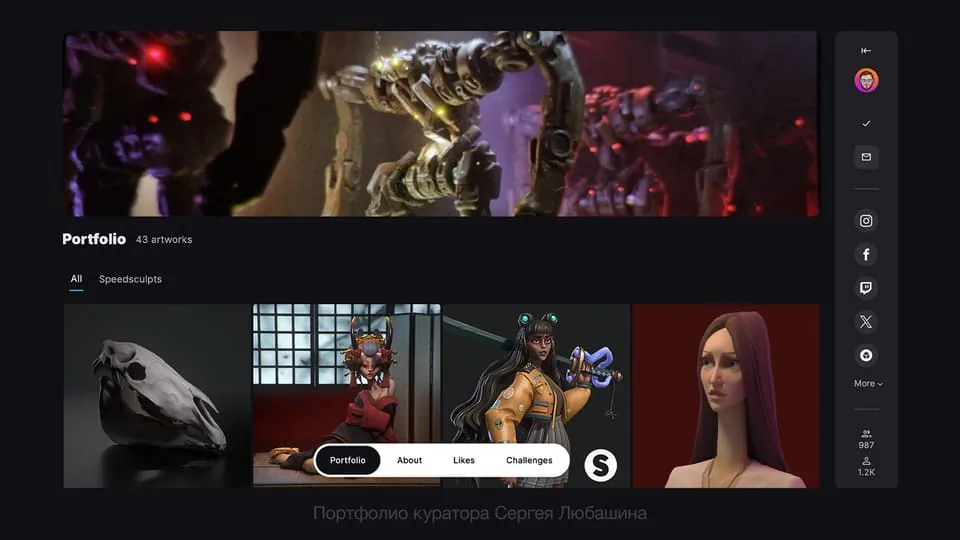 A portfolio is not a personal gallery of beautiful pictures, butan important tool for presenting skills and a way to attract attention,first of all, potential employers. You can say that in the portfolioyou confirm in practice the skills listed in the resume.
As in the previous paragraphs, it is better to start working on the portfolio with collecting information and analyzing successful cases, in your opinion. For example, study the portfolios of 3D artists you like, look at the design of each project, technical details, selection of works, their diversity and the overall look of the entire collection. It is worth paying attention to what strong portfolios have in common, trying to highlight what exactly catches the eye, and perhaps trying to repeat some of the chips in your portfolio.
These can be simple little things like the same background color in all works, a good stylish font or beautiful mood boards that illustrate the artist's thoughts in the process of developing the model — yes, these are details and, of course, they are not decisive when viewing your portfolio by a potential employer, but they indicate the thoughtfulness and logic of your selection.
A portfolio is not a personal gallery of beautiful pictures, butan important tool for presenting skills and a way to attract attention,first of all, potential employers. You can say that in the portfolioyou confirm in practice the skills listed in the resume.
As in the previous paragraphs, it is better to start working on the portfolio with collecting information and analyzing successful cases, in your opinion. For example, study the portfolios of 3D artists you like, look at the design of each project, technical details, selection of works, their diversity and the overall look of the entire collection. It is worth paying attention to what strong portfolios have in common, trying to highlight what exactly catches the eye, and perhaps trying to repeat some of the chips in your portfolio.
These can be simple little things like the same background color in all works, a good stylish font or beautiful mood boards that illustrate the artist's thoughts in the process of developing the model — yes, these are details and, of course, they are not decisive when viewing your portfolio by a potential employer, but they indicate the thoughtfulness and logic of your selection.
Portfolio Content
From a beautiful visual style of the portfolio, let's move on to its content, and here many people make fundamental mistakes. The first mistake is to upload everything in a row to the portfolio, hoping to «take» a future employer by quantity. Quantity is not always equal to quality, and there is a high probability that your portfolio will be marked as unprofessional, even if you have a lot of decent works, but they will all get lost among many others done in a hurry. But why doesn't the employer look at all the works? Let's be honest: HR has dozens, if not hundreds, of portfolios like yours, and instead of carefully studying 50 of your works, it's easier for them to work with more structured and informative selections of candidates. If all your works are equally good, but different in style, you can fall into a trap when you are chosen for a position not in your favorite direction, and it's not always desirable to refuse and look for another one again. It's best to leave only high-quality, well-thought-out works in the portfolio, made exactly in the style you decided to work in. Of course, if there are works that do not fit into the general context, but collect a lot of positive feedback, do not push them aside: for example, if you made a beautiful speedsculpt that shows that you quickly grasp details and have excellent skills in ZBrush. But if there are more of these speedsculpts than technically representative works, something is obviously going wrong. From this comes the second mistake — to neglect technical renders, focusing on artistic ones. Yes, a beautiful, catchy picture is great, but for an employer it is far from the first place: for him it is more important that you understand what and why you are doing. Even if it's one student's work, but the pipeline it worked on is shown in detail, it is more expensive than ten beautiful renders and gives much more information about you. Unfoldings, renders of baked textures without painting, texture maps that you use, and much more — all this is very important and should be designed no worse than the artistic part. In the end, the skill of a beautiful render is unlikely to be needed in the position of an artist in game graphics, but the ability to make a grid on lowpoly will definitely be appreciated in the profession. There is nothing зазорного in that to supplement old works or change their visual to the better. For example, you made a character, and you like it externally, but there are no technical renders. Or there are, but something in them does not suit you — correct it and present your work in a more favorable light. Over time, your portfolio will change, at some point you will have to delete something and revise the concept of presentation and, perhaps, even change direction. The main thing is that the collection of works is relevant and of high quality at the moment. The third mistake — excessive post-editing of works. A little color correction is normal, but to cover up mistakes that you noticed later, and even more so to draw parts with the help of a neural network is a bad idea. Firstly, if you can't fix such big things at the stage of creating the model, it means that there is not enough skill. Secondly, if you are asked to show the original model, the deception will be quickly revealed, and the decision to invite to an interview will not be in your favor. So, let's summarize: when creating a portfolio, you need to consider several factors that will allow a potential employer to be interested in us:- General impression of our portfolio — is it overloaded, does it look thought out
- Technical content — is the work process fully understood
- Quality of visual style
About money
 As soon as the portfolio is ready, it's time to prepare for the first interviews and look for vacancies, evaluate positions, salaries, prospects. Try to immediately send responses to the most interesting positions: maybe you will be lucky, and your search will end faster than you expect.
If at the position above junior it is unlikely to be claimed at the first stage, then with the salary the issue is much more interesting. How to assess yourself and not scare away with too high a request or, conversely, not to put the salary lower than you deserve?
According to the WN Media Group study, the median salary of a 3D artist on the Russian market is 120,000 rubles (for guys with experience). The average salary at the junior position in a Russian company is about 50-60 thousand, in Europe — 2-2.5 thousand euros. In fact, the difference is only in the knowledge of the language, while the other requirements will be about the same.
But if we take not the average indicators, but those that appear depending on vacancies, then the spread is huge: you can be lucky, and after an internship you will get into a large company with a salary twice higher than the average, or you can be unlucky, and a long search will force you to agree to an offer with a lower salary.
The main thing is to soberly assess the skills, the size of the company you are applying to, and the level of the vacancy. And even if now you are not at the salary level you expected, do not stop growing and looking. Salary increases, including due to the fact that you have found a better place, have grown out of a too simple project or have invested in the development of your skills.
If you feel that your skills have improved a lot during the time of work, ask for a salary increase within the same company. Large companies even benefit from your growth and loyalty.
You can also start by setting that you are here for experience, and after working for six months to a year, you will already more consciously return to the question of searching for the company of your dreams with an already formed idea of the value of your knowledge, real experience and a clear understanding of what you want.
It should be remembered that at any level of your career, whether you are a junior or already a mid, most likely you will not be directly told about the average salary for the requested position due to the fact that many companies have a policy of confidentiality regarding salary levels. This is due to the fact that it is easier for employers to pay employees exactly as much as the employees evaluate themselves, and very often two people can receive different salaries for the same position.
As soon as the portfolio is ready, it's time to prepare for the first interviews and look for vacancies, evaluate positions, salaries, prospects. Try to immediately send responses to the most interesting positions: maybe you will be lucky, and your search will end faster than you expect.
If at the position above junior it is unlikely to be claimed at the first stage, then with the salary the issue is much more interesting. How to assess yourself and not scare away with too high a request or, conversely, not to put the salary lower than you deserve?
According to the WN Media Group study, the median salary of a 3D artist on the Russian market is 120,000 rubles (for guys with experience). The average salary at the junior position in a Russian company is about 50-60 thousand, in Europe — 2-2.5 thousand euros. In fact, the difference is only in the knowledge of the language, while the other requirements will be about the same.
But if we take not the average indicators, but those that appear depending on vacancies, then the spread is huge: you can be lucky, and after an internship you will get into a large company with a salary twice higher than the average, or you can be unlucky, and a long search will force you to agree to an offer with a lower salary.
The main thing is to soberly assess the skills, the size of the company you are applying to, and the level of the vacancy. And even if now you are not at the salary level you expected, do not stop growing and looking. Salary increases, including due to the fact that you have found a better place, have grown out of a too simple project or have invested in the development of your skills.
If you feel that your skills have improved a lot during the time of work, ask for a salary increase within the same company. Large companies even benefit from your growth and loyalty.
You can also start by setting that you are here for experience, and after working for six months to a year, you will already more consciously return to the question of searching for the company of your dreams with an already formed idea of the value of your knowledge, real experience and a clear understanding of what you want.
It should be remembered that at any level of your career, whether you are a junior or already a mid, most likely you will not be directly told about the average salary for the requested position due to the fact that many companies have a policy of confidentiality regarding salary levels. This is due to the fact that it is easier for employers to pay employees exactly as much as the employees evaluate themselves, and very often two people can receive different salaries for the same position.
Test task
 If everything is more or less clear with the interview: do not hesitate to ask questions you are interested in, be polite, smile, before an online interview tidy up the room within the camera's view, then with the test task things are much more interesting, and it is this test that separates you from the final goal of your path.
Test tasks for the position of a junior are almost 100% practice. Yes, there are situations with the same internships when you are taken without it, but in this case you still pass the test of your knowledge. Unfortunately, in the era of neural networks and a huge number of applicants, you have to check if the submitted portfolio really belongs to the applicant.
Be careful and do not agree to too voluminous or suspicious test tasks. The test should be neutral and not take several days or even weeks of work. For example, if you were asked to make a whole character with retopology and painting, and sometimes even with a rig, you should think about whether this is a full-fledged work that they want to get for free?
In cases where the amount of work for a test task exceeds all reasonable limits, I advise you to ask for payment for your time and insist on signing a contract for single provision of services. If the employer is not clean, most likely he will quickly stop contacting you, as it will be easier for him to find another victim than to contact you. Do not hesitate to file complaints against such individuals! Unfortunately, there are many such cases, and not only in the 3D field.
As a rule, a good test includes a small object, perhaps even selected to your taste, but corresponding to the style of the project you are applying for. A small retop without certain rules is possible, just to understand that you have basic knowledge in this area, or creating a texture from parts if it is a handpaint project. In any case, you should immediately see and understand what skills are being tested by this or that task without hidden motives.
Of course, there are exceptions to the rule: they ask to do a paid large project, sometimes only a sculpt is needed, or they ask to do only a retop. The main thing is to soberly look at the sent ТЗ and immediately honestly answer yourself if you can pull it — yes, it’s better to say right away if you can’t do the task. But if you have already promised to do it, you should put all your efforts into meeting expectations: an undone ТЗ speaks much louder than even a poorly done work.
What else should you do before you start working on the test task? Read it and clarify all the questions with the employer. Do not be afraid that because of this he will consider you incompetent: it is more important to correctly understand what is required of you in order to correctly complete the ТЗ.
Make an action plan, if you understand that you will use more than one program, or the test task is multi-level. A clear division of a large task into small stages will help to calculate the time and give full feedback, such as accurate time costs for each stage, understanding at which stages there were the most difficulties, and to note for yourself what to pull further. Yes, we have already talked about checklists and the importance of time management and pipeline more than once, but believe me, as soon as you start to divide each complex aspect into parts, solving problems will become much easier.
Follow the instructions and the requirements that were stated in the test task. Do not try to do more or something extra: you can accidentally miss the things that the employer wants to look at, or do them worse because you were distracted by more grandiose ideas. Conventionally, do not make the whole car if you were told to do only the wheel from it — it is better to spend this time on the test for another company or watching a couple more useful lessons.
If everything is more or less clear with the interview: do not hesitate to ask questions you are interested in, be polite, smile, before an online interview tidy up the room within the camera's view, then with the test task things are much more interesting, and it is this test that separates you from the final goal of your path.
Test tasks for the position of a junior are almost 100% practice. Yes, there are situations with the same internships when you are taken without it, but in this case you still pass the test of your knowledge. Unfortunately, in the era of neural networks and a huge number of applicants, you have to check if the submitted portfolio really belongs to the applicant.
Be careful and do not agree to too voluminous or suspicious test tasks. The test should be neutral and not take several days or even weeks of work. For example, if you were asked to make a whole character with retopology and painting, and sometimes even with a rig, you should think about whether this is a full-fledged work that they want to get for free?
In cases where the amount of work for a test task exceeds all reasonable limits, I advise you to ask for payment for your time and insist on signing a contract for single provision of services. If the employer is not clean, most likely he will quickly stop contacting you, as it will be easier for him to find another victim than to contact you. Do not hesitate to file complaints against such individuals! Unfortunately, there are many such cases, and not only in the 3D field.
As a rule, a good test includes a small object, perhaps even selected to your taste, but corresponding to the style of the project you are applying for. A small retop without certain rules is possible, just to understand that you have basic knowledge in this area, or creating a texture from parts if it is a handpaint project. In any case, you should immediately see and understand what skills are being tested by this or that task without hidden motives.
Of course, there are exceptions to the rule: they ask to do a paid large project, sometimes only a sculpt is needed, or they ask to do only a retop. The main thing is to soberly look at the sent ТЗ and immediately honestly answer yourself if you can pull it — yes, it’s better to say right away if you can’t do the task. But if you have already promised to do it, you should put all your efforts into meeting expectations: an undone ТЗ speaks much louder than even a poorly done work.
What else should you do before you start working on the test task? Read it and clarify all the questions with the employer. Do not be afraid that because of this he will consider you incompetent: it is more important to correctly understand what is required of you in order to correctly complete the ТЗ.
Make an action plan, if you understand that you will use more than one program, or the test task is multi-level. A clear division of a large task into small stages will help to calculate the time and give full feedback, such as accurate time costs for each stage, understanding at which stages there were the most difficulties, and to note for yourself what to pull further. Yes, we have already talked about checklists and the importance of time management and pipeline more than once, but believe me, as soon as you start to divide each complex aspect into parts, solving problems will become much easier.
Follow the instructions and the requirements that were stated in the test task. Do not try to do more or something extra: you can accidentally miss the things that the employer wants to look at, or do them worse because you were distracted by more grandiose ideas. Conventionally, do not make the whole car if you were told to do only the wheel from it — it is better to spend this time on the test for another company or watching a couple more useful lessons.
Refusals
You have done 10, 20, 30 test tasks, but you have not been offered a job? Unfortunately, here you have to admit, first of all, to yourself that if after many attempts you get only refusals, then probably the problem is in your skill. Look at your portfolio again, compare the works with the works of the companies you applied to — do you have enough knowledge and are the arts good enough? Under no circumstances am I saying that it's just about you, but if you get refusal after refusal for a long time, it's worth double-checking everything you send. You can ask for the opinions of people you trust. Go back to the test tasks and improve them to the result that you like, change the pipeline, try other styles. Ask for feedback on your test after refusal. Perhaps the point is not so much in the already existing knowledge, but in the lack of skills in a particular program. Do not close yourself in yourself, work with refusals and do not get upset ahead of time: refusals come at all levels of pumping, so just do it and wait for the result.Disinformation
 It is worth accepting one simple thing: even those who want to help you can be mistaken or not know something the same as you do. Trust the facts and opinions of people who work or have worked for many years in the industry.
Let me give you an example. Many people believe or have heard somewhere that all 3D artists work only in Maya, and if you have learned Blender or 3Ds Max, then you need to срочно переучиваться. But this is far from the case. Spoiler: sooner or later, working as a 3D artist, you will still get to all the 3D packages, but at first any of them will suit you, since the basic set of actions in them is similar. And the second spoiler: the work pipeline, as a rule, involves delivering the final work in one of the packages, not creating it. Conditionally, if you need to submit work in Maya, you can спокойно do everything in Blender, and then assemble the final file in the specified editor using minimal knowledge of it.
And there are a lot of such examples: someone was not hired because animation was required there, and now he will tell you that this is a mandatory requirement, someone believes that only ZBrush is needed for work, and someone else will sculpt for him, and does not understand why they do not take him anywhere, and in general we are all here through acquaintances and paid to work.
Returning to the beginning of our article, I call once again: analyze vacancies, look for what you consider adequate requirements, compare information with real cases, and not with comments under videos on YouTube, on forums and the words of a second cousin who heard something on the subway. They can a thousand times consider themselves right, but it will not help you in any way, but only make you panic and waste time on skills that are not primary.
It is worth accepting one simple thing: even those who want to help you can be mistaken or not know something the same as you do. Trust the facts and opinions of people who work or have worked for many years in the industry.
Let me give you an example. Many people believe or have heard somewhere that all 3D artists work only in Maya, and if you have learned Blender or 3Ds Max, then you need to срочно переучиваться. But this is far from the case. Spoiler: sooner or later, working as a 3D artist, you will still get to all the 3D packages, but at first any of them will suit you, since the basic set of actions in them is similar. And the second spoiler: the work pipeline, as a rule, involves delivering the final work in one of the packages, not creating it. Conditionally, if you need to submit work in Maya, you can спокойно do everything in Blender, and then assemble the final file in the specified editor using minimal knowledge of it.
And there are a lot of such examples: someone was not hired because animation was required there, and now he will tell you that this is a mandatory requirement, someone believes that only ZBrush is needed for work, and someone else will sculpt for him, and does not understand why they do not take him anywhere, and in general we are all here through acquaintances and paid to work.
Returning to the beginning of our article, I call once again: analyze vacancies, look for what you consider adequate requirements, compare information with real cases, and not with comments under videos on YouTube, on forums and the words of a second cousin who heard something on the subway. They can a thousand times consider themselves right, but it will not help you in any way, but only make you panic and waste time on skills that are not primary.
Clear goal setting
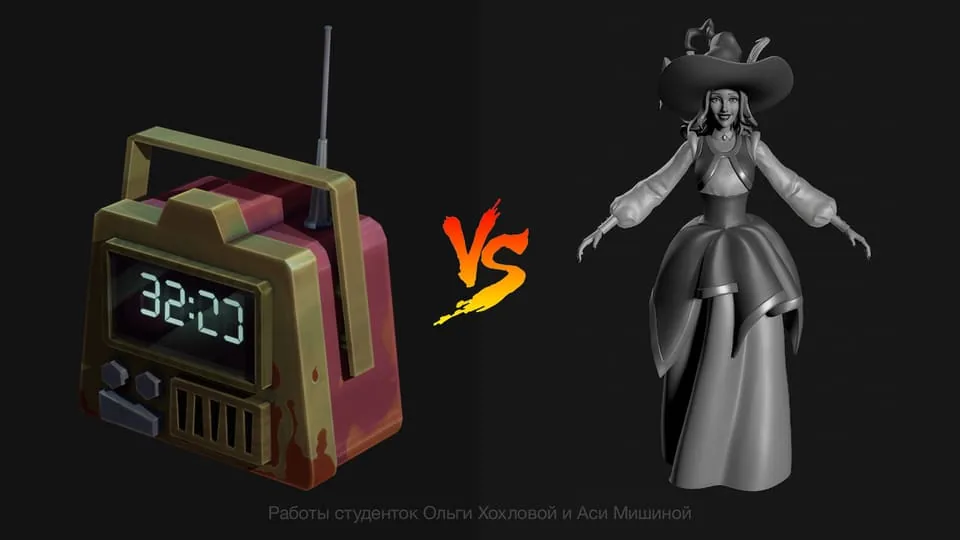 Of course, there are objective situations when you can immediately conclude that without this or that tool there is nowhere to go further, like knowledge of anatomy in a character or the ability to work with Marvelous Designer if you plan to make realistic clothes. But if you plan to engage in props or techniques, how will anatomy help you and do you even need it at all as an additional skill? General knowledge will not hurt anyone, but, I repeat, this is not decided in the first year of work.
No one says that it is not necessary to try to develop comprehensively and know more programs, to have more skills, but it is better to have a starter set of well-studied skills than to know a little of everything and in the end not know anything. If you wish, the same anatomy can be learned in parallel, working on a project, trying everything in practice — in the position of a junior, such development will be very welcome. But if you do not know how to make a развертку or any other step of the mandatory pipeline, it will not please anyone.
Of course, there are objective situations when you can immediately conclude that without this or that tool there is nowhere to go further, like knowledge of anatomy in a character or the ability to work with Marvelous Designer if you plan to make realistic clothes. But if you plan to engage in props or techniques, how will anatomy help you and do you even need it at all as an additional skill? General knowledge will not hurt anyone, but, I repeat, this is not decided in the first year of work.
No one says that it is not necessary to try to develop comprehensively and know more programs, to have more skills, but it is better to have a starter set of well-studied skills than to know a little of everything and in the end not know anything. If you wish, the same anatomy can be learned in parallel, working on a project, trying everything in practice — in the position of a junior, such development will be very welcome. But if you do not know how to make a развертку or any other step of the mandatory pipeline, it will not please anyone.
Conclusion
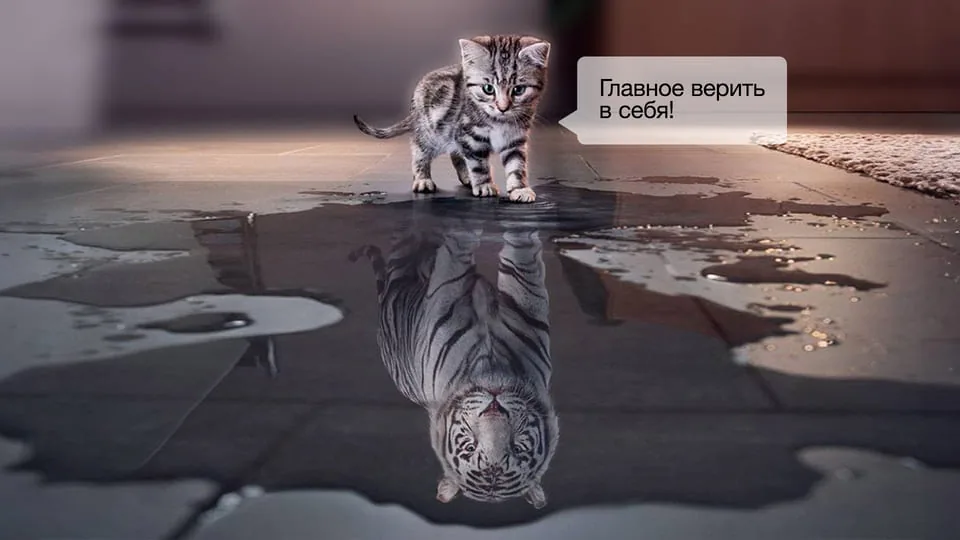 I do not want to sound banal and convince you that it will certainly be good, and tomorrow you will definitely be called to an excellent vacancy where everything will be perfect. You will have to engage in self-development, try to look for opportunities, try yourself in different companies, and so on. But one thing I am sure of: if you do not try anything, then nothing will happen. If you approach it wisely, do not waste money on everything, communicate with like-minded people and, of course, improve your skills, the result will not keep you waiting.
Believe in yourself! Set clear goals in creating a portfolio, finding work, developing yourself as a specialist. Do not throw away emotions and time, do not concentrate on bad news and do not elevate everything to an absolute degree. Be critical of yourself, but without fanaticism. And, of course, remain, first of all, a good person — yes, this is not a profession, but it is better to teach someone the necessary skills than to tolerate a not very pleasant worker who spoils the mood of everyone else.
Remember that even Larian studios did not give Baldur’s Gate 3 right away, but only after they proved that they could do this project well. Do not give up, then a happy ending will certainly overtake you, and, quite possibly, you will be the next one to tell that everything is quite real.
We will teach you how to create cool 3D models for games, as well as design a strong portfolio and a competitive resume on our course profession 3D artist.
To consolidate the material and learn more about the profession of a 3D artist, watch the video “Who is a 3D artist: gamdev and not only” by 3D artist and curator of the 3D direction at Skills Up School Sergey Lyubashin.
I do not want to sound banal and convince you that it will certainly be good, and tomorrow you will definitely be called to an excellent vacancy where everything will be perfect. You will have to engage in self-development, try to look for opportunities, try yourself in different companies, and so on. But one thing I am sure of: if you do not try anything, then nothing will happen. If you approach it wisely, do not waste money on everything, communicate with like-minded people and, of course, improve your skills, the result will not keep you waiting.
Believe in yourself! Set clear goals in creating a portfolio, finding work, developing yourself as a specialist. Do not throw away emotions and time, do not concentrate on bad news and do not elevate everything to an absolute degree. Be critical of yourself, but without fanaticism. And, of course, remain, first of all, a good person — yes, this is not a profession, but it is better to teach someone the necessary skills than to tolerate a not very pleasant worker who spoils the mood of everyone else.
Remember that even Larian studios did not give Baldur’s Gate 3 right away, but only after they proved that they could do this project well. Do not give up, then a happy ending will certainly overtake you, and, quite possibly, you will be the next one to tell that everything is quite real.
We will teach you how to create cool 3D models for games, as well as design a strong portfolio and a competitive resume on our course profession 3D artist.
To consolidate the material and learn more about the profession of a 3D artist, watch the video “Who is a 3D artist: gamdev and not only” by 3D artist and curator of the 3D direction at Skills Up School Sergey Lyubashin.
Now the course can be bought with a 36% discount
The course is discounted by 36%. Training will cost you 140,000 rubles instead of 218,500.
Related courses
All courses
And you can also apply for an interest-free installment up to 10 months and distribute the expenses, then you will pay only 14,000 rubles a month.
🎁Only for our readers there is a secret promo code OSEN24, which gives an additional discount on training in the amount of 5000 rubles.
Go to the link to apply the promo code and get a discount.
Related materials
Article
How to become an artist: interview questions
September 18, 2023
Article
Time management for an artist
September 18, 2023
Article
The artist's dictionary: your guide in the world of creativity
March 18, 2025

Article
Digital painting. Skills of a modern artist
August 9, 2024
Article
GameDev. Who are you?
April 19, 2024
Tutorial
How to draw a crystal. Step-by-step guide for artists
March 24, 2025