
ArticleUpdated: September 6, 2026
How to draw armor
In short
Armour follows the body: plates part at the shoulders, elbows and knees, or the wearer cannot move. Before you draw armour, work out how your character will walk in it and raise their arms. Then the materials, the decoration and why every fighter's plate armour is different.

2D artist (illustrator)
What to consider before drawing armor
Sometimes you want to throw your computer out the window, saddle a horse, a real horse, a chestnut-colored slim-legged and fast one. Pack your travel bag, sharpen your sword, put on your best armor, take your equipped squire with you and set off to perform feats together! And rush, rush into the sunset for a great goal! Well, perhaps a modern person can go on a horse to digital horizons in computer games. Oh dear... sometimes romanticism awakens in the soul... You want not only to be a knight, but also to draw them, and for this you need to understand the structure of armor.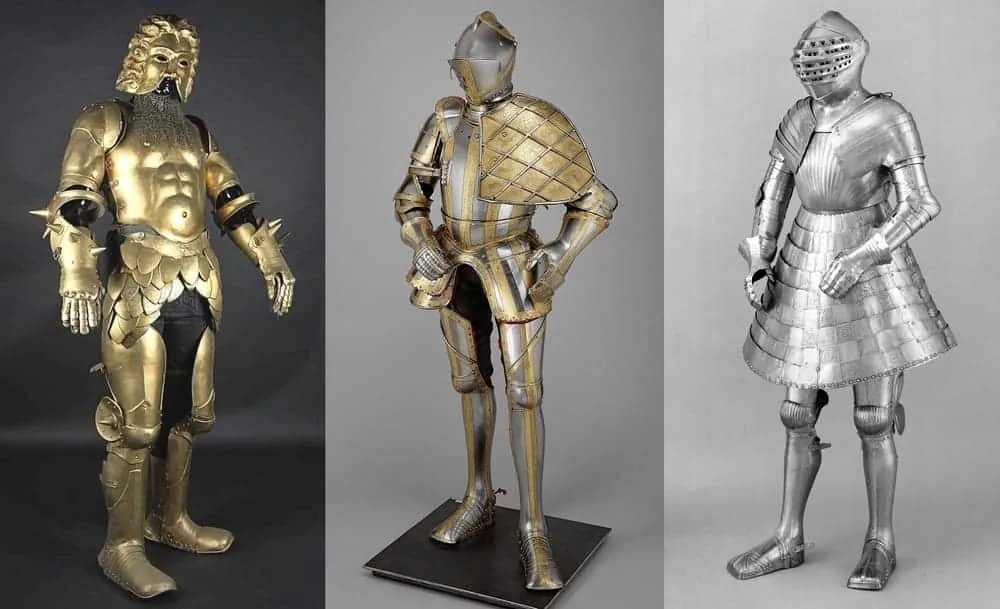 Look how different all the armor is: one design mimics the muscles of our body, the second has a huge plate on the arm, and the third one generally wears a skirt. But at the same time they have something in common - they are ergonomic. That is, they are adapted to the human body, its proportions and movements. Our body is very mobile and resourceful, that's why ancient masters cleverly thought out the combinatorics of details so that they would both protect the body and allow their wearer to move and fight. And in this area, anatomical research was not without it. We can say that armor is a kind of human body schemes. We drew Ikea mannequin schemes on top of the armor and found a very interesting correspondence of armor details to the joints and sections of the figures.
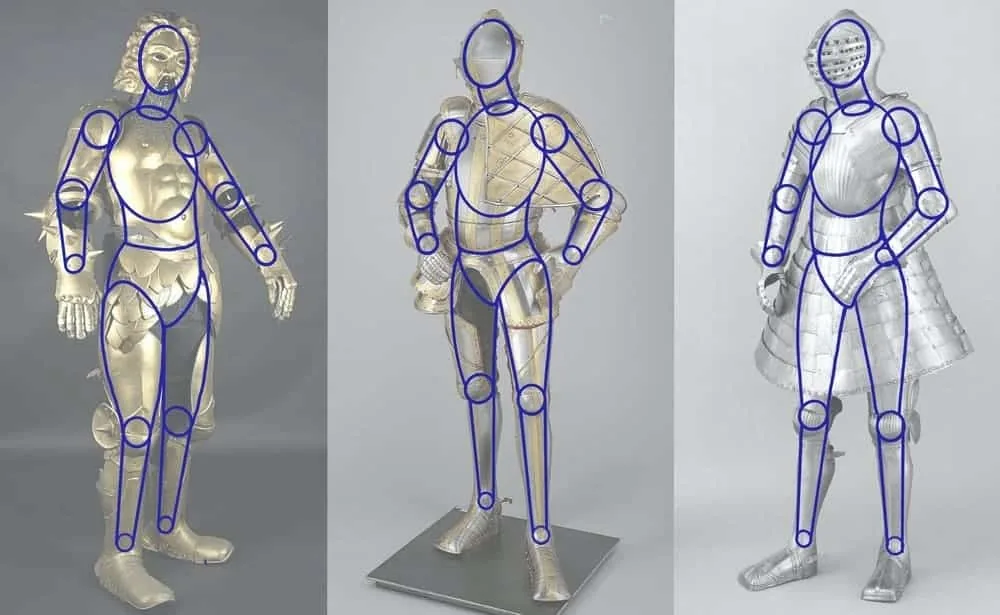 What is important to consider:
- Think in advance how a person in the armor you invented and drew will walk, squat, raise their arms, turn their head and just bend over. Keep the human body structure in mind, the armor is a functional and perhaps beautiful wrapper.
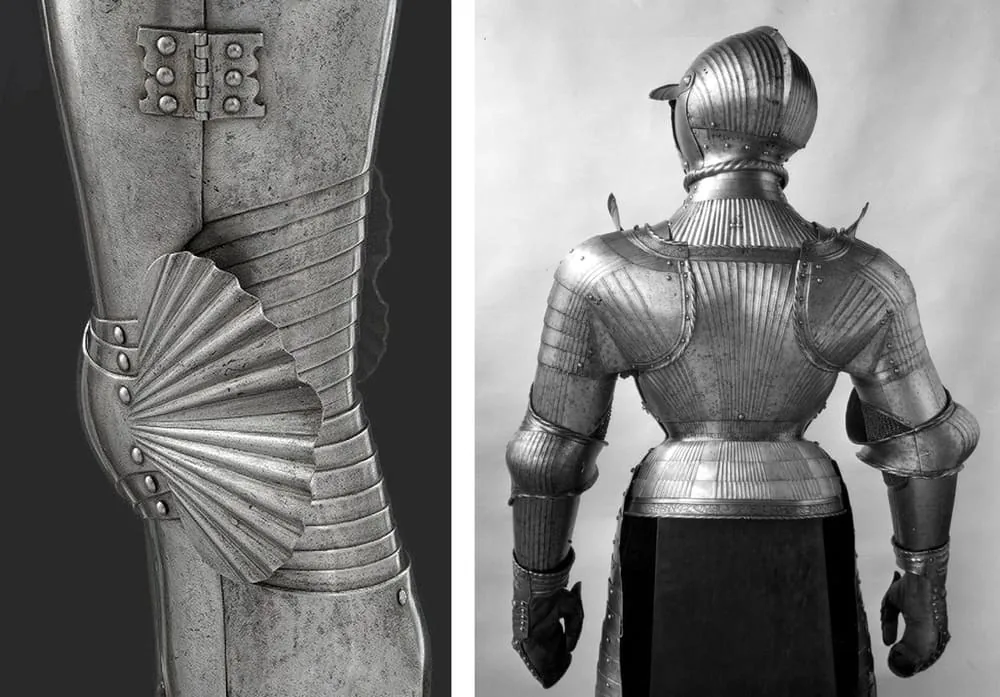
- In mobile places - shoulders, elbows, knees, ankles, pelvis, torso - there are gaps in the plates and spaces for body bends inside. Because of this, the armor is multi-layered, and often there is chain mail or dense clothing under it, protecting these voids.
- All our armor in the photos have some differences among themselves. These seemingly random occurrences were not just for fun. Master Ugvey's words come to mind: "randomness is not random." Each type of warrior has its own style of combat, which means movements will be different. Someone needs tank-like armor all over the body, someone only needs one heavily protected area of the body, and someone needs armor minimally so as not to hinder movement. Decide in advance who your warrior will be. Do not use the principle of "All at once, more, more beautiful."
Armor elements
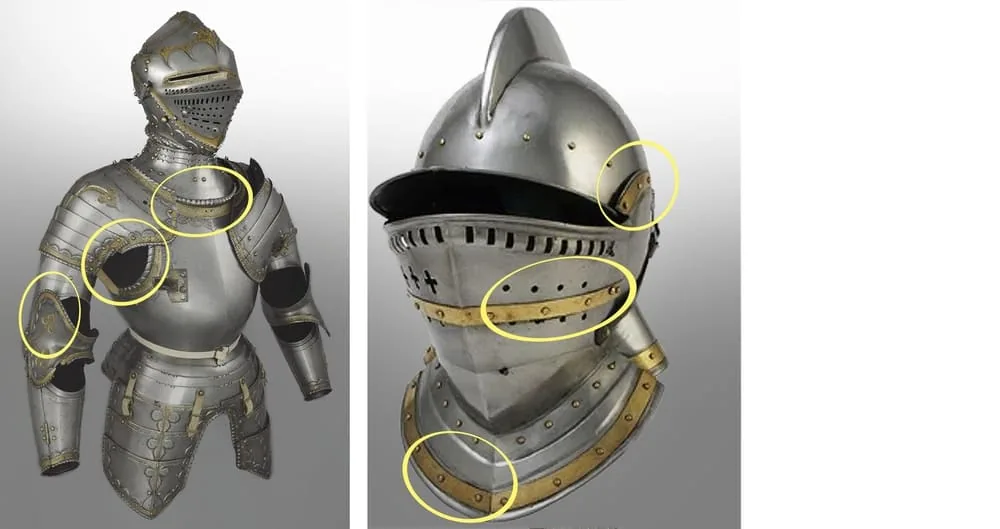
Not always the elements of armor correspond in proportion 1:1 to the human body. What we mean is: one joint, and one detail on top. Some departments are assembled from several segments. But underneath there is still a whole body. People are kind of boiled shrimp in a shell, just as pink. We noted the main elements of the armor, but there are many modifications of them, so we will focus on the main details. As you can see, they are identical in all armor, however, there are also different nuances. The left armor has a chain mail mesh - an armored hood. It is attached to the helmet and protects the lower part of the face and neck. And the right ones have a collar - a gorget on this place. The central armor has a large mesh plate - a tarch on the shoulder. This is a knight's shield that is attached directly to the armor itself and protects the shoulder and chest from a spear strike. In essence, it is all the same heavily overgrown shoulder pad. The right armor has a metal round on the leg, next to the knee joint - a rondel. Such disks cover the joint areas, including the armpits and elbows. And also all the armor lack a metal codpiece, it protects the groin area. You can also meet the name tasset - this is a combination of a plate skirt and a vambrace. Well, the buttocks were protected by a cullet, it was attached to the belt and continued the plate skirt.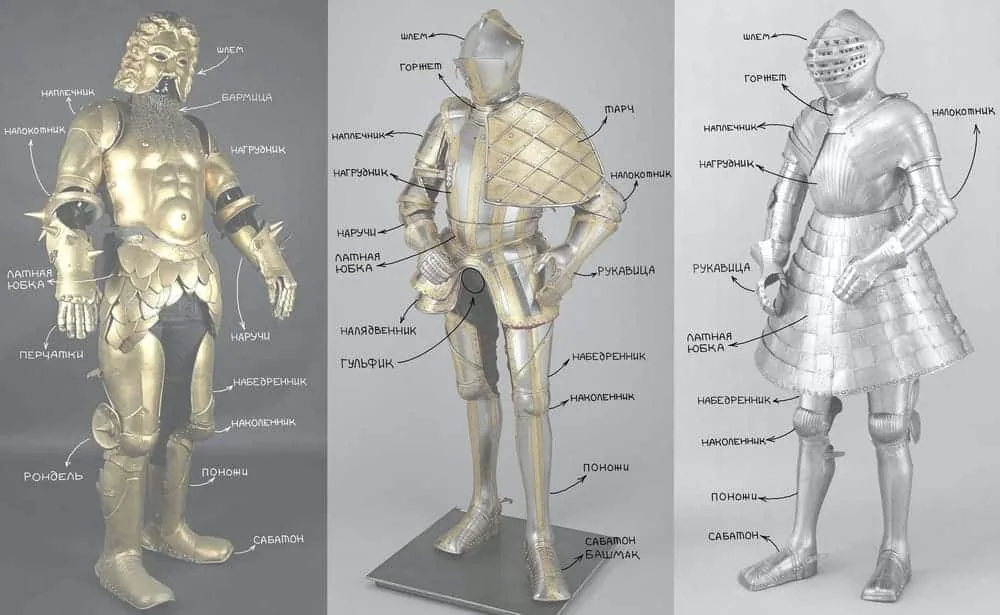 And now wave your wand and say with feeling "Lorica segmentata!" Was the light from heaven shining on you, did your clothes shine? Oh, we were so hoping for a miracle, because this phrase sounds like a spell that clothes the speaker in unbreakable armor. But this is just a laminar Roman armor. Please note that it consists of separate plates, however their connection is very similar to the same shoulder pads, нагрудники and hem. We remembered it because another principle of armor-forming elements still comes from anatomical proportions and features.
What materials are used to create armor
In all cultures there were defenders with special types of armor. You can easily distinguish a Japanese samurai from a Slavic bogatyr, and both of them from a Roman legionnaire. And all because armor was created and continues to be created from different materials. If you go and read on the Internet the world evolution of armor, you will find even armor made of paper that the Chinese used. Have you tried to tear a few sheets of paper, and a whole stack? It's not that easy, and paper coped well with the task assigned to it, until crossbows were invented and the piercing power of the tips increased. Purely theoretically, it is possible to develop a concept of armor even from feathers or earth.What armor is made of:
Related courses
All courses
from 3 750 ₽
-25%
My first figure
5 000 ₽3 750 ₽
Learn more

from 4 950 ₽
-45%
Book illustration: The first page
9 000 ₽4 950 ₽
Learn more

from 4 950 ₽
-45%
Prop concept: render and atmosphere
9 000 ₽4 950 ₽
Learn more
Leather
Metal plates are fastened together either with metal rivets or with leather belts. And there are also variations of armor, the plates of which are sewn onto leather or fabric fragments. Fully leather armor was also created, but they wore out faster and could not protect their owner as well as metal ones. And also made of leather cases, bags, decorative elements, shoes and wallets (somewhere the knight had to put his purse with money and house keys).
Fabric
You can't do without canvas, woolen fabrics, because they were also used to make cords for fastening armor and the inner layer of clothing under the metal shell: quilted jackets, pants, helmets and hose (somewhat similar in principle to dense stockings that protect the legs). And also cloth napalate cloaks embroidered with coats of arms and identification signs, ceremonial capes and cloaks were worn over the armor.
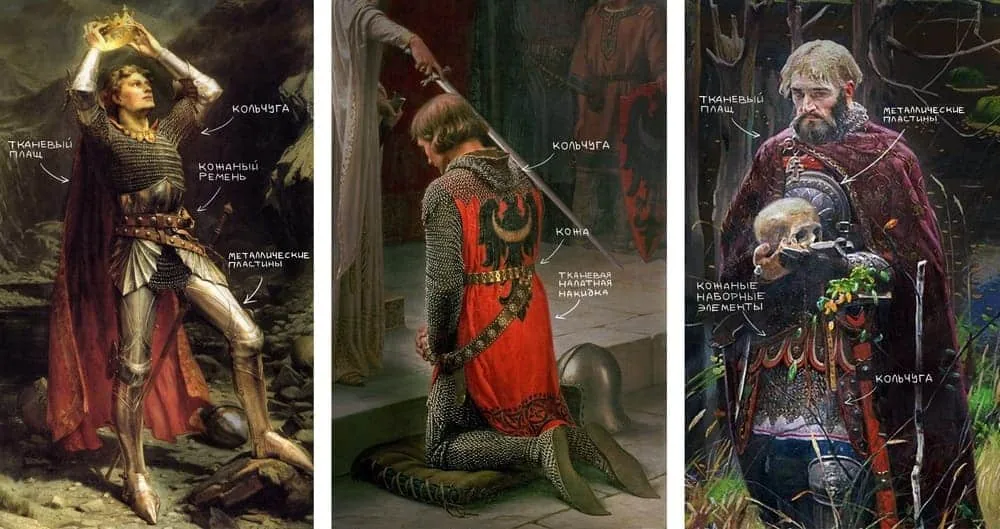 We can't help but add a little informative information, we should introduce you to the authors of works of art! In the first picture is King Arthur by Charles Ernest Butler. In the second is "Accolade" by Edmund Leighton. We have a day of new words today: accolade is knighting. And the third picture depicts Alexander Nevsky by Pavel Ryzhenko.
Metal
Now about the main thing: iron and steel were used to create chain mail armor and metal plates. It could be a combination of chain mail and partial armor, or it could be exclusively chain mail armor. It all depends on the mobility, place and time of creation of the armor. On Jessica Taylor's sketches, concepts of warriors in fully metal armor and the same combination of chain mail elements with assembled plates are depicted.
We can't help but add a little informative information, we should introduce you to the authors of works of art! In the first picture is King Arthur by Charles Ernest Butler. In the second is "Accolade" by Edmund Leighton. We have a day of new words today: accolade is knighting. And the third picture depicts Alexander Nevsky by Pavel Ryzhenko.
Metal
Now about the main thing: iron and steel were used to create chain mail armor and metal plates. It could be a combination of chain mail and partial armor, or it could be exclusively chain mail armor. It all depends on the mobility, place and time of creation of the armor. On Jessica Taylor's sketches, concepts of warriors in fully metal armor and the same combination of chain mail elements with assembled plates are depicted.
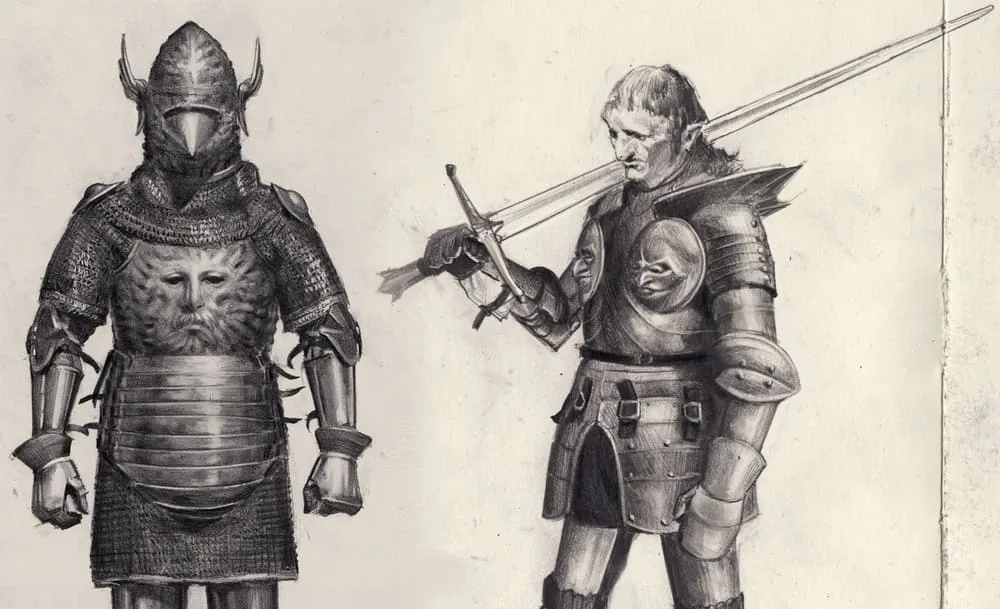 In the paintings of classical modern artists and maestros of antiquity we will see different variations of ceremonial or more practical armor. But in cinema and game industry there are made of anything: bones and leather, wood, plastic, metal and magical elemental. Fantasy is безгранична, but it follows the same principle even for fictional armor: you must believe that they can be worn, they do not interfere with the movement of the body and protect.
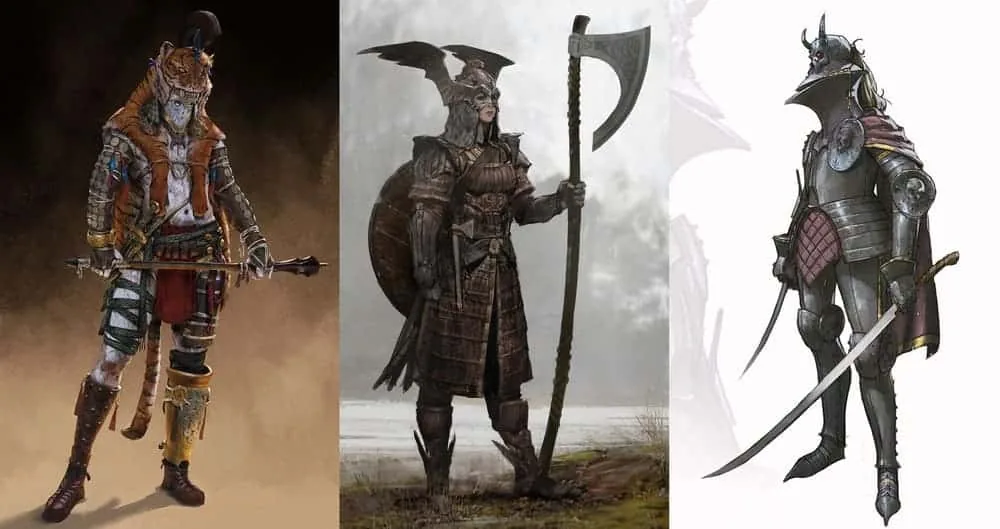
We found three wonderful concepts to show you the possibilities of imagination. The first gladiator from Giby Joseph has the most unusual and ostentatious armor with a tiger skin, straps, decorative decorations and a half-naked body. Often in this case you can find the term "armor bra". The gladiator's armor creates an aggressive image that the viewer believes. The Scandinavian maiden from King Chen is wrapped in leather armor from head to toe with metal elements, leather stamping and metal engravings. Well, the knight from Oliver Odmark is the image of a more classic medieval warrior that we are used to. Did you pay attention to the finishing and ornamentation of the armor elements of these characters? It's time to move from design to decoration.
In the paintings of classical modern artists and maestros of antiquity we will see different variations of ceremonial or more practical armor. But in cinema and game industry there are made of anything: bones and leather, wood, plastic, metal and magical elemental. Fantasy is безгранична, but it follows the same principle even for fictional armor: you must believe that they can be worn, they do not interfere with the movement of the body and protect.
We found three wonderful concepts to show you the possibilities of imagination. The first gladiator from Giby Joseph has the most unusual and ostentatious armor with a tiger skin, straps, decorative decorations and a half-naked body. Often in this case you can find the term "armor bra". The gladiator's armor creates an aggressive image that the viewer believes. The Scandinavian maiden from King Chen is wrapped in leather armor from head to toe with metal elements, leather stamping and metal engravings. Well, the knight from Oliver Odmark is the image of a more classic medieval warrior that we are used to. Did you pay attention to the finishing and ornamentation of the armor elements of these characters? It's time to move from design to decoration.
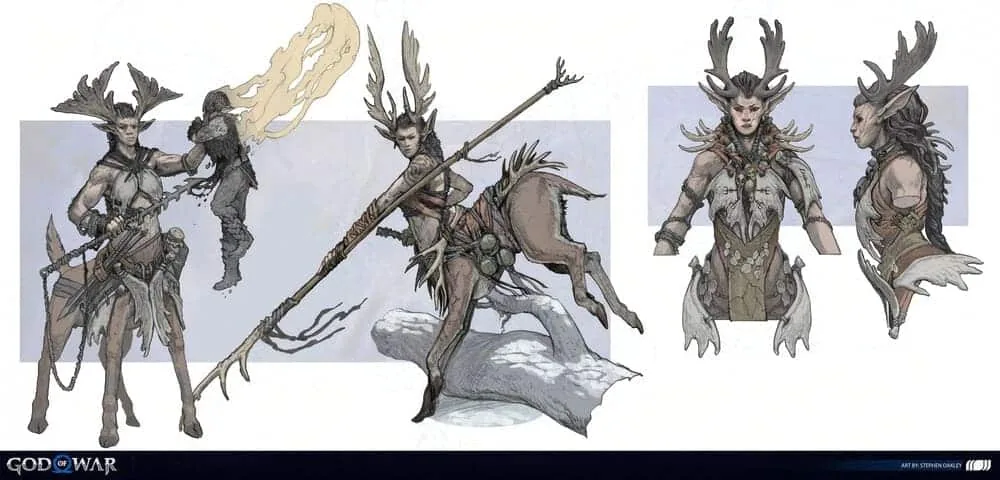
 Not always the characters who will participate in military actions are humans. They can be anthropomorphic creatures. We have all read myths and fairy tales of different cultures, watched fantasy cinema and saw centaurs, mermaids, minotaurs, and they are often encased in armor. Let's consider, for example, an elk-like centaur-catcher from God of War, how the armor is adapted to the part of the animal's body. Stephen Oakley has thought out options that cover the body and limbs more tightly, and more open ones. The composite of materials for them is also different, but not typical for traditional armor: leather, fabrics, roots, moss, and metal. We also see protection options in the form of horns and fabric bindings.
 The artist does not accidentally use different poses and puts his character in 3/4, full face, and profile positions. This is necessary in order to check whether the armor elements will not get in the way under the arms, bind the legs, pierce the back with sharp edges, or prick the hips. This helps to think over the fastening system in the nodal places (under the arms, in the hip area, on the shoulders and lower back). Fantasy armor has something that real armor does not have: it needs a spectacle effect and an emotional connection. A catcher encased in iron sheets would look like a medieval knight, which would not be novelty and surprise. But a forest guard, hung with horns, bags, a necklace of skulls, and braids - is a completely different character of the warrior and a completely different perception effect. The image becomes bright, forest, dense, dangerous, in other words, unforgettable. Therefore, alas, but fictional armor is not always functional, but it is beautiful and impressive.
 We want to brag a little about the armor that our student Elena Grishchenko created in the 2D High Graphics course. They combine fabric, leather, and metal elements (chain mail and plates). Each detail is functional, and the fashionable chaper hat completes the whole image. Here are some more new words for you: chaper was also called capeline, cabasset, or Eisenhut. Now, if a quiz game gives you such a name, you will not be confused and will know the answer. By the way, in this course you can develop not only a medieval character, but any character you are interested in and the environment for him. We'll leave you a link, maybe this is your dream.
 Drawing armor is not an easy task, but definitely interesting! And of course, it is associated with the study of the characteristics of the body of its owner, whether it be a person, a mystical character, or even a cat. By the way, such armor for cats exists and looks very pretentious. So we have finished our short digression into the features of armor, there is little left to do: go and draw. We wish you that your drawings and concepts be as brilliant as polished and polished new armor!
We can't help but add a little informative information, we should introduce you to the authors of works of art! In the first picture is King Arthur by Charles Ernest Butler. In the second is "Accolade" by Edmund Leighton. We have a day of new words today: accolade is knighting. And the third picture depicts Alexander Nevsky by Pavel Ryzhenko.
Metal
Now about the main thing: iron and steel were used to create chain mail armor and metal plates. It could be a combination of chain mail and partial armor, or it could be exclusively chain mail armor. It all depends on the mobility, place and time of creation of the armor. On Jessica Taylor's sketches, concepts of warriors in fully metal armor and the same combination of chain mail elements with assembled plates are depicted.
In the paintings of classical modern artists and maestros of antiquity we will see different variations of ceremonial or more practical armor. But in cinema and game industry there are made of anything: bones and leather, wood, plastic, metal and magical elemental. Fantasy is безгранична, but it follows the same principle even for fictional armor: you must believe that they can be worn, they do not interfere with the movement of the body and protect.
We found three wonderful concepts to show you the possibilities of imagination. The first gladiator from Giby Joseph has the most unusual and ostentatious armor with a tiger skin, straps, decorative decorations and a half-naked body. Often in this case you can find the term "armor bra". The gladiator's armor creates an aggressive image that the viewer believes. The Scandinavian maiden from King Chen is wrapped in leather armor from head to toe with metal elements, leather stamping and metal engravings. Well, the knight from Oliver Odmark is the image of a more classic medieval warrior that we are used to. Did you pay attention to the finishing and ornamentation of the armor elements of these characters? It's time to move from design to decoration.
Armor decorations
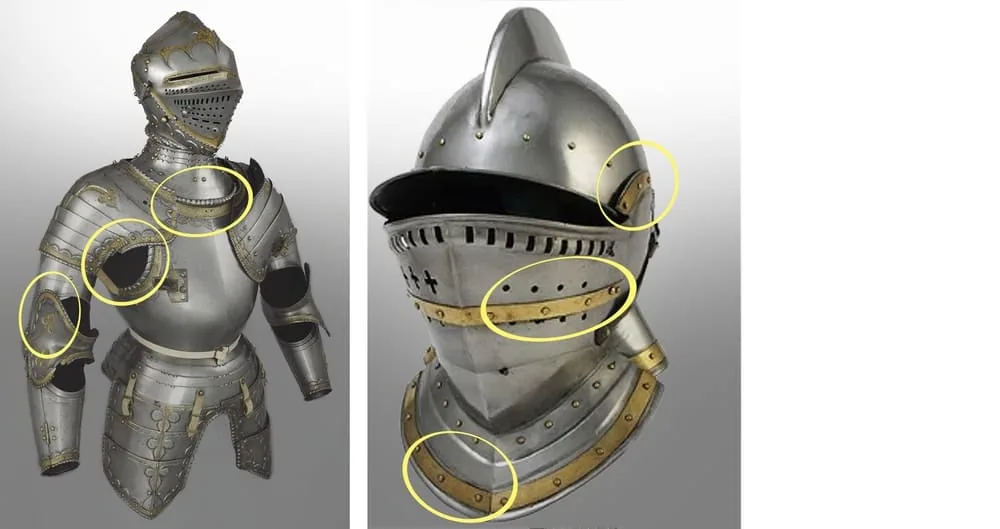
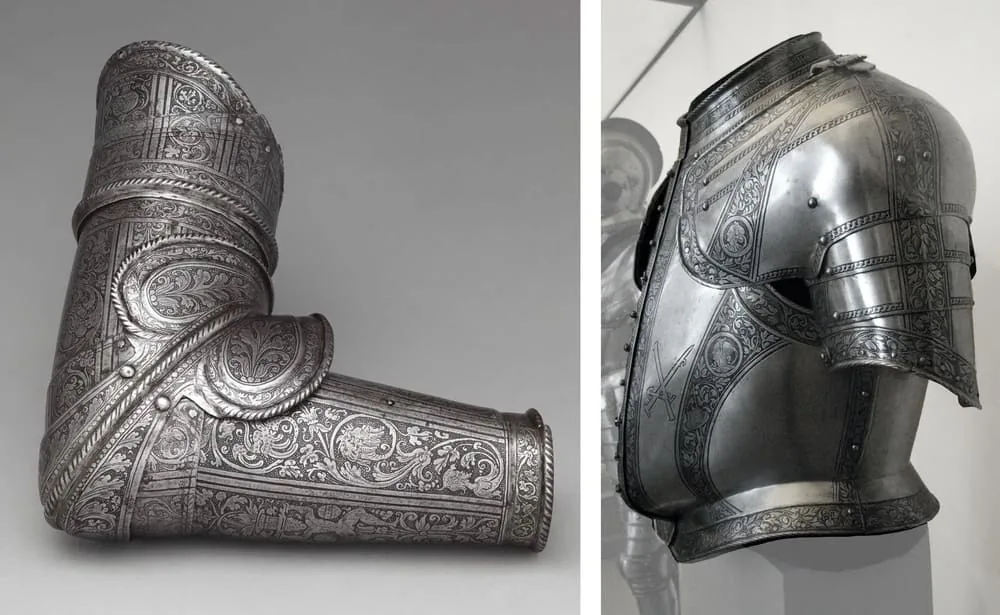
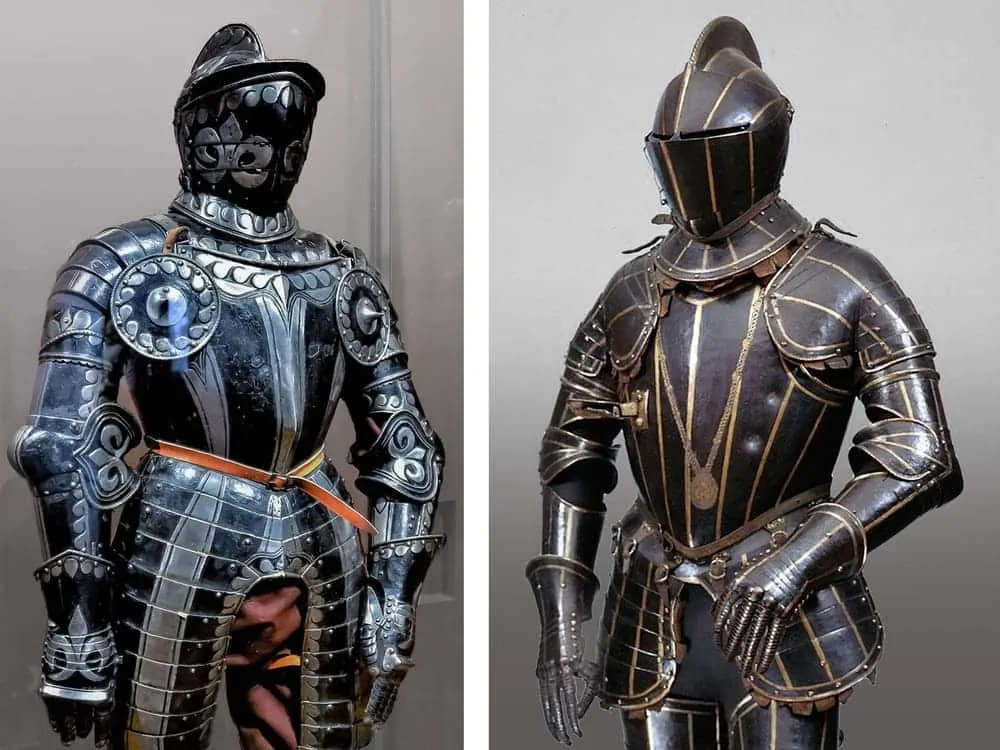
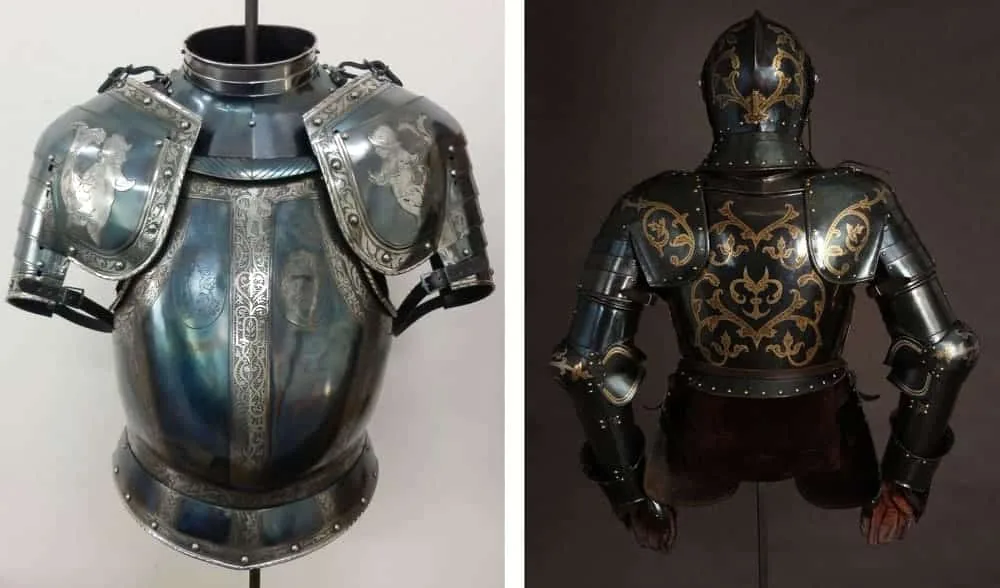
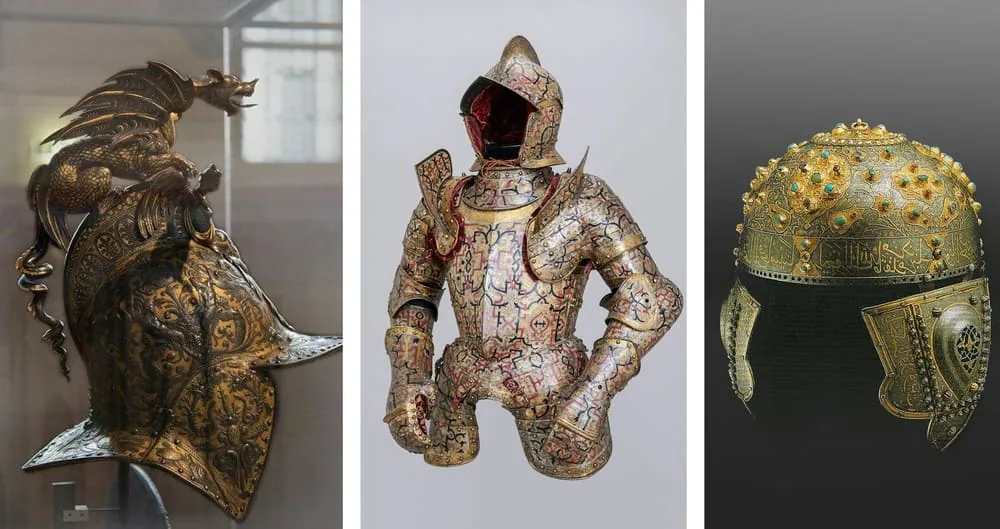
Modern people do airbrushing on cars, put phones in cases with prints, choose jackets with a pattern, emphasize the beauty of the body with elegantly cut suits. All the same was in ancient times. Especially when I wanted to demonstrate status and wealth. Combat armor, of course, was decorated less often. Excessive protrusions, decorative pads and patterns could play a cruel joke with their owner: it was very easy to get caught with such elements and become easy prey for your opponent. In addition, the decor adds weight. Well, more ceremonial armor could allow this. Decoration should also not interfere with the mobility of the armor, so it went with a covering pattern on the surface of the armor or was located in such places as not to interfere with movement.- Border edging
- Engraving and etching
- Painting
- Thermal bluing
- Metal corrugation
- Gilding
Creating armor for characters
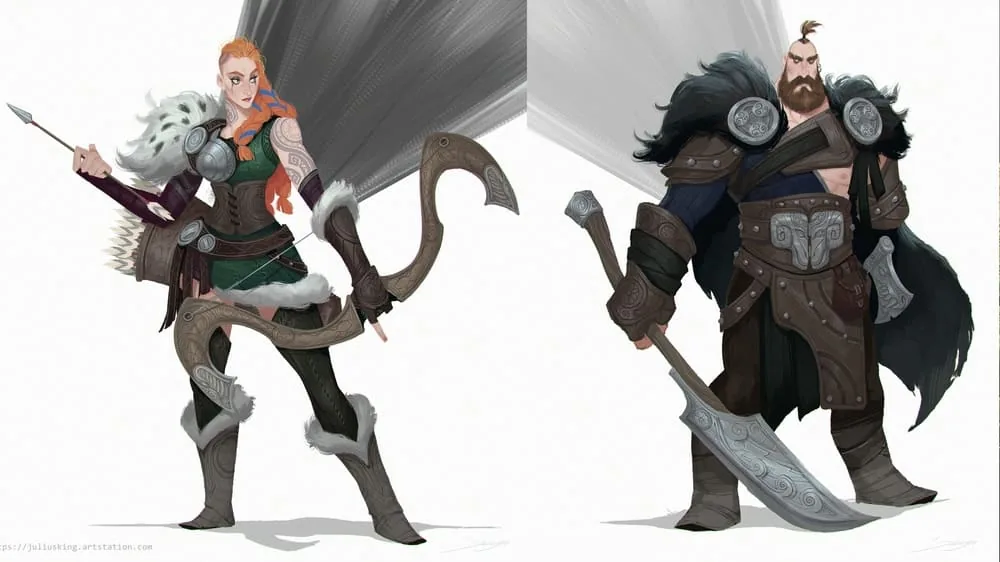
In animation, cinema, games, and comics, boys and girls in armor actively live and fight. Of course, character concept artists create clothes and armor for them. We have already studied the components of armor with you and can interpret them according to the tasks and descriptions of the characters. For example, if we have a story about Vikings who are not afraid of cold and are as huge as a rock, encased in iron and skins, then we can imagine characters like the couple from the Scandinavian world by artist Julian del Rey.
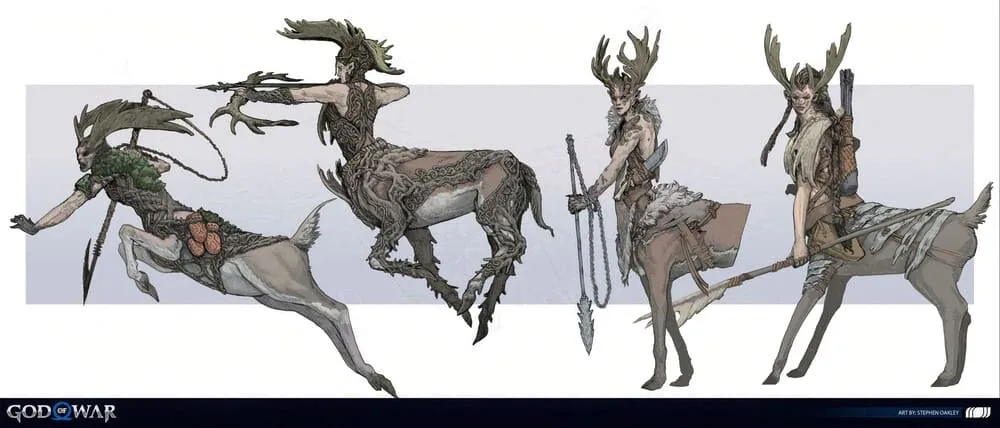
Not always the characters who will participate in military actions are humans. They can be anthropomorphic creatures. We have all read myths and fairy tales of different cultures, watched fantasy cinema and saw centaurs, mermaids, minotaurs, and they are often encased in armor. Let's consider, for example, an elk-like centaur-catcher from God of War, how the armor is adapted to the part of the animal's body. Stephen Oakley has thought out options that cover the body and limbs more tightly, and more open ones. The composite of materials for them is also different, but not typical for traditional armor: leather, fabrics, roots, moss, and metal. We also see protection options in the form of horns and fabric bindings.
The artist does not accidentally use different poses and puts his character in 3/4, full face, and profile positions. This is necessary in order to check whether the armor elements will not get in the way under the arms, bind the legs, pierce the back with sharp edges, or prick the hips. This helps to think over the fastening system in the nodal places (under the arms, in the hip area, on the shoulders and lower back). Fantasy armor has something that real armor does not have: it needs a spectacle effect and an emotional connection. A catcher encased in iron sheets would look like a medieval knight, which would not be novelty and surprise. But a forest guard, hung with horns, bags, a necklace of skulls, and braids - is a completely different character of the warrior and a completely different perception effect. The image becomes bright, forest, dense, dangerous, in other words, unforgettable. Therefore, alas, but fictional armor is not always functional, but it is beautiful and impressive.
We want to brag a little about the armor that our student Elena Grishchenko created in the 2D High Graphics course. They combine fabric, leather, and metal elements (chain mail and plates). Each detail is functional, and the fashionable chaper hat completes the whole image. Here are some more new words for you: chaper was also called capeline, cabasset, or Eisenhut. Now, if a quiz game gives you such a name, you will not be confused and will know the answer. By the way, in this course you can develop not only a medieval character, but any character you are interested in and the environment for him. We'll leave you a link, maybe this is your dream.
Drawing armor is not an easy task, but definitely interesting! And of course, it is associated with the study of the characteristics of the body of its owner, whether it be a person, a mystical character, or even a cat. By the way, such armor for cats exists and looks very pretentious. So we have finished our short digression into the features of armor, there is little left to do: go and draw. We wish you that your drawings and concepts be as brilliant as polished and polished new armor!Related materials
Article
What to start drawing with?
December 20, 2024
Tutorial
How to draw a nut
September 18, 2023
Article
How to draw hands correctly
October 14, 2024
Article
Drawing faces of people of different ages
December 26, 2023
Article
3 tips for a beginner character artist. How to draw emotions
September 18, 2023
Tutorial
How to draw hair with a pencil
July 30, 2026