References for the artist: arm references. Part 1
A set of hand references with a note on what to look for in each: construction and anatomy, the plasticity of the forms, how precise the modelling is, how a gesture carries emotion. Copying here is allowed and encouraged: it fixes the anatomy and sharpens attention.

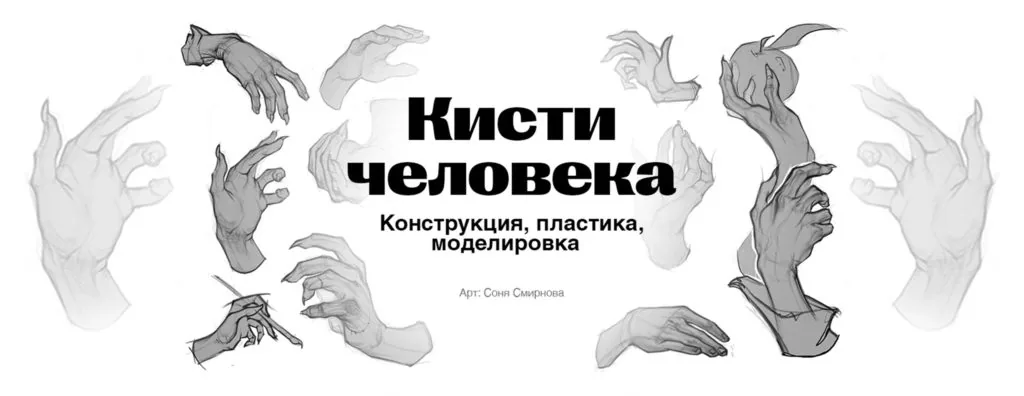
We are opening a series of articles about drawing human hands. Hands are one of the most difficult topics in figure study; they are very plastic and reflect emotional state.
If you want to learn how to draw hands well, come to the Human Hands course at Skills Up School. Or read the first part of the article — in it we have collected references for drawing that demonstrate the structure, plasticity and modeling of hands.
And do not be afraid to copy — copying helps to consolidate knowledge of anatomy, increase attention to detail and accuracy of work.
References and comments on them were shared by the artist and curator of Skills Up School Anna Pacha
Structure and Anatomy
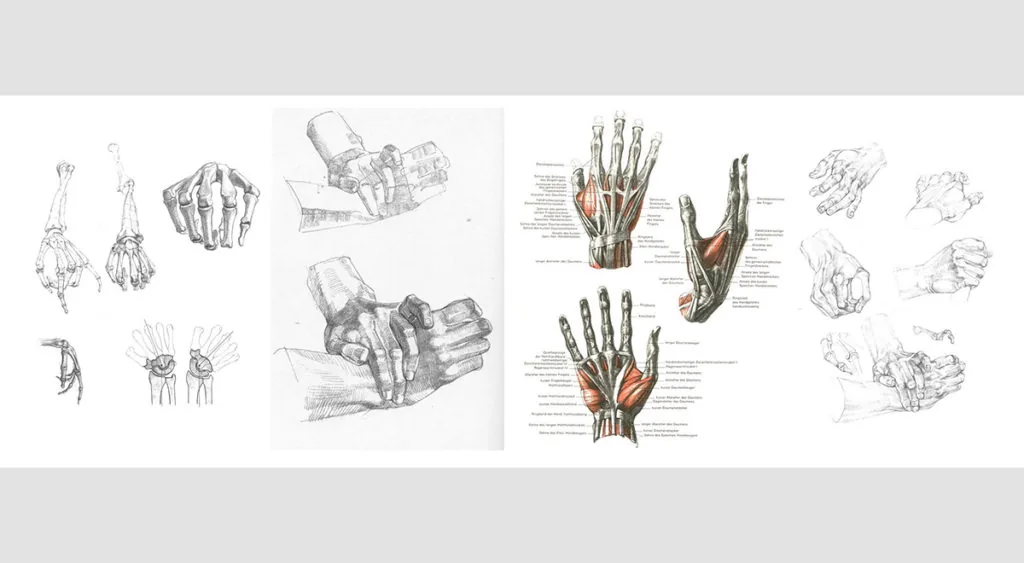
To work with hands, it is important to first familiarize yourself with their structure and understand what they consist of — muscles, tendons. To do this, you can refer to the works of Gottfried Bammes.
Related courses
All courses
His "Image of Man" is a reference book for many artists. Bammes very logically breaks down the complex structure of hands into simple forms.
After it became clear how to work with the main masses and how they behave in perspective, you can study the bones with muscles — and here Bammes has everything set out in sufficient detail. It is best to first study the bone structure, as it holds the structure like a frame, and then move on to soft tissues.
Plasticity of Forms
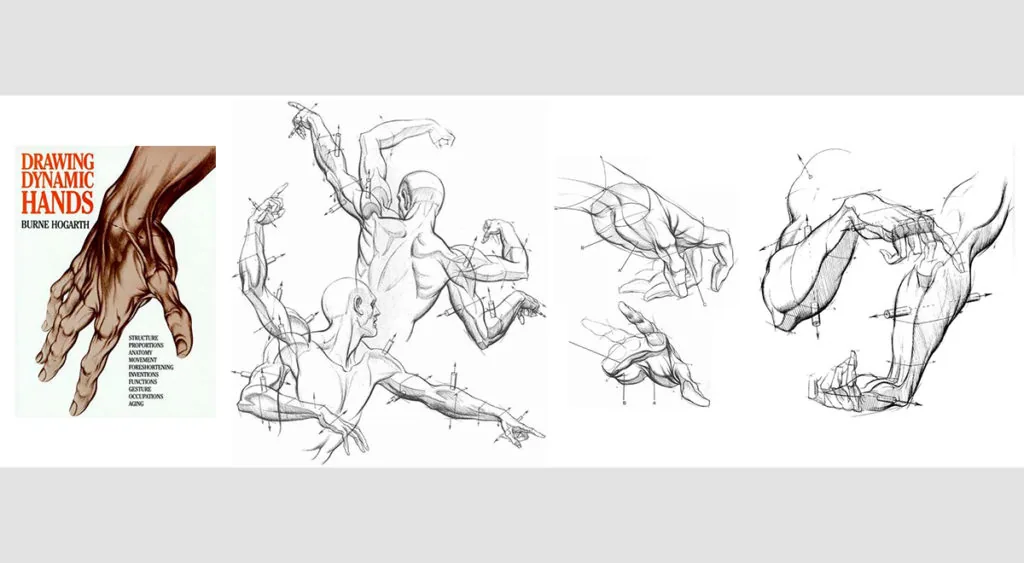
In this topic, Bern Hogarth is good — he has a book "Dynamic Hands". It contains both anatomical analyses and a huge number of drawings of hands in everyday and simply expressive poses. Often they are depicted with the forearm, shoulder, showing the movement of the whole hand.
Expressive gestures, the interweaving of soft tissues, the rhythms of fingers and joints, the logical distribution of accents — these are what you should look at in Hogarth.
Beauty and Justification of Modeling
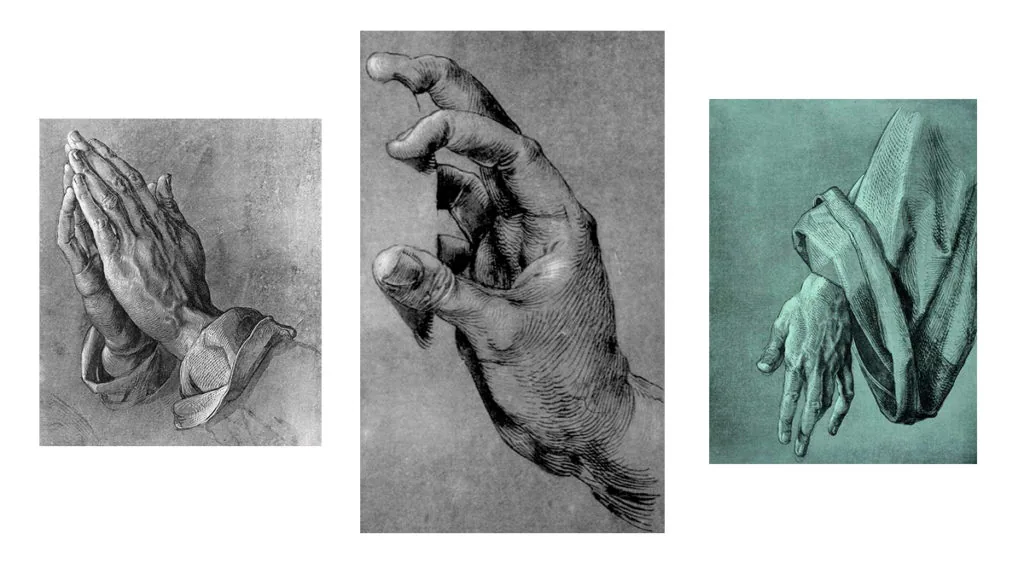
It is strange if Durer was not here! In his works, much attention is paid to the expressiveness of silhouettes and the modeling of forms, there are separate sketches of hands that are often used for copying practice by students.
The gestures of hands in Durer's works are restrained and realistic, the modeling is very detailed, as if embracing the forms. The works are built on nuances: the fingers, even in a calm position, are slightly разнонаправлены, which helps to avoid the feeling of "artificiality", while the hands look anatomical.
In the course "Human Hands" at Skills Up School, you will study the basic proportions and shaping of the human hand, learn how to introduce plasticity into the hands without losing the structure, and learn how to draw them from different angles. The course is suitable for those who already have basic pencil drawing skills.
Read more — on the page with courses
Related materials

How to analyze references for artists

3D for 2D illustration: A comprehensive guide for artists

The artist's dictionary: your guide in the world of creativity

Digital painting. Skills of a modern artist
Concept artist: overview of the profession