References for the artist: hand references. Part 2
How to achieve expressiveness when drawing hands: references demonstrating accuracy and selectivity in depicting hands and expressing emotions. Part 2.

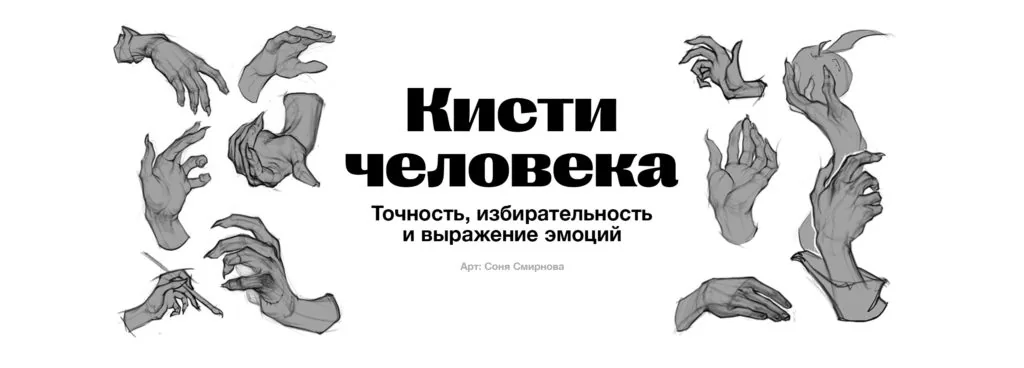
This is the second part of the article about drawing human hands. Here we have collected references demonstrating accuracy and selectivity in depicting hands and expressing emotions through them.
We remind you that Skills Up School has a course dedicated entirely to drawing hands. Since this is one of the most difficult topics in studying the human figure, you need to have basic pencil drawing skills when you enroll. If in doubt, send us your portfolio, and we will tell you which courses are right for you.
References and comments were shared by the artist and curator of Skills Up School, Anna Pacha
Accuracy and Selectivity
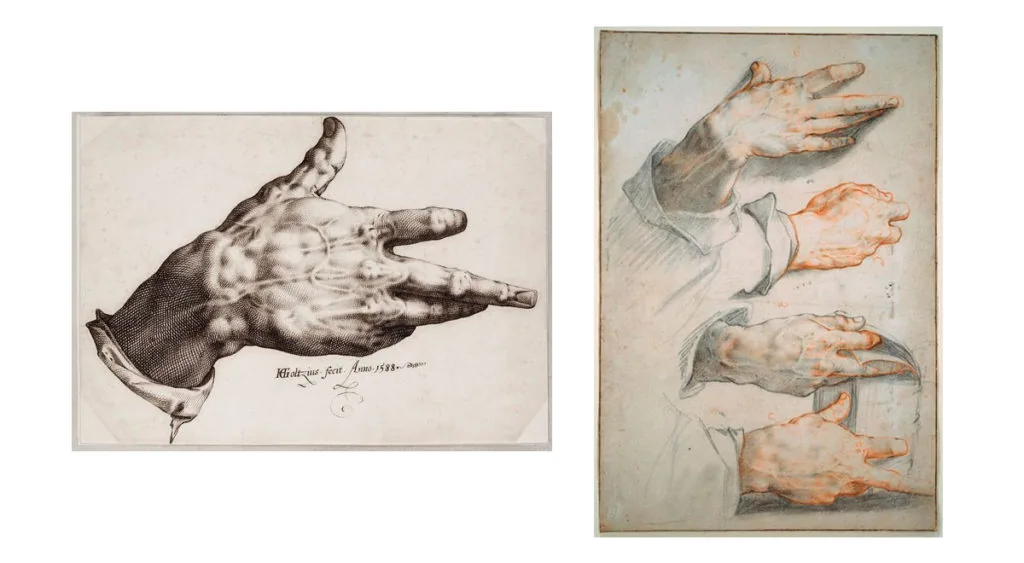
The graphic artist you can study to understand the work with brushes is Hendrick Goltzius. Pay attention to the competent distribution of details: it seems that each joint and vein is drawn, but this is done with varying degrees of contrast and generalization.
Due to the rather complex stroke, his works are difficult to copy — you can either analyze them orally or try to simplify the stroke system.
Related courses
All courses
2D Artist
307 000 ₽61 400 ₽

Бесплатный курс «Погружение в магию 2D-художников»

Бесплатный курс «Основы портрета»
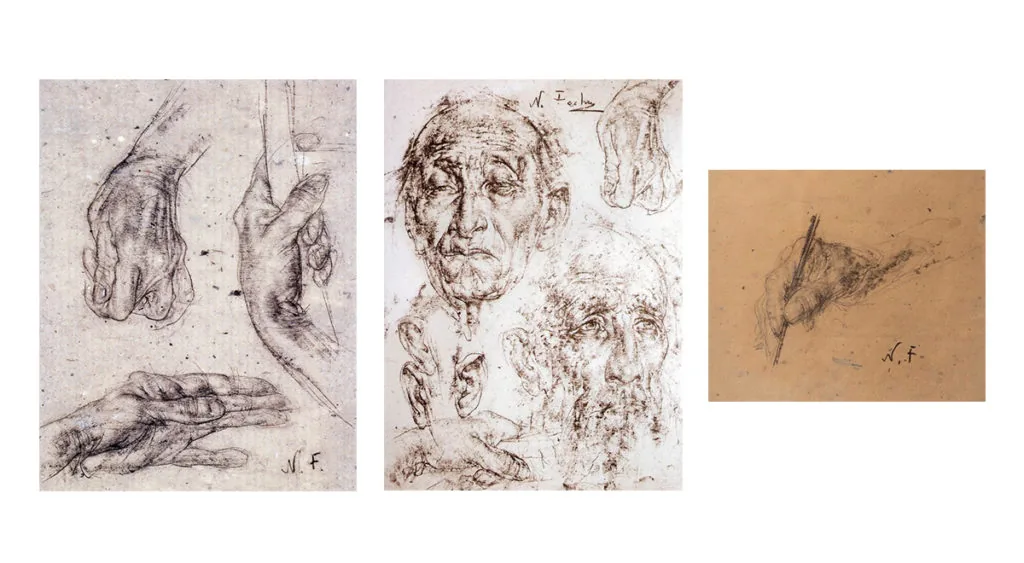
Graphic artist and painter Nikolai Feshin — we know him mainly for portraits and complex compositions. He has both separate sketches and exploratory sketches of brushes located on the same sheet with heads.
Feshin used the side of a soft material to generalize the shape and express volume. The tone in his depiction of brushes thickens around the joints and becomes softer in the area of muscles, fingertips and disappears in the background. The line works along the edge of the shape and emphasizes the design due to folds, nail shapes. The line breaks here and there, dynamically changes its thickness and, like tone, dissolves, going to the background.
The artist nuancedly uses chalk to make sure that the viewer starts considering the work from the point he needs.
Expression of Emotions
In drawing brushes, in addition to structure and anatomy, liveliness is important: hands can convey emotions even more actively than facial expressions.
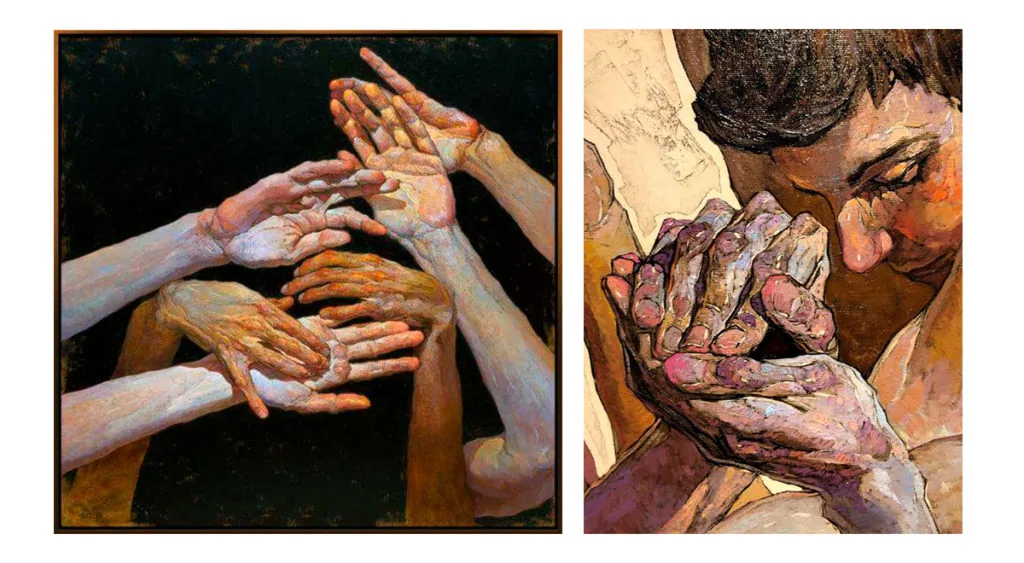
In the works of Denis Sarazhin, the hands and feet often express the main emotion of the work and are drawn with special attention. The brushes are anatomically worked out, complex rhythms of the location of individual details and large spots are found — both the rhythm of the fingers and the rhythm of the joints, and even the rhythm of individual strokes make up a harmony, disturbing and attractive.
Sarazhin's works are picturesque, with a huge number of shades. The multi-colored колорит is selective, organized by light and shadow relationships, generalizations, warm and cold work, at the same time — a lot of graphic moves (line, deaf monochromatic fills).
Adaptation for Your Goals
When analyzing the works of masters and copying practice, look not only at individual sketches, but also at the whole paintings — this task is more difficult, since everything that fills the picture can distract from the brushes. But it is important to understand what meaning the image of brushes plays in the work, whether they are the center of the composition or support the main motif — the degree of expressiveness, the degree of elaboration depend on this.
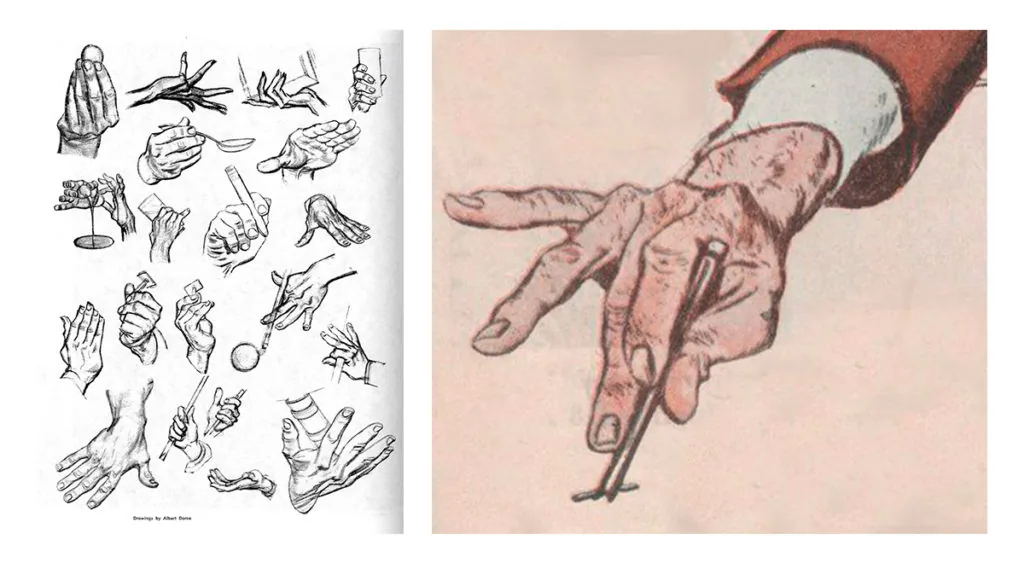
In the work of Albert Dorn with sketches of brushes, brushes performing everyday actions are collected. Due to the expressive silhouette, generalizations, nuances, these sketches look convincing. In the fragment with a broken pencil, tension is felt, the nuances of textures add materiality and character.
You can learn more about the course Human Hands — its program, cost and the nearest start date — on the course page. Sign up to learn how to draw bright, dynamic hands in different poses.
Related materials

References for the artist: arm references. Part 1
Free lesson in Blender. Part 2. Handles

How to analyze references for artists

The artist's dictionary: your guide in the world of creativity

Digital painting. Skills of a modern artist

How to draw a crystal. Step-by-step guide for artists