How to Draw a Character
Learn to draw a character in concept art: from a tiny thumbnail and silhouette through to colour. Three walkthroughs: a super mutant, a ghoul and a girl from Fallout.

Super mutant's head
Thumbnail and character of a super mutant
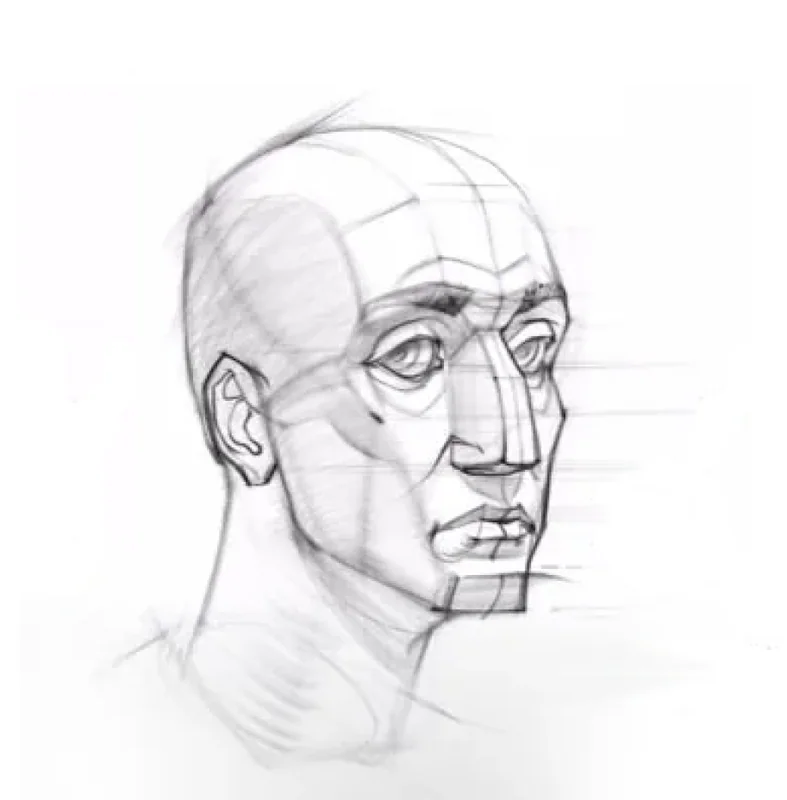
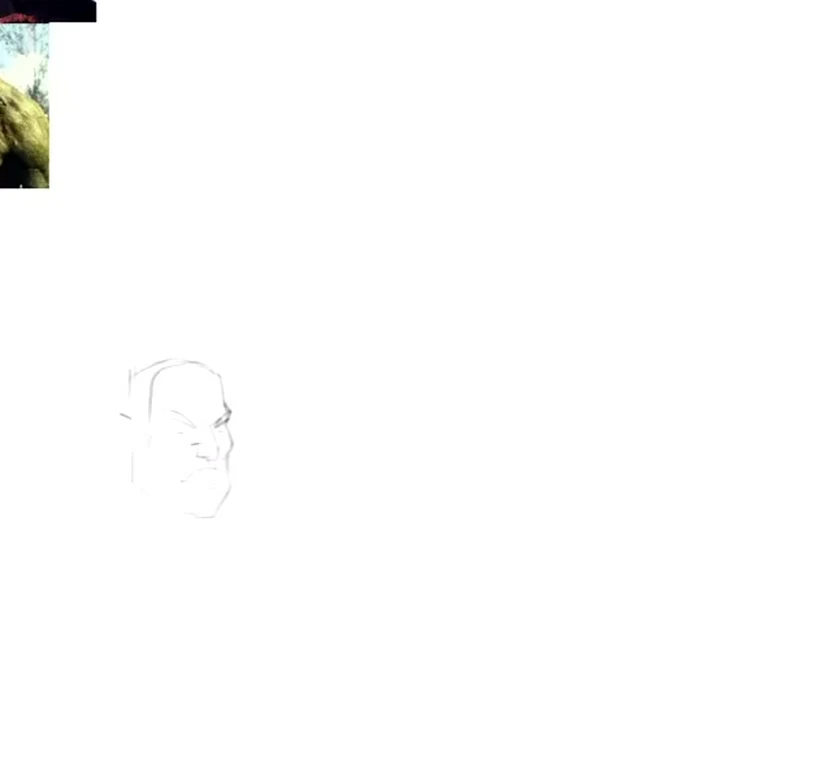
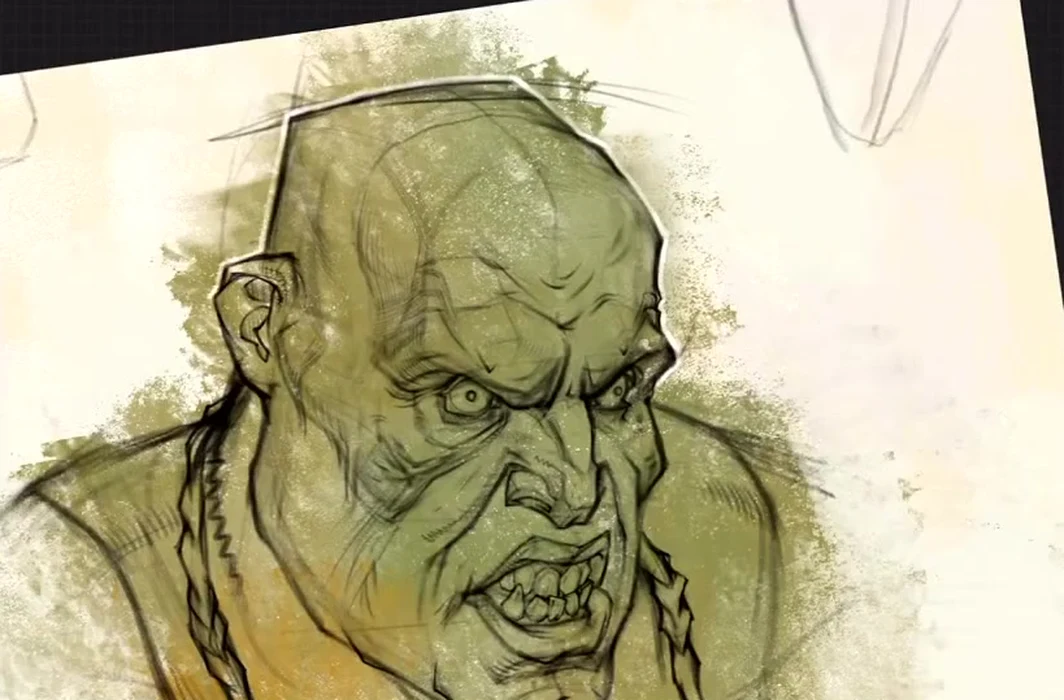
I start with a tiny head thumbnail and immediately establish the character: a small skull and not much brain, but huge protruding cheekbones, a heavy jutting jaw, and an aggressive snarl. I make the gaze from under the brow: I tilt the head oval down, distribute the eyes slightly lower, and bring the brow ridges forward. A super mutant has no eyebrows, so the brow ridges and folds take their place.
Bones, cheekbones, and snarl
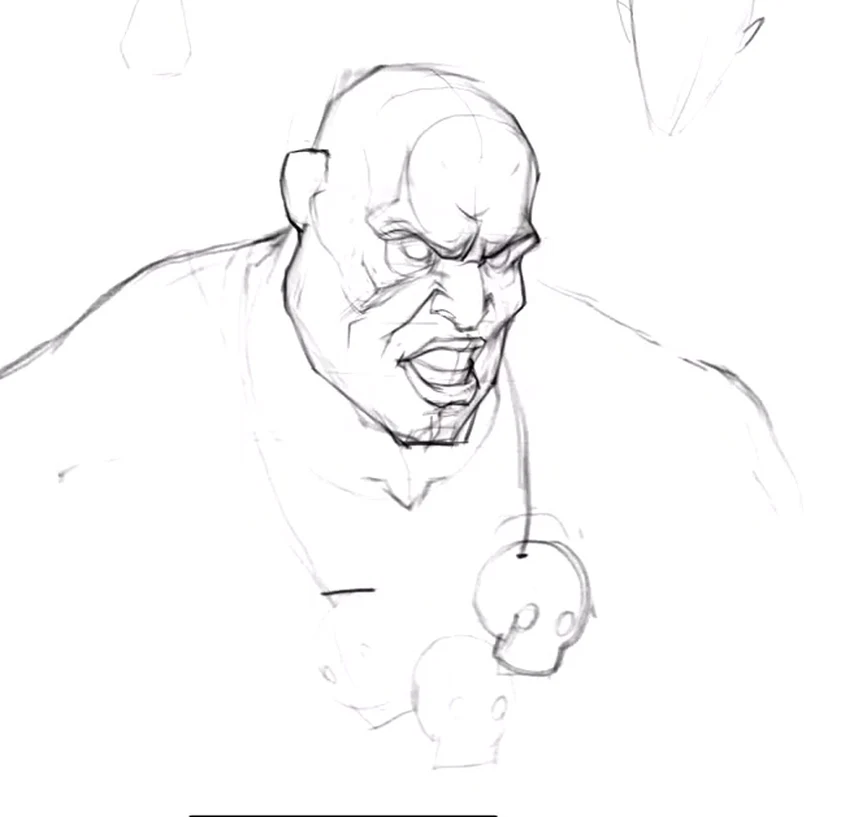
Next, I express the bone structure, and all his bones are sharp: the frontal plate, brow ridges, zygomatic arch, masseter, clavicles. I mold the periorbital area before I put in the eyes, it's easier to set them in the bone sockets. The eyes are small, deep, slightly diverging from rage. I build the snarl with stretched lips: the middle settles with anger, the edges rise. I limit the composition with the shoulder girdle, I don't drag the whole trapezius.
Teeth, skin, and attributes
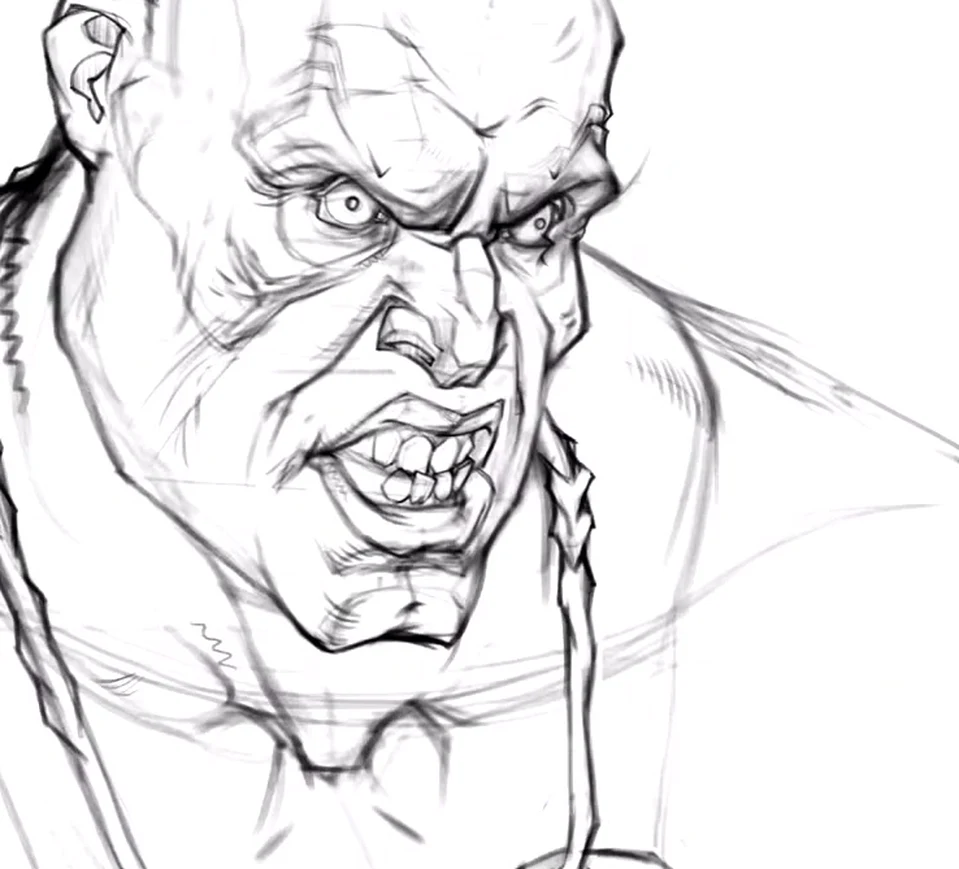
I draw the teeth like stones or tombstones: crooked, hewn, each with its own volume, wolf-like fangs, caries. Flat even teeth kill the image right away. I cover the skin with stretch marks, scars, burns, and add fine wrinkles around the eyes for age. I make the ear like a fighter's, bitten off. I hang a necklace of human skulls on a braided rope around the neck, and the skulls must be different, I redo two identical ones.
Rendering and color
In color, I fill it with green and add warm orange tan spots. A flat clear fill makes the drawing poorer, so I take a textured brush and a base under the paper. I repaint the line from black to earthy rusty red and lead it with variable thickness, with pressure. A dark spot on about ten percent of the canvas gathers the composition.
A ghoul from Fallout
Reference hook and pose
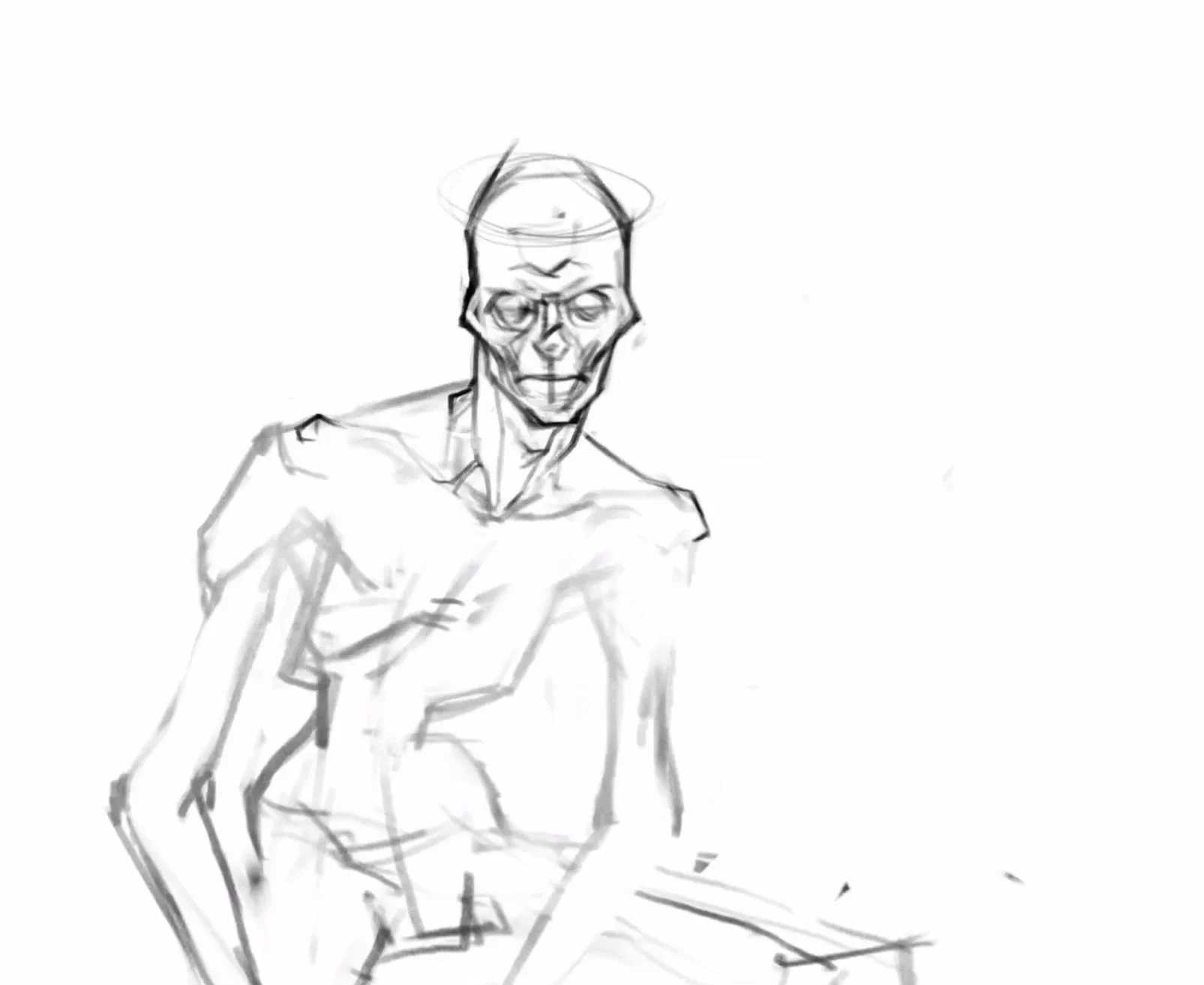
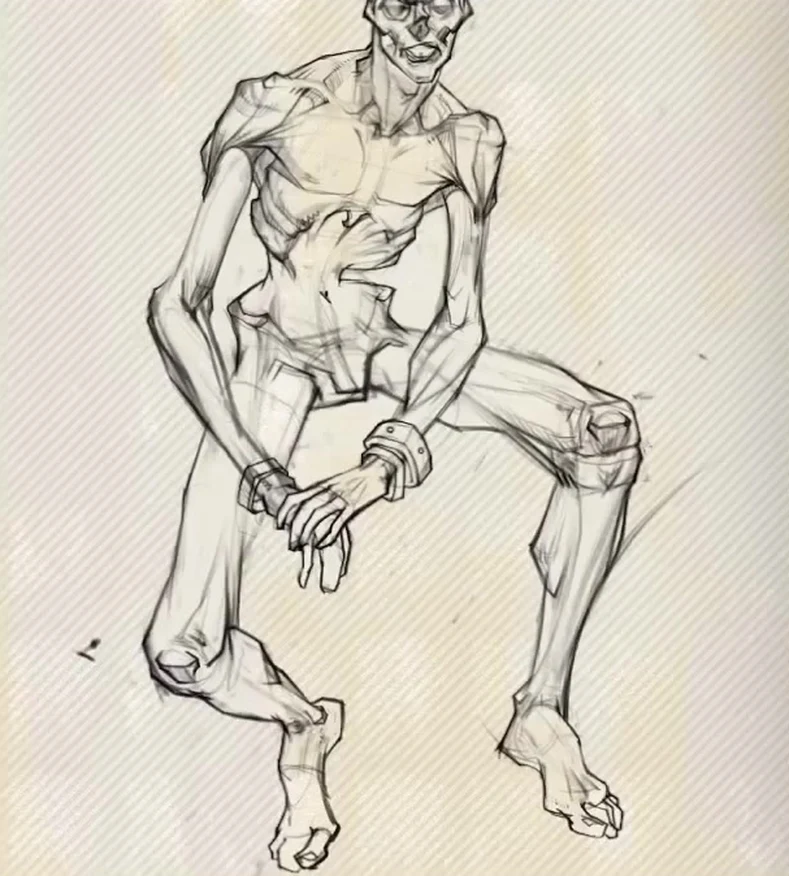
I don't draw a ghoul simply as a zombie. First, I look for a hook: I take the plasticity of the Discobolus, the angry forest spirit Shurale from the Tatar ballet, and the image of a withered mummy. This sets the character and pose even before I pick up the pencil. Then I sketch small silhouette thumbnails, looking for the interaction between the pelvis, ribcage, and head, make several pose options, and choose the most expressive one.
Withered anatomy based on the skeleton
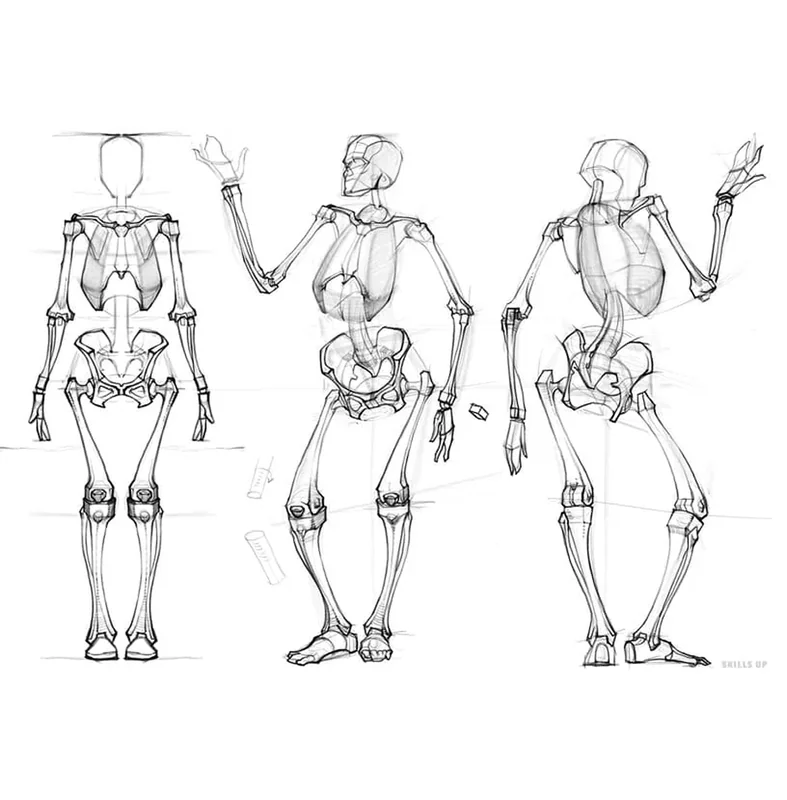
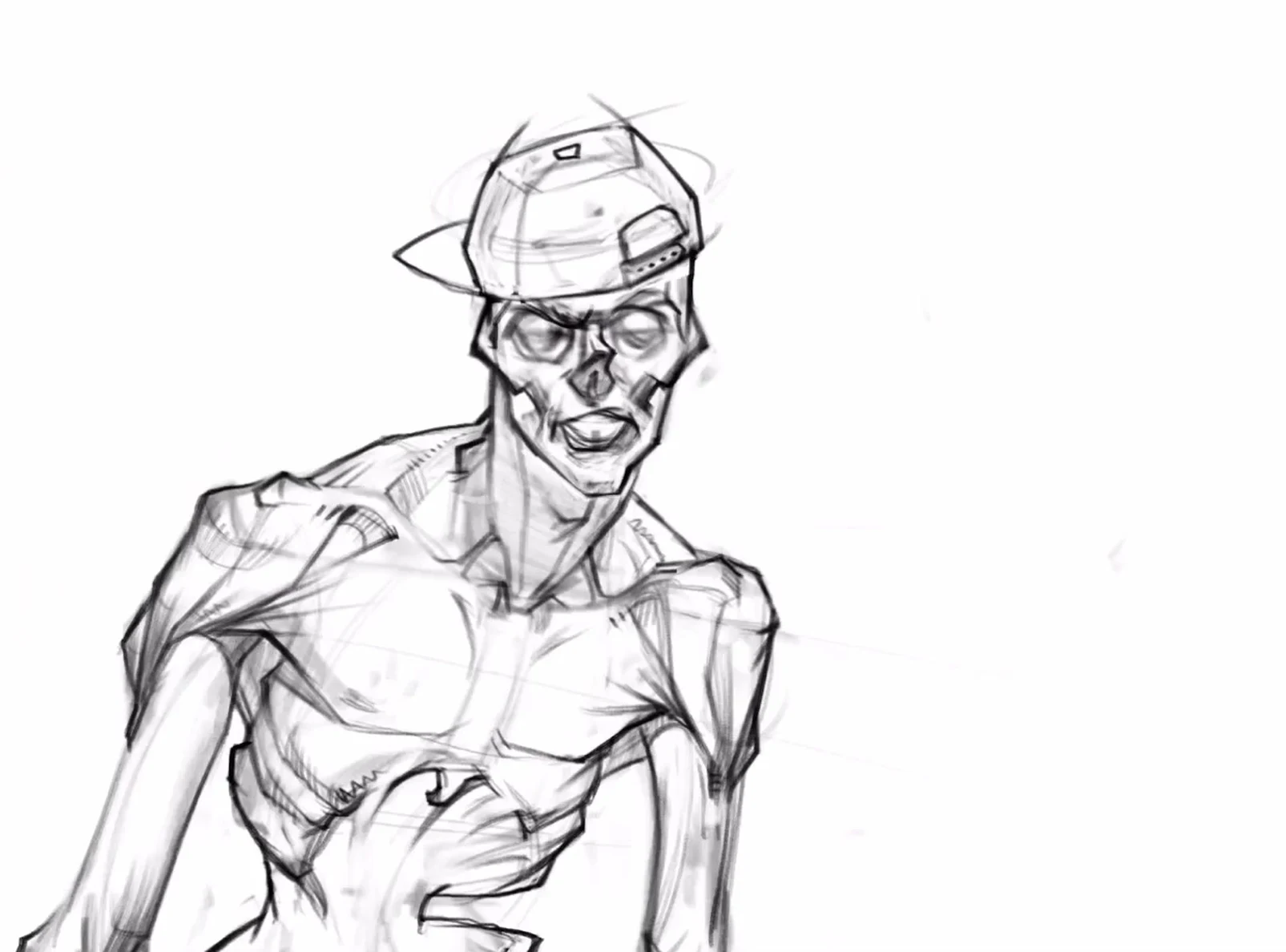
I build from the skeleton. The ghoul has little muscle mass, so the skeleton protrudes prominently: sharp angular skull protrusions, battered ribs, large bony joint nodes. The muscles are withered and covered with skin, the waist goes right under the ribs. For a readable silhouette, I freely adjust the muscles: where needed, I add trapezius, where not needed, I reduce. The cartilage of the nose and ears seems to have rotted, so there's no normal nose, just an exposed septum.
Exposure of bones and corpse color
In some places, I show the exposed skull, open eye sockets, and muscle fibers at attachment points. I leave the eyes; he needs to see something with them. The skin hangs in some places, in others it is stretched over the bones. In color, I go for a cold blue-lilac, corpse-like, not green, this is not a super mutant. I make the legs and hands darker and dirtier, the shoulder girdle lighter, and put ocher-orange spots of dried blood on the muscle veins for contrast.
Female character from Fallout
Silhouette and Pose
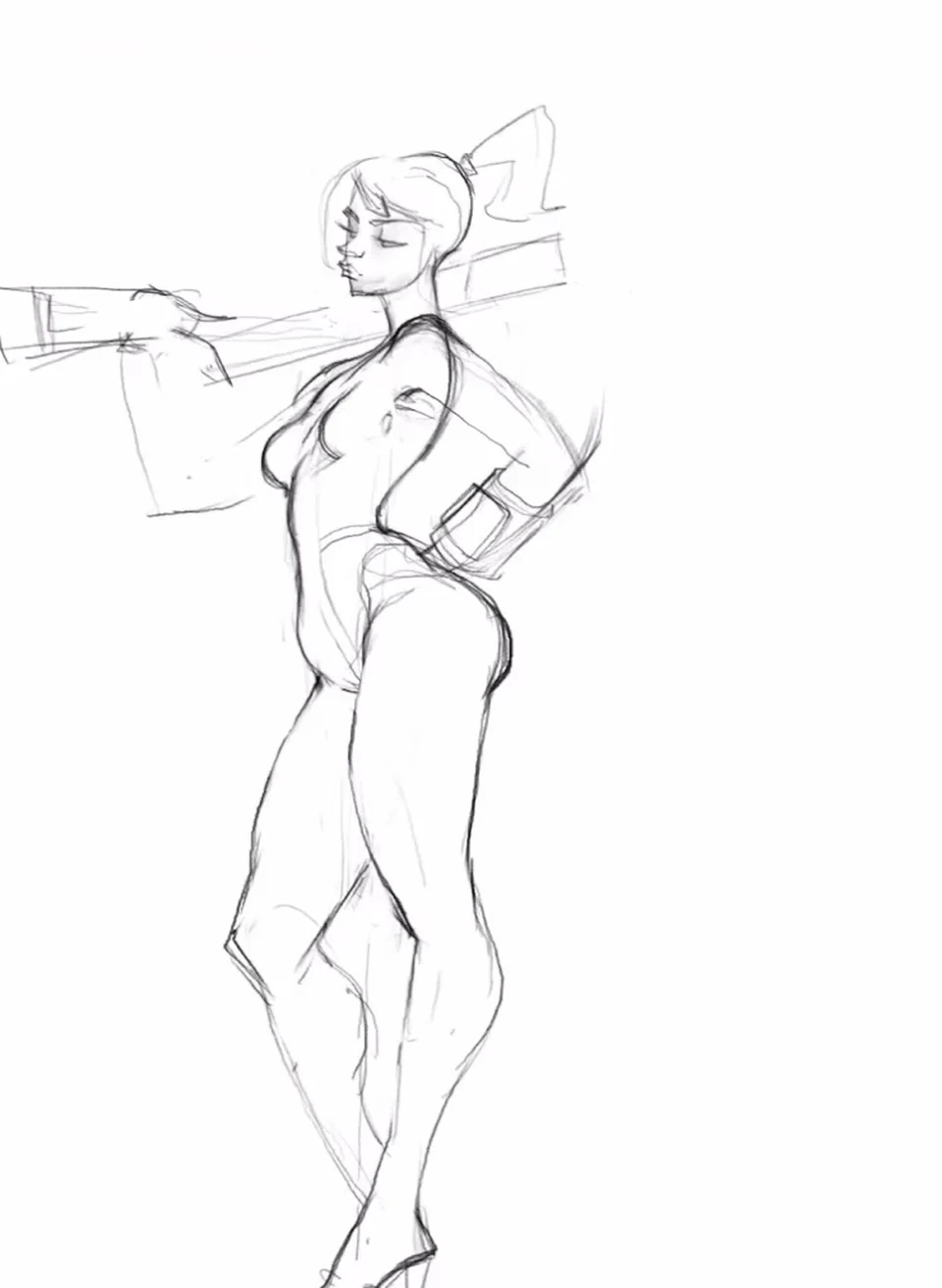
I build the female character first as a figure, and the character itself is secondary. I start with many simple small silhouettes, looking for an expressive movement of the pelvis relative to the ribcage. The simpler it is at the beginning, the better. I make three or four pose options, compare them as pure silhouettes, and take the best one. I immediately lay down a slight stylization: elongated shins, heels, small joint nodes, to avoid falling into realism.
Face and Character
I analyze the face in a separate session. The eyes are large, like lakes, but I don't place them in a bunch, I spread them out, the eye almost reaches the eyebrow and still fits into the eye socket. I make the hairstyle sharp and graphic, the curls are maximally different in thickness, I use the bangs as an accent outline. I add a scar on the eyebrow and piercing: it looks like a harmless girl, but in Fallout, the more harmless, the more dangerous.
Fallout Costume and Equipment
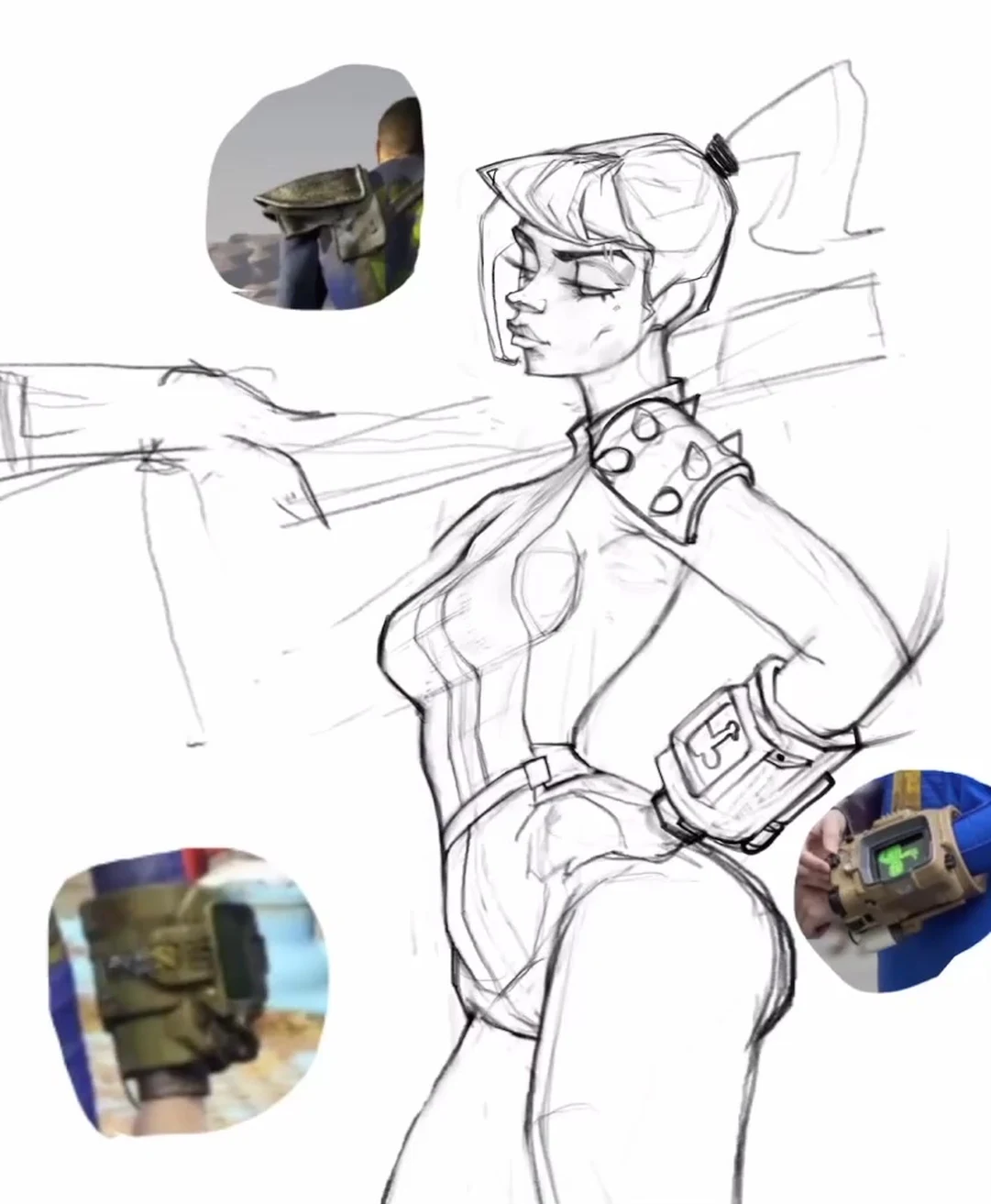
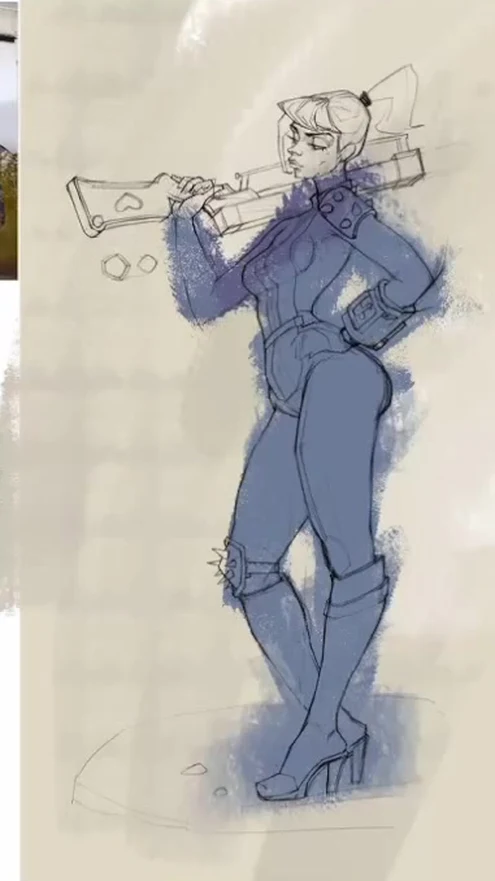
I dress her like a vault dweller who went out into the wasteland: a tight-fitting jumpsuit with a collar and zipper, metal studs, a belt across the oblique muscle. I put a Pip-Boy, a green glowing wrist computer, on her left hand. I give her a laser rifle of my own design with an extended barrel and battery in her hands. I hang trophy raider armor with spikes, as if taken from an enemy, on her shoulder and knee. The main thing is not to overload: the tight-fitting suit and clean silhouette are more important than a scattering of details.
Color and Materials
First, I lay down a general underpainting of the paper color and dirty spots, looking for a color palette. Warm earthy tones dominate me, and I keep cold blue subdued because bright blue will mess up the whole palette. I leave the most saturated spot as an accent inside the picture, and tone down the background. I handle materials differently: rusty gray metal of the rifle and armor, khaki plastic of the Pip-Boy with glow, fabric of the jumpsuit in folds. The silhouette at the end is intentionally blurry, the fills slightly flow out, and I put a light secondary contour on top.
Universal process: how to draw a character from scratch
I assemble any character according to the same logic, whether it's a mutant, a ghoul, or a girl from the vault. First, I start with a small thumbnail sketch. I sketch the character as a tiny silhouette, about the size of a fingernail, without thinking about details. The smaller the thumbnail, the easier it is to detail later, and the clearer the character's nature becomes. Here, the main things are decided: pose, mood, and silhouette. The silhouette carries seventy to eighty percent of the information about the character, so if it doesn't read as a black spot, the details won't save it.
Next, I make several pose variations. Usually, the fourth sketch is stronger than the first three, as my hand has warmed up. I choose the best silhouette and only enlarge that one.
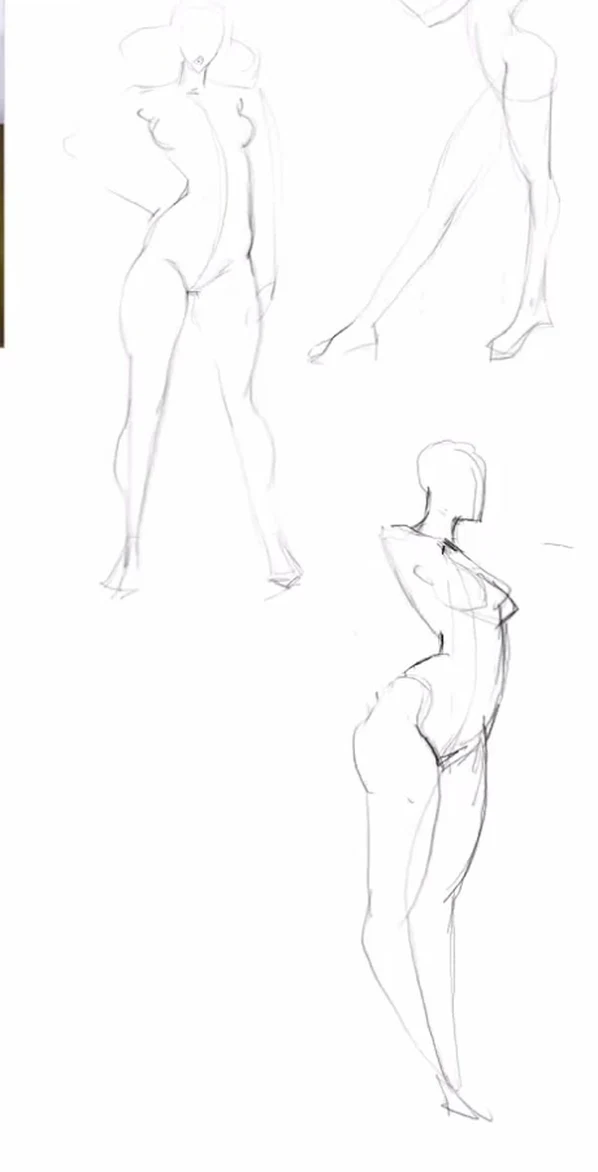
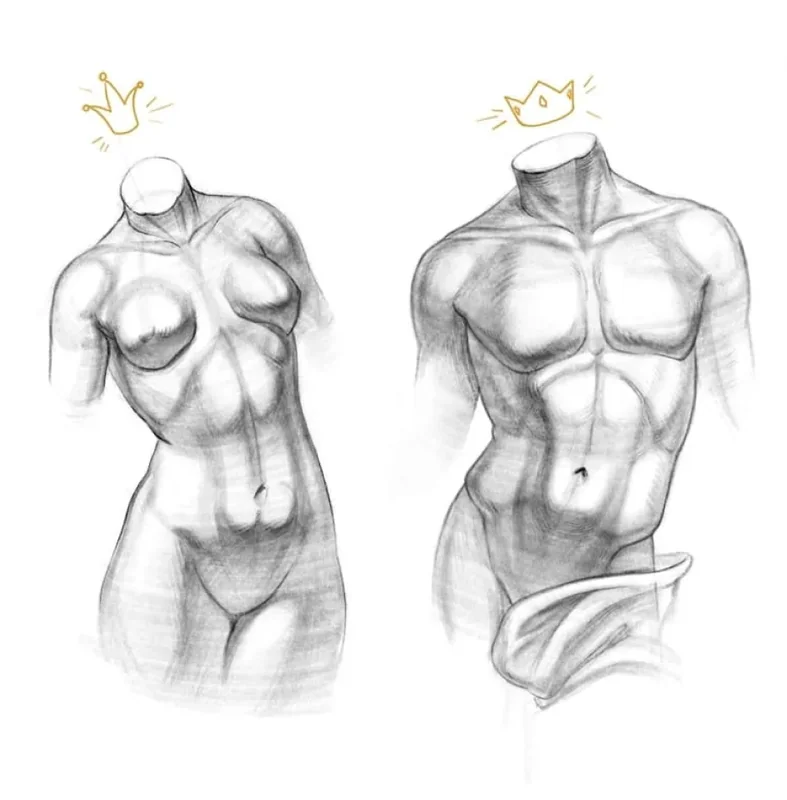
Then I move on to larger forms and construction. I don't draw muscles and folds right away; first, I lay down the large masses: the head, ribcage, pelvis, and connect them with movement. I fit anatomy inside these masses: the skull, reference bones, muscles. Everything is based on an understanding of the human figure, even if the character is fictional.
Related courses
All courses
My first figure
5 000 ₽3 750 ₽

Book illustration: The first page
9 000 ₽4 950 ₽

Prop concept: render and atmosphere
9 000 ₽4 950 ₽
Then comes detailing and materials: skin, fabric, metal, each with its own surface character. And only at the end, the rendering: light, tone, color, textured brush, and colored lineart instead of black. The order is the same, only the character changes.
How to draw a monster or creature
A monster is not a random collection of deformities, but a person I consciously break. I always start from normal anatomy and then decide what to exaggerate. For a super mutant, I reduce the cranial box and inflate the cheekbones and jaw. For a ghoul, I dry out the muscles so that the skeleton sticks out, and the cartilage of the nose and ears seem to have rotted. The trick is to take a recognizable base and exaggerate one or two features to grotesque levels.
The second key is the conceptual hook. I conceived the ghoul through the plasticity of the Discobolus and the evil forest spirit Shurale from the Tatar ballet, added the image of a withered mummy. Even a monster should refer to something, otherwise, it's dead. And the color follows the logic of the material: my ghoul is cold blue-purple, cadaverous, not green, with ocher spots of clotted blood for contrast.
Common mistakes in character concept art
- Starting with details. Until the silhouette and pose are found, details only get in the way. Draw a thumbnail.
- Dead silhouette. If the character doesn't read as a black spot, the viewer won't understand it.
- Symmetry and uniformity. Two identical arms, two identical skulls in a necklace, a line of uniform thickness immediately give away a schematic approach.
- Realism where stylization is needed. For a stylized character, I make the joints and knee nodes smaller, generalize the chest, otherwise, the image falls apart.
- Details without a story. A scar, trophy armor, blood on the boots should tell a story, not just fill space.
Where to start right now
Take a character you love and draw a thumbnail sketch of them, about the size of a fingernail. Then make four pose variations and choose the best silhouette. This is already half the concept. In the full versions of the lessons, I guide the entire process: from the thumbnail sketch of a super mutant, ghoul, and girl from Fallout to the colored rendering, with all the decisions on anatomy, materials, and color.