How to Draw the Neck
Learn to draw the neck: the cylinder of the neck, the jugular notch and seventh vertebra, the sternocleidomastoid, the Adam's apple and trapezius.

The neck is a cylinder
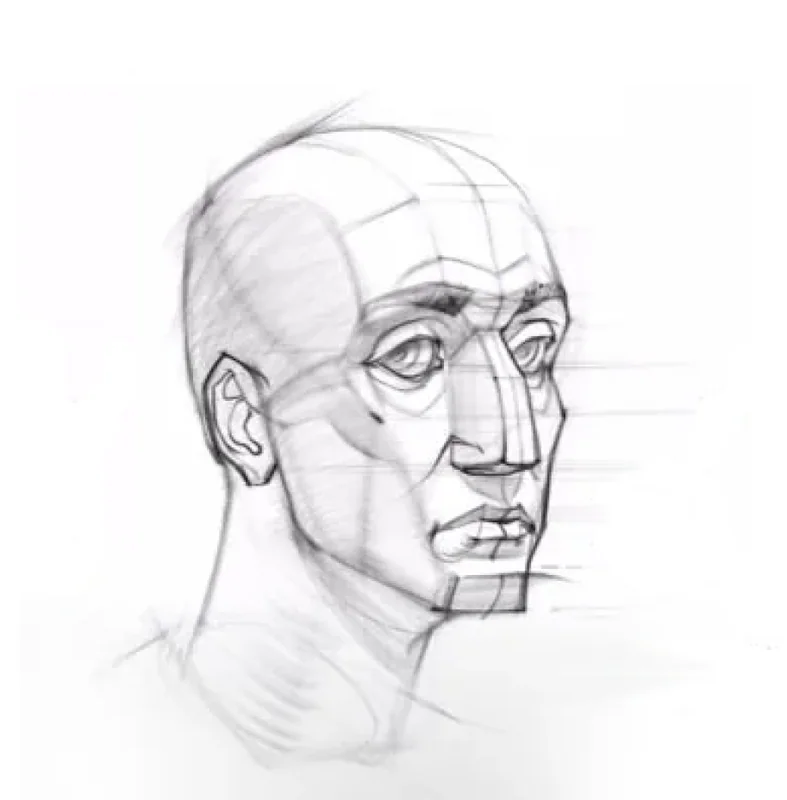
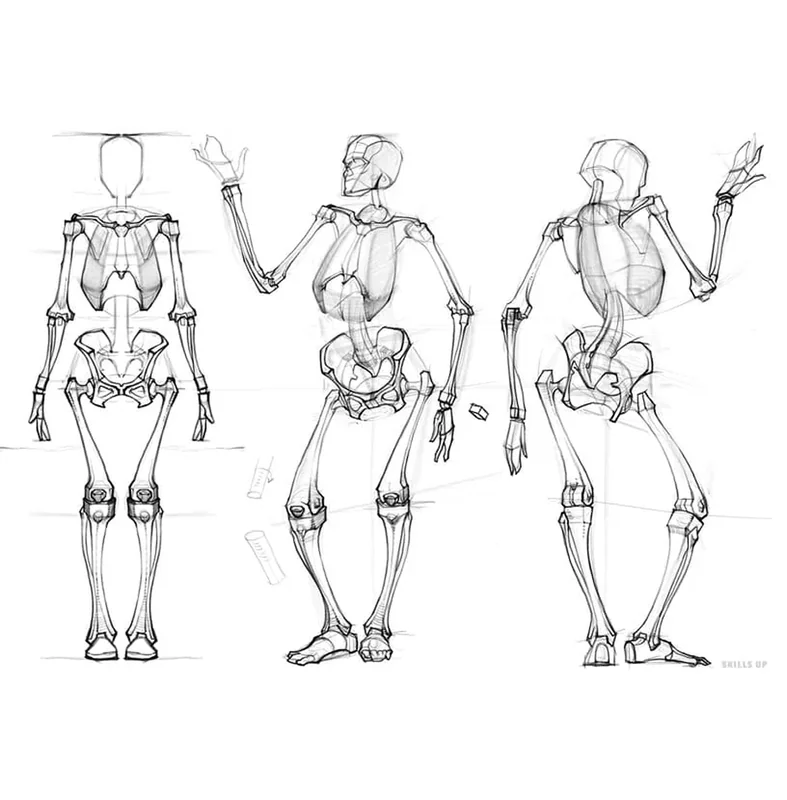
I always start with a cylinder for the neck. First, I outline how this cylinder goes and find two reference points in it: the jugular notch in front and the seventh cervical vertebra at the back. I draw the shoulder girdle through the seventh cervical vertebra, extending it to the sides: on one side it is sloping, on the other its volume is visible. At the same time, I mark the heads of the clavicles and the supraclavicular fossae above them. This is the framework on which everything else will lie.
Sternocleidomastoid muscle
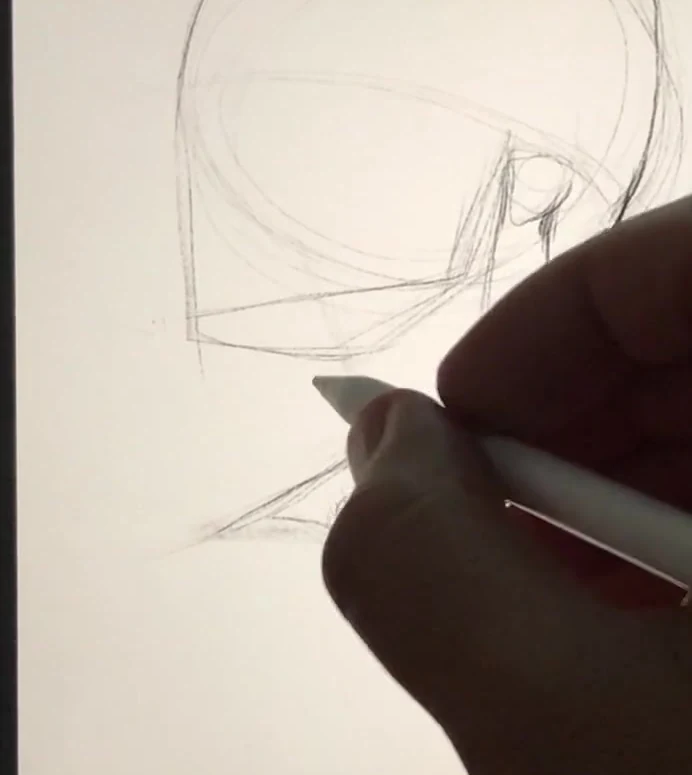
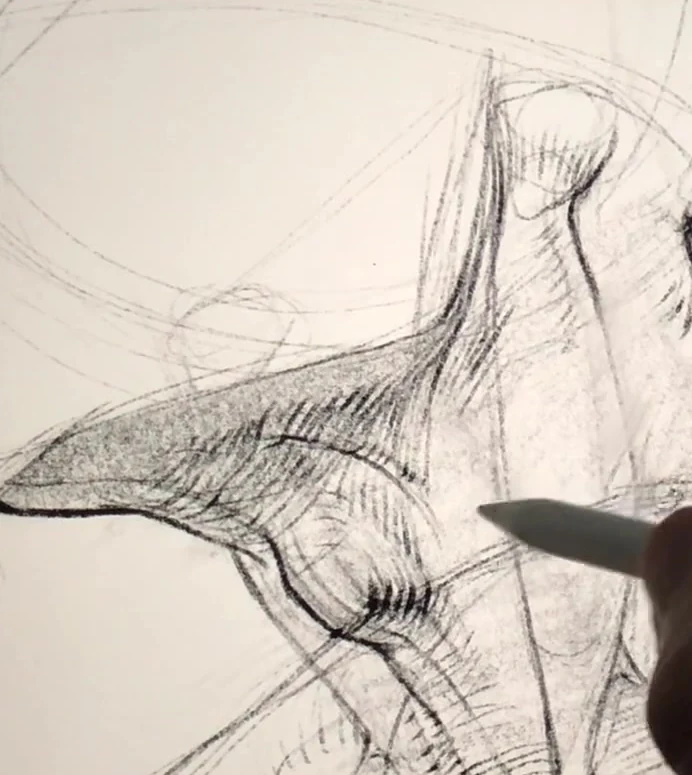
Next, I outline the cranium and estimate the sternocleidomastoid muscle. It is attached to the mastoid process behind the lower jaw at the top and stretches to the jugular notch. The jugular notch itself is formed where these two muscles converge. The muscle is the thinnest in volume at the jugular notch, and the thickest place is in the middle: there is a large, medium, and small form, as in any well-coordinated form. It has three attachment points, mastoid, sternal, and clavicular, and the muscle is thin at the attachment points, there is a tendinous part, and it thickens only closer to the middle.
Adam's apple and the midline
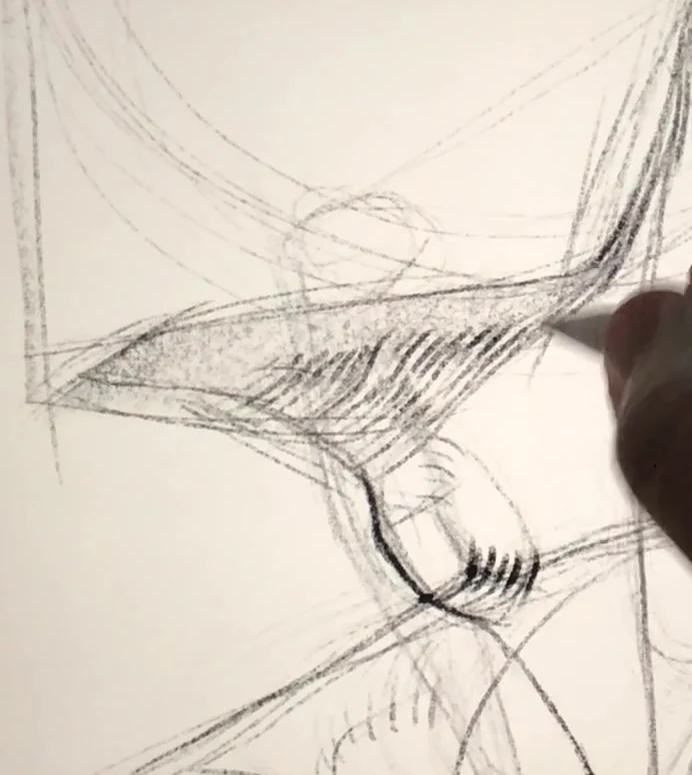
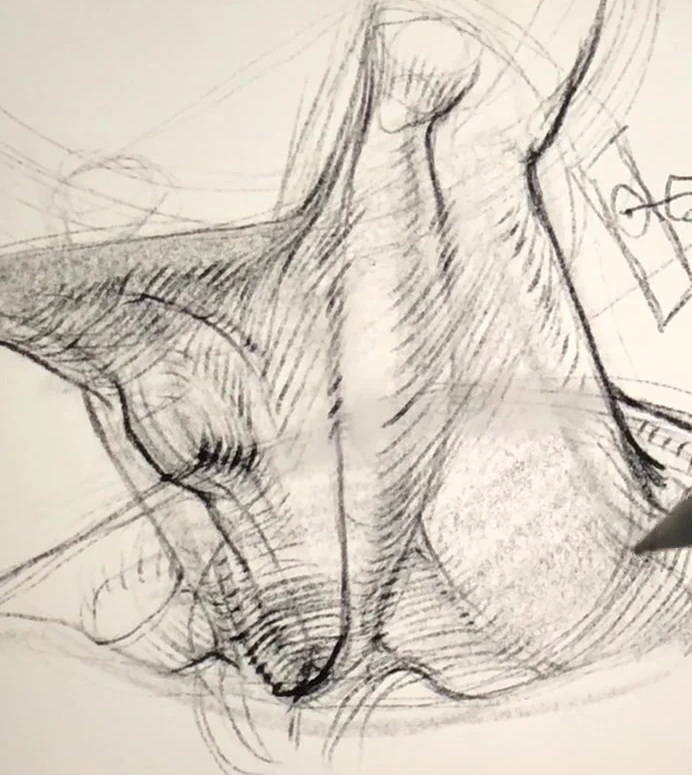
Along the midline, from the chin down, there is a central flow of tissue, and the Adam's apple protrudes on it. I solve it through an egg shape, and then add planes, a bit of cube structure. Below the Adam's apple, this central flow dissolves, and instead of a convexity, a concavity appears, because the sternocleidomastoid begins to dominate there and bulge with its volume. When I draw the muscle in perspective, I always show this volume, and do not lead it with a flat line.
Related courses
All courses
My first figure
5 000 ₽3 750 ₽

Book illustration: The first page
9 000 ₽4 950 ₽

Prop concept: render and atmosphere
9 000 ₽4 950 ₽
Trapezius: neck and shoulder in different planes
An important point with the trapezius muscle. It is attached to the cranium along the nuchal line and goes to the shoulder, and the part near the neck and the part near the shoulder are the same muscle, but they lie in different planes. One belongs to the neck cylinder, the other to the shoulder girdle. Therefore, they cannot be drawn as one: I always separate the neck cylinder from the shoulder girdle, show the mass of the muscle, the turn of the form, and the departure into the supraclavicular fossa, even if the junction is not visible in nature.
The neck is not only a cylinder, but also a cube structure
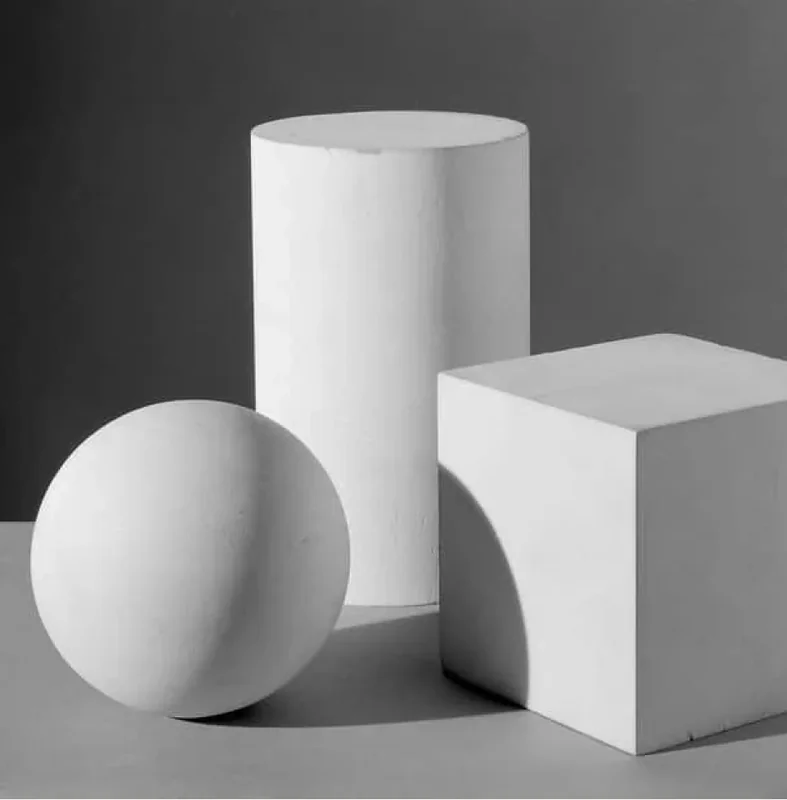
The neck is a cylinder, but it has a front and a side part, that is, it contains a cube structure. I cover the side part with tone a bit more actively, and I place the hatching according to the form: along the side plane in one direction, along the front in the other. I also cover the chin more tightly to make it clear that this is the lower plane, facing down. This way, the neck ceases to be a flat tube and gains volume.
Emphasis on focal joints
The sternocleidomastoid is actively expressed only at the top and bottom, and in the center it gently merges with the neck cylinder. Therefore, I emphasize the focal joints: I work out the volume with hatching and tone more densely at the attachment points, and touch it softer towards the middle, giving preference to the large form. I slightly encrypt the construction towards the end so that it does not interfere with perception, but I do not remove it completely, let the drawing show through a bit. I also reveal the far muscle, but I keep it in my own, slightly more distant plane.
Common mistakes
- Drawing the neck as a flat tube. The neck has both a cylinder and a cube structure, front and side planes. Hatch according to the form.
- Blending the neck with the shoulders. The part of the trapezius near the neck and near the shoulder lies in different planes. Separate the neck cylinder from the shoulder girdle.
- Drawing the sternocleidomastoid with one line. It has volume: thin at the attachments, thick in the middle. Show this form.
- Forgetting about the jugular notch and the seventh cervical. These are the reference points of the cylinder, without them the neck goes away.
- Working out everything equally. The muscle is expressed at the focal joints at the top and bottom, and softer in the center. Emphasize the focal joints.
Short advice
Do not rush to hatch the skin and veins right away. First, set the neck cylinder, find the jugular notch and the seventh cervical, stretch the sternocleidomastoid from the mastoid process to the notch, and only then build up the volume with tone, according to the form, and with emphasis on the focal joints. Then the neck will connect the head with the shoulders, and not hang as a separate tube.