
ArticleUpdated: September 6, 2026
Statics and dynamics in drawing: creating mood and movement
In short
Stillness gives calm and stability, dynamics give movement and tension. They work through axes, tilts, rhythm and pose: verticals and horizontals settle the frame, diagonals rock it. When each is appropriate and how to combine both in one piece.

2D artist
How to make a drawing catch the viewer's eye at first sight? It's all about how you manage statics and dynamics. These elements of composition are your trump card that sets the rhythm of the whole work and indicates accents and character. Let's figure out together how to use them.
Will the picture be static or dynamic, largely depends on the mood of the work, its task.

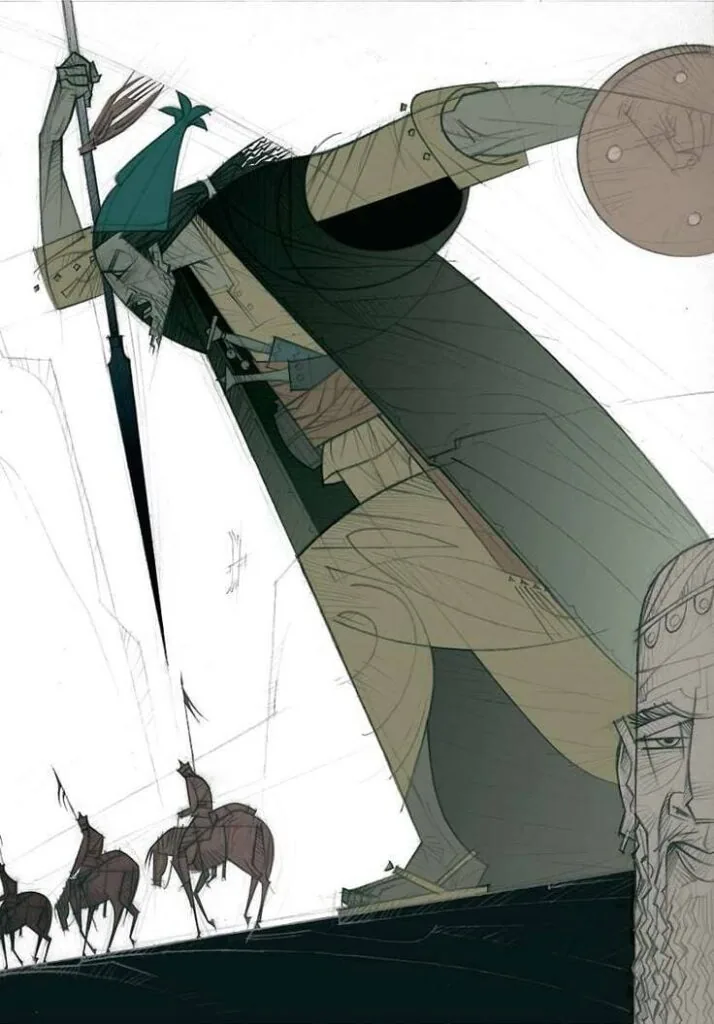
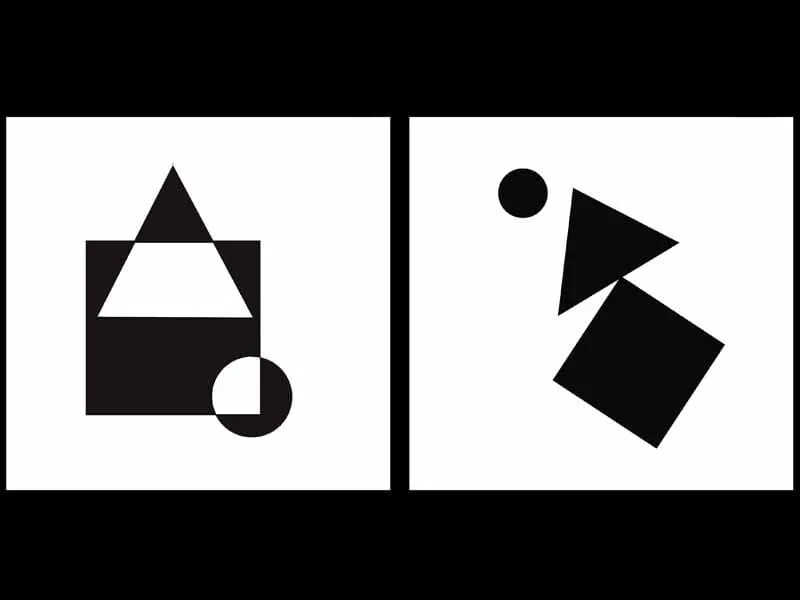 Examples:
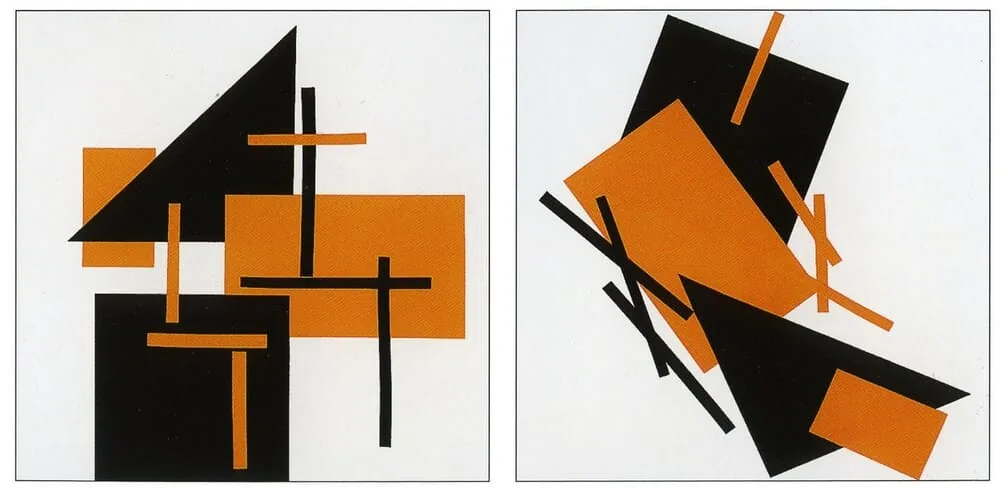
- Statics: evokes a sense of security, helps to concentrate.
- Dynamics: excites, evokes emotions, attracts the eye.
What is statics and dynamics?
Statics is calmness, balance, stability. It is created through the use of vertical and horizontal lines, symmetry and regular shapes. Of the simplest figures, statics are characterized by a square, rectangle, trapezoid, triangle, line standing evenly on its long edge. Dynamics, on the contrary, means movement, chaos and energy. These are diagonals, asymmetry, unexpected shapes. In figures, this can be represented as a rhombus, a diagonal, triangles standing on top. A circle is a special figure; it is static, but it does not have straight lines and angles. However, the circle has internal dynamics and is less stable than other figures.
Examples:
- Statics: smooth lines, soft gradients, symmetric shapes.
- Dynamics: angular shapes, intersecting lines, sharp contrasts.
Why is statics not boring?
Statics does not mean monotony at all. It helps to convey the atmosphere of calm, reflection, stability or greatness and monumentality. Many masterpieces of architecture and painting are based on statics.When to use statics:
- In landscapes where you want to convey serenity by stretching it horizontally.
- In portraits to focus attention on the model.
Related courses
All courses
from 3 750 ₽
-25%
My first figure
5 000 ₽3 750 ₽
Learn more

from 4 950 ₽
-45%
Book illustration: The first page
9 000 ₽4 950 ₽
Learn more

from 4 950 ₽
-45%
Prop concept: render and atmosphere
9 000 ₽4 950 ₽
Learn more
Tip: Even in a static composition, use small elements of dynamics. For example, a thin inclined line to direct the viewer's gaze and create slight tension.
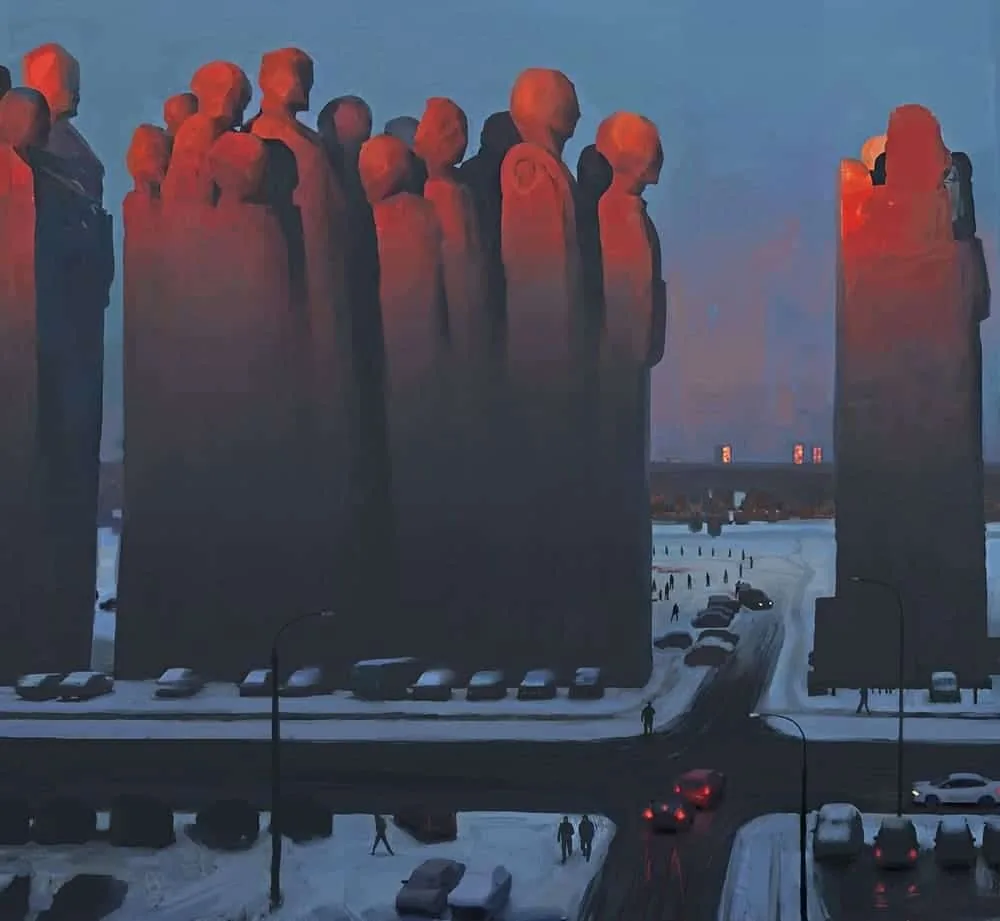

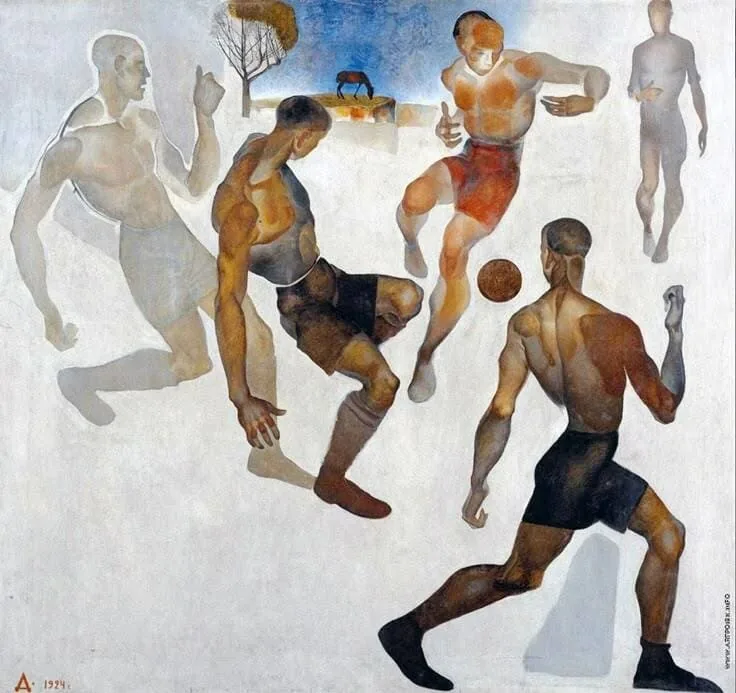
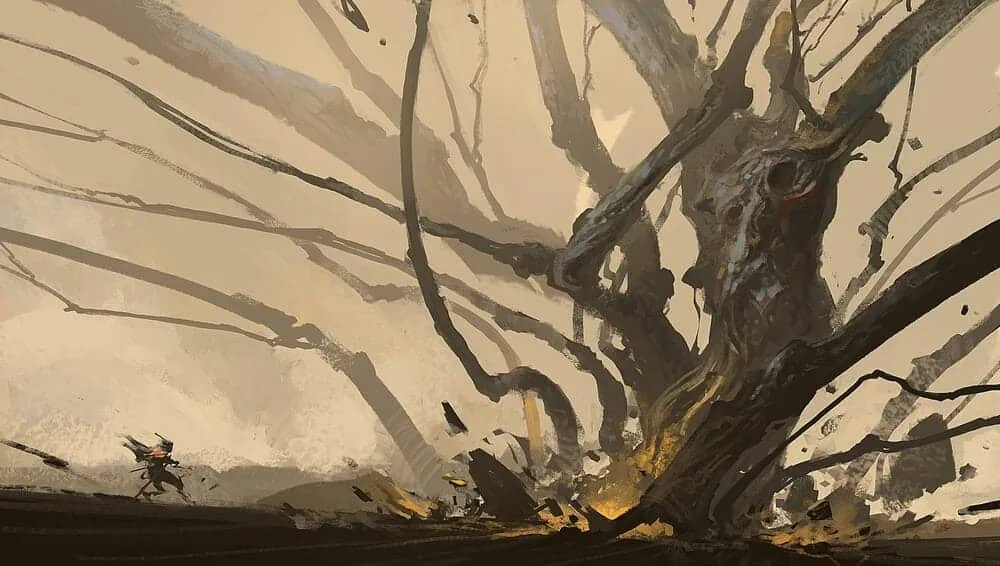
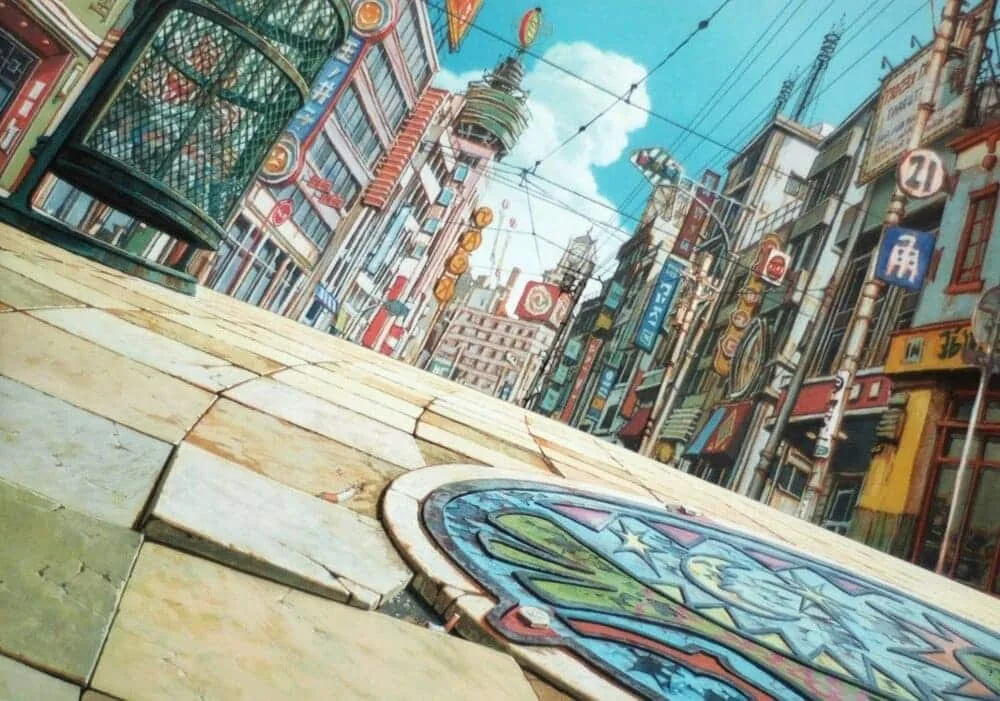

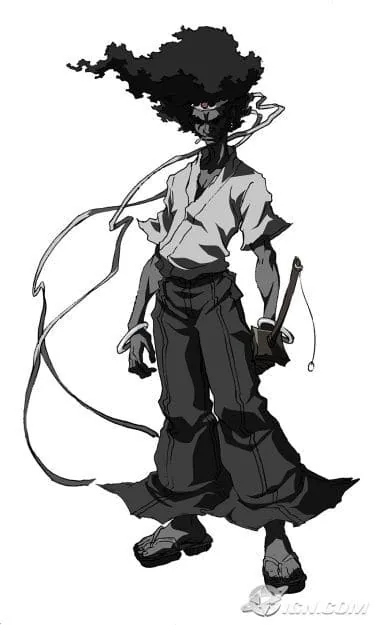

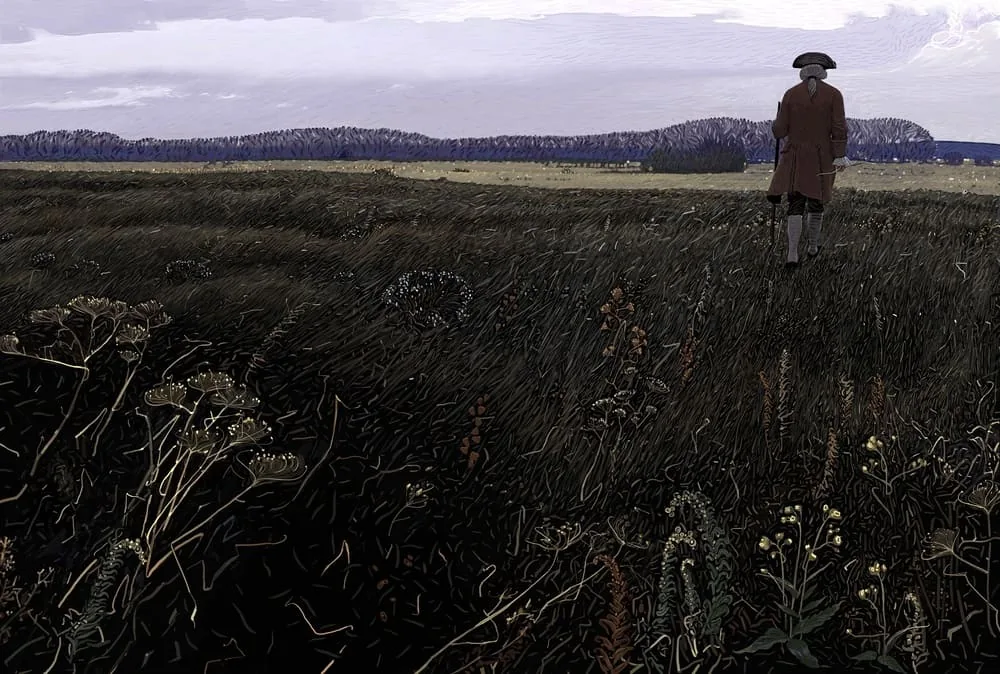 Do not be afraid to experiment. Create the same scene in two versions: static and dynamic. See how the perception changes.
Motivation: Remember that every artist started with experiments. Mistakes are not the end, but part of the process. The more you try, the better you understand how composition works. Make spotty small sketches of the composition to understand the work of spots and masses. Experiment with colors, because they greatly affect the dynamism or statics of the spot.
Do not be afraid to experiment. Create the same scene in two versions: static and dynamic. See how the perception changes.
Motivation: Remember that every artist started with experiments. Mistakes are not the end, but part of the process. The more you try, the better you understand how composition works. Make spotty small sketches of the composition to understand the work of spots and masses. Experiment with colors, because they greatly affect the dynamism or statics of the spot.
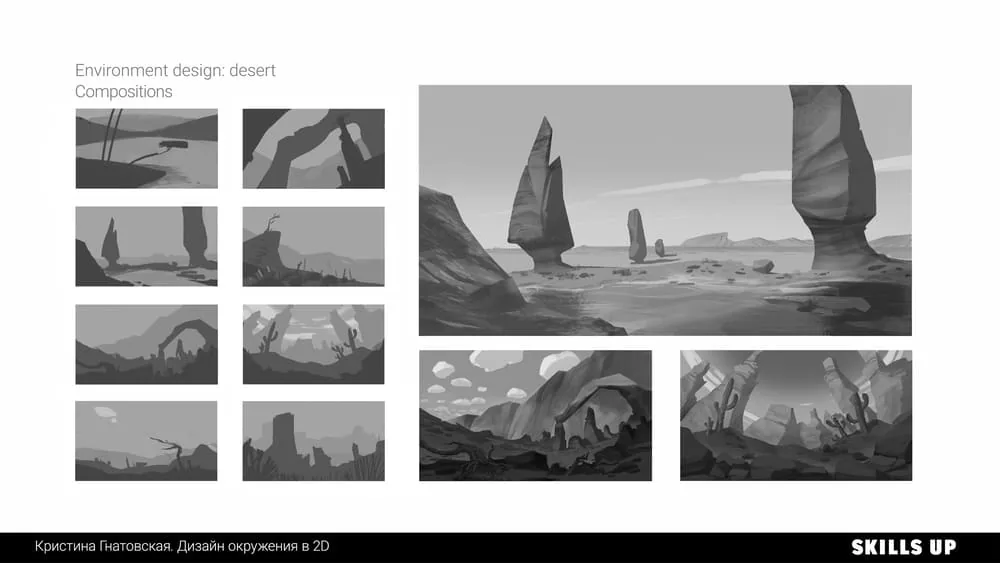
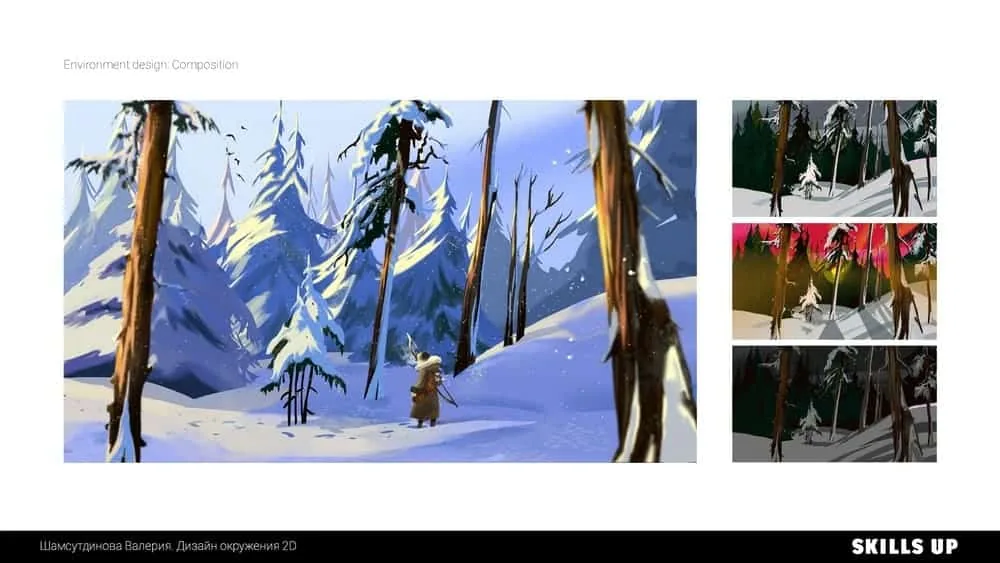

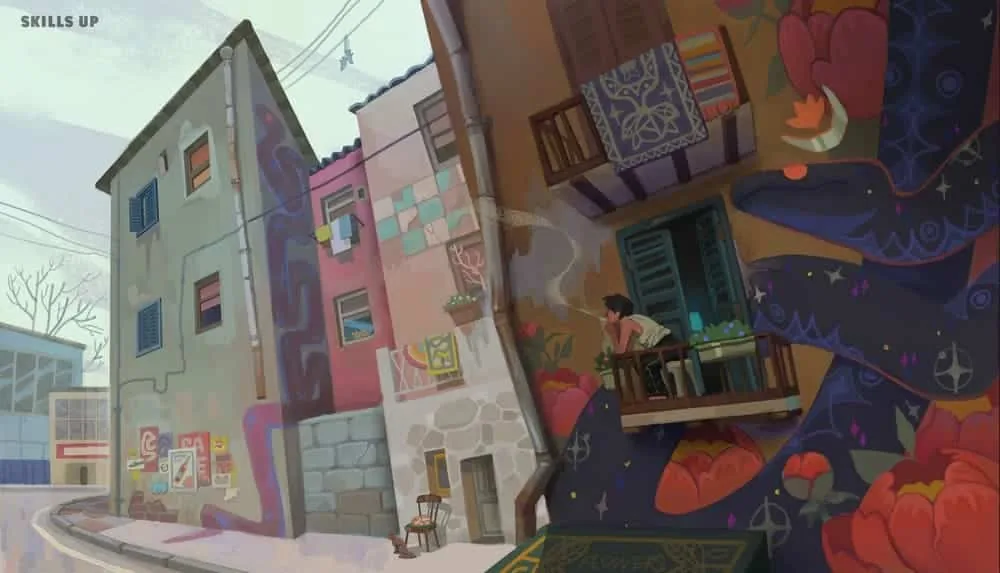
Dynamics: how to create energy?
Dynamics brings drama and active movement. Do you want to convey speed or chaos? Use diagonals, twisted lines and elements that indicate movement. Diagonals can be both corner-to-corner and shorter and less inclined. Examples:- Running man: body bends, flying hair.
- Raging storm: waves, tree branches, scattering drops.
Perspective and its influence on composition
Perspective sets the depth and direction in your work:- Perspective on one and two points: ideal for peace and statics.
- Perspective on three points: adds tension and drama and movement to the entire composition.
- Tilted horizon: instantly brings a sense of movement and instability even to a static composition.
Character poses: bringing composition to life
The line of action of the character is the key to his expressiveness. A straight vertical line creates a sense of stability, while curved and sharp inclined lines add movement and emotion.How to distinguish statics from dynamics:
- Statics: straight posture, vertical lines, symmetry.
- Dynamics: tilts, C- and S-shaped lines, asymmetry in poses.
Combining statics and dynamics
The most interesting compositions are born when statics and dynamics work together. The contrast between them creates tension that holds the viewer's attention.Combination tips:
- Divide the background and foreground: let one be static, the other dynamic.
- Play with scales: a large static object next to small dynamic ones.
- Add color contrasts or dynamic textures.
- Offset the compositional center.
Do not be afraid to experiment. Create the same scene in two versions: static and dynamic. See how the perception changes.
Motivation: Remember that every artist started with experiments. Mistakes are not the end, but part of the process. The more you try, the better you understand how composition works. Make spotty small sketches of the composition to understand the work of spots and masses. Experiment with colors, because they greatly affect the dynamism or statics of the spot.
Do you want to know more?
If you want to deepen your knowledge in the field of drawing, join our courses: Courses, where you will master the basic skills of composition and color, learn to see proportions and create expressive objects, backgrounds, characters and illustrations. On our courses you will get practical knowledge, feedback from experienced mentors and a lot of inspiration. Start your journey to perfection in drawing right now!
Related materials
Article
Frontal perspective in drawing
October 1, 2025

Article
Texture and finish in the drawing
November 15, 2024

Article
Concept art in game creation
March 14, 2025
Article
All about brushes in digital drawing
February 13, 2025

Article
Stylization in drawing
January 27, 2025
Tutorial
Chiaroscuro in drawing
December 17, 2024