
ArticleUpdated: September 6, 2026
Drawing faces of people of different ages
In short
The reference point is an adult face of 20 to 40: from twenty the proportions of the skull no longer change. Other ages are counted from there. A child has a larger cranium and a smaller face; in an older person the soft tissue changes, not the bone. Anton Korostov works through four portraits.

2D artist (illustrator)
User:
Hello! My name is Anton Korostov, I am a curator of drawing courses at Skills Up. I lead all levels: from Basic to Dynamic Figure Drawing and Portrait Sketching. In this article, I will tell you about how to draw the faces of people of different ages.
So, before you draw faces of different ages, you need to understand the basic shapes and proportions of the face. It is better to take an adult person aged 20-40 as a reference: the proportions of the skull do not change after the age of 20, and the skull serves as the basis for the shape of the head. By the way, we teach you step by step how to draw a face in this cool tutorial.
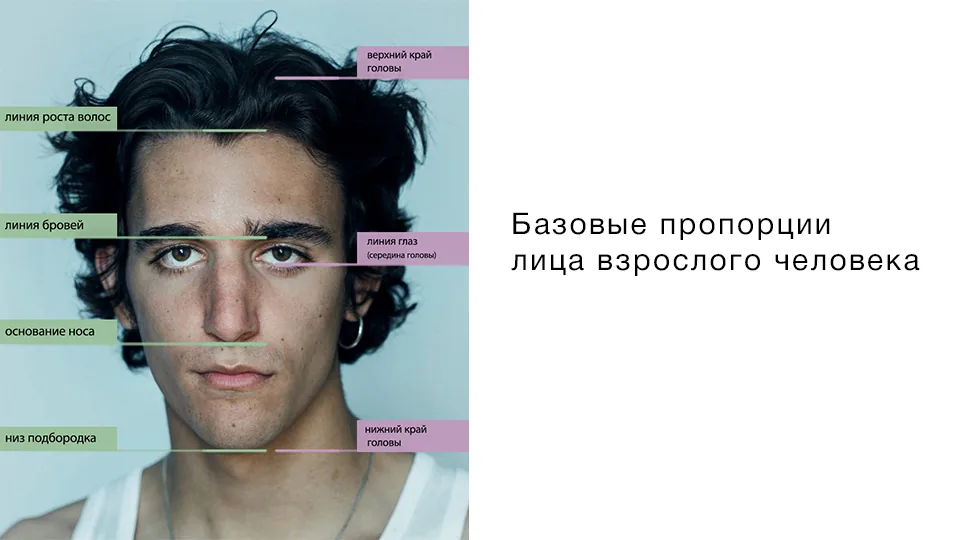 Regardless of gender, racial and age differences, individual features of the face shape can be different for each person. There are no clear boundaries, as well as a strict formula, how to create a particular character or portrait from nature. Faces and head shapes can be long, wide, triangular, round, rhomboid, full and thin, the shapes of the parts of the face can also differ in their sharpness, softness or roundness.
Lips, noses and ears have a wide range of shapes, and all this can be both in male nature and in representatives of the fair sex. Although all people are beautiful, and we should learn to depict them beautifully and artistically in our drawings.
Also, to study the human face, you must be able to draw simple shapes as convincing three-dimensional figures within the two-dimensional space of a sheet of paper or canvas on the tablet. You can learn this in the Basic Drawing course.
We will highlight the most common differences in the faces of people by gender and age. You can rely on them when creating the basis for our sketch, which also play a role your artistic style of drawing and the ability to notice the character and details of nature — for this we pump up the eye and remember the rule: you need to practice more and more.
Regardless of gender, racial and age differences, individual features of the face shape can be different for each person. There are no clear boundaries, as well as a strict formula, how to create a particular character or portrait from nature. Faces and head shapes can be long, wide, triangular, round, rhomboid, full and thin, the shapes of the parts of the face can also differ in their sharpness, softness or roundness.
Lips, noses and ears have a wide range of shapes, and all this can be both in male nature and in representatives of the fair sex. Although all people are beautiful, and we should learn to depict them beautifully and artistically in our drawings.
Also, to study the human face, you must be able to draw simple shapes as convincing three-dimensional figures within the two-dimensional space of a sheet of paper or canvas on the tablet. You can learn this in the Basic Drawing course.
We will highlight the most common differences in the faces of people by gender and age. You can rely on them when creating the basis for our sketch, which also play a role your artistic style of drawing and the ability to notice the character and details of nature — for this we pump up the eye and remember the rule: you need to practice more and more.
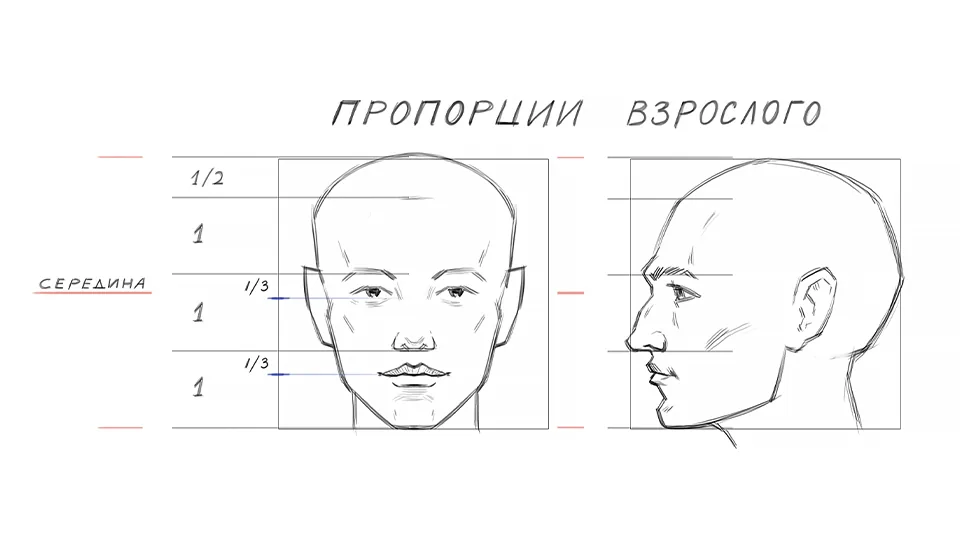 If we visually divide the height of the entire head in half, we will find the eye line. The vertical proportions of the face can be divided into three equal segments: from the chin to the base of the nose, from the base of the nose to the eyebrow line and from the eyebrows to the hairline. The height from the hairline to the top of the head is equal to half of such a segment (about 1\7 of the height of the entire head). So, age-related changes will be more related to the location of the parts of the face in height, not width.
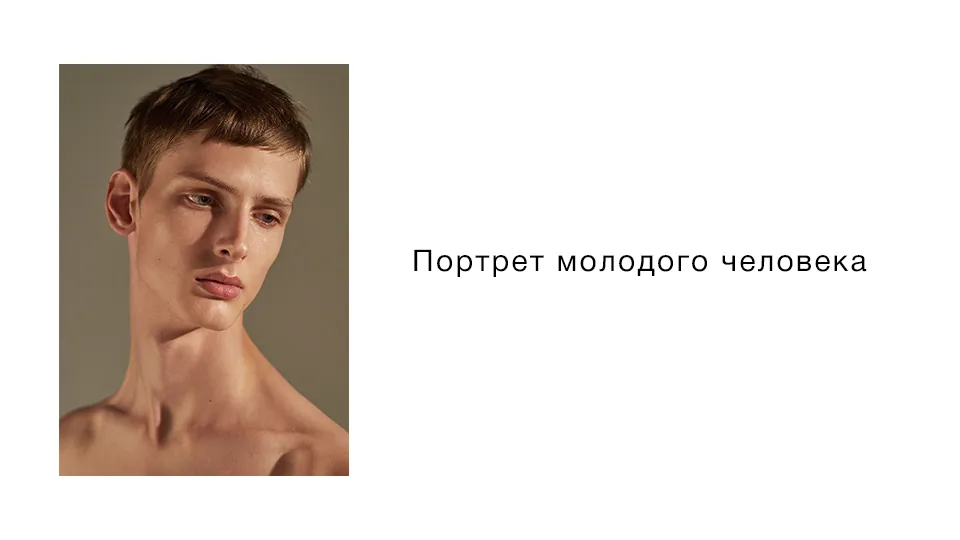
Let's look at the portrait of a young man. We see that the proportions of his face more or less coincide with the scheme. Yes, sometimes some proportions may slightly deviate from the scheme, because we all have individual characteristics, and our task is to emphasize them.
If we visually divide the height of the entire head in half, we will find the eye line. The vertical proportions of the face can be divided into three equal segments: from the chin to the base of the nose, from the base of the nose to the eyebrow line and from the eyebrows to the hairline. The height from the hairline to the top of the head is equal to half of such a segment (about 1\7 of the height of the entire head). So, age-related changes will be more related to the location of the parts of the face in height, not width.
Let's look at the portrait of a young man. We see that the proportions of his face more or less coincide with the scheme. Yes, sometimes some proportions may slightly deviate from the scheme, because we all have individual characteristics, and our task is to emphasize them.
 Closer to adulthood, the male skull is fully developed and does not change. The head is larger in size than the female one, the skull protrusions are more active. We clearly notice prominent cheekbones, chin and brow ridges. In profile, the lower jaw line tends to be horizontal. Muscles are more developed, especially the chewing one.
A distinctive feature is the presence of intense vegetation in the lower part of the face — the lower part of the face looks darker, even if the man is гладко выбрит. Men's eyebrows have less clear outlines than women's. The hairline is straight, sometimes in the center part of this line goes down a little. The older the man, the more sparse the hair becomes, and the hairline moves back, gray hair may appear mixed with dark hair.
The general approach to drawing a male portrait should be more constructive and angular in terms of conveying volume and tougher and more contrasting in terms of technique.
Remember that you should draw volumetric shapes, and move in the study — from the general to the particular. Therefore, keep in mind that the whole head is a volume that needs to be conveyed convincingly, without going into details. Then you can move on to the parts of the face and also solve their volume and only after these stages are done, notice some details that convey the characteristics of the nature. Do not get carried away with excessive application of folds, otherwise you will send a young man to retirement ahead of time 🙂
Closer to adulthood, the male skull is fully developed and does not change. The head is larger in size than the female one, the skull protrusions are more active. We clearly notice prominent cheekbones, chin and brow ridges. In profile, the lower jaw line tends to be horizontal. Muscles are more developed, especially the chewing one.
A distinctive feature is the presence of intense vegetation in the lower part of the face — the lower part of the face looks darker, even if the man is гладко выбрит. Men's eyebrows have less clear outlines than women's. The hairline is straight, sometimes in the center part of this line goes down a little. The older the man, the more sparse the hair becomes, and the hairline moves back, gray hair may appear mixed with dark hair.
The general approach to drawing a male portrait should be more constructive and angular in terms of conveying volume and tougher and more contrasting in terms of technique.
Remember that you should draw volumetric shapes, and move in the study — from the general to the particular. Therefore, keep in mind that the whole head is a volume that needs to be conveyed convincingly, without going into details. Then you can move on to the parts of the face and also solve their volume and only after these stages are done, notice some details that convey the characteristics of the nature. Do not get carried away with excessive application of folds, otherwise you will send a young man to retirement ahead of time 🙂
Regardless of gender, racial and age differences, individual features of the face shape can be different for each person. There are no clear boundaries, as well as a strict formula, how to create a particular character or portrait from nature. Faces and head shapes can be long, wide, triangular, round, rhomboid, full and thin, the shapes of the parts of the face can also differ in their sharpness, softness or roundness.
Lips, noses and ears have a wide range of shapes, and all this can be both in male nature and in representatives of the fair sex. Although all people are beautiful, and we should learn to depict them beautifully and artistically in our drawings.
Also, to study the human face, you must be able to draw simple shapes as convincing three-dimensional figures within the two-dimensional space of a sheet of paper or canvas on the tablet. You can learn this in the Basic Drawing course.
We will highlight the most common differences in the faces of people by gender and age. You can rely on them when creating the basis for our sketch, which also play a role your artistic style of drawing and the ability to notice the character and details of nature — for this we pump up the eye and remember the rule: you need to practice more and more.
Drawing a male portrait
If we visually divide the height of the entire head in half, we will find the eye line. The vertical proportions of the face can be divided into three equal segments: from the chin to the base of the nose, from the base of the nose to the eyebrow line and from the eyebrows to the hairline. The height from the hairline to the top of the head is equal to half of such a segment (about 1\7 of the height of the entire head). So, age-related changes will be more related to the location of the parts of the face in height, not width.
Let's look at the portrait of a young man. We see that the proportions of his face more or less coincide with the scheme. Yes, sometimes some proportions may slightly deviate from the scheme, because we all have individual characteristics, and our task is to emphasize them.
Closer to adulthood, the male skull is fully developed and does not change. The head is larger in size than the female one, the skull protrusions are more active. We clearly notice prominent cheekbones, chin and brow ridges. In profile, the lower jaw line tends to be horizontal. Muscles are more developed, especially the chewing one.
A distinctive feature is the presence of intense vegetation in the lower part of the face — the lower part of the face looks darker, even if the man is гладко выбрит. Men's eyebrows have less clear outlines than women's. The hairline is straight, sometimes in the center part of this line goes down a little. The older the man, the more sparse the hair becomes, and the hairline moves back, gray hair may appear mixed with dark hair.
The general approach to drawing a male portrait should be more constructive and angular in terms of conveying volume and tougher and more contrasting in terms of technique.
Remember that you should draw volumetric shapes, and move in the study — from the general to the particular. Therefore, keep in mind that the whole head is a volume that needs to be conveyed convincingly, without going into details. Then you can move on to the parts of the face and also solve their volume and only after these stages are done, notice some details that convey the characteristics of the nature. Do not get carried away with excessive application of folds, otherwise you will send a young man to retirement ahead of time 🙂
Drawing a female portrait
Related courses
All courses
from 3 750 ₽
-25%
My first figure
5 000 ₽3 750 ₽
Learn more

from 4 950 ₽
-45%
Book illustration: The first page
9 000 ₽4 950 ₽
Learn more

from 4 950 ₽
-45%
Prop concept: render and atmosphere
9 000 ₽4 950 ₽
Learn more
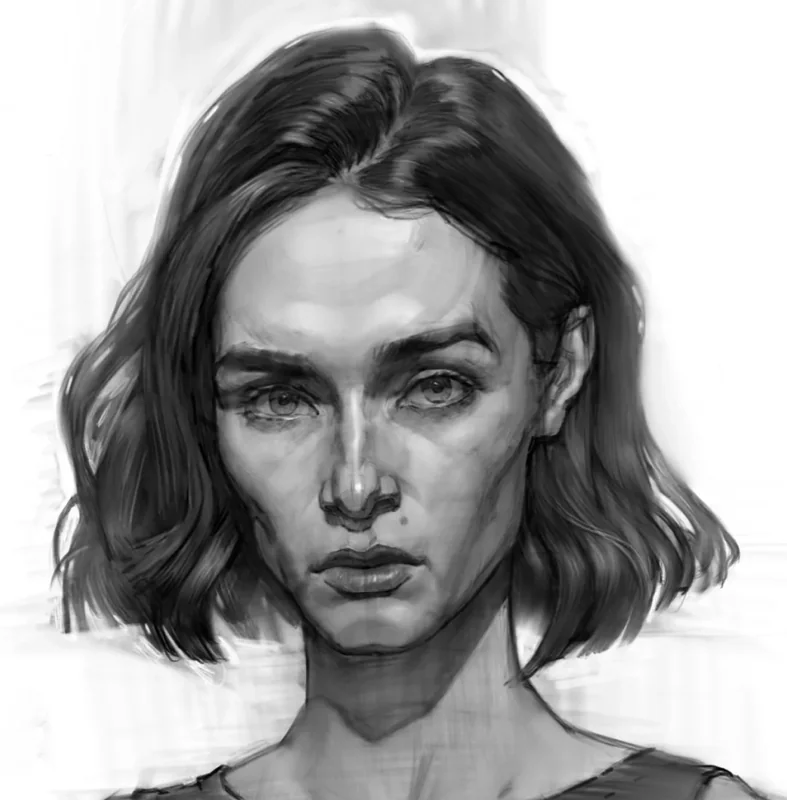
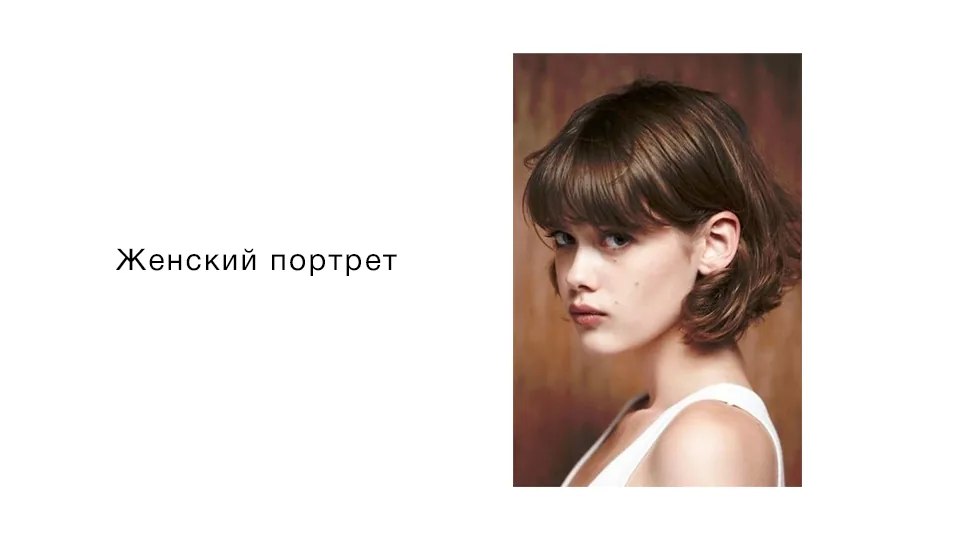 Now let's talk about the differences in drawing a female portrait. The proportions of a woman's face are similar to men's, but there are still differences, and the approach to drawing is different. The technique should be much softer, use more аккуратные, light strokes or shading, the general character of the drawing make less contrast — this is how we convey the soft surface of a woman's face.
The woman's skull is smaller than the man's, the brow ridges are almost not manifested. Cheekbones, lower jaw and cheek muscles are smoothed out and do not manifest themselves as strongly as in men. The mouth is smaller, but the lips are fuller and rounder, men's lips are often narrow and there is no such volume. Women's eyes are larger in proportion to the face and have accented eyelashes. Nostrils should be made small, the fold above the upper lip barely noticeable. The structure of the ear is neat and soft. Women's eyebrows are thinner and more graceful, and in height you can raise them a little higher. The neck is longer and also more graceful than the male one.
Now let's talk about the differences in drawing a female portrait. The proportions of a woman's face are similar to men's, but there are still differences, and the approach to drawing is different. The technique should be much softer, use more аккуратные, light strokes or shading, the general character of the drawing make less contrast — this is how we convey the soft surface of a woman's face.
The woman's skull is smaller than the man's, the brow ridges are almost not manifested. Cheekbones, lower jaw and cheek muscles are smoothed out and do not manifest themselves as strongly as in men. The mouth is smaller, but the lips are fuller and rounder, men's lips are often narrow and there is no such volume. Women's eyes are larger in proportion to the face and have accented eyelashes. Nostrils should be made small, the fold above the upper lip barely noticeable. The structure of the ear is neat and soft. Women's eyebrows are thinner and more graceful, and in height you can raise them a little higher. The neck is longer and also more graceful than the male one.
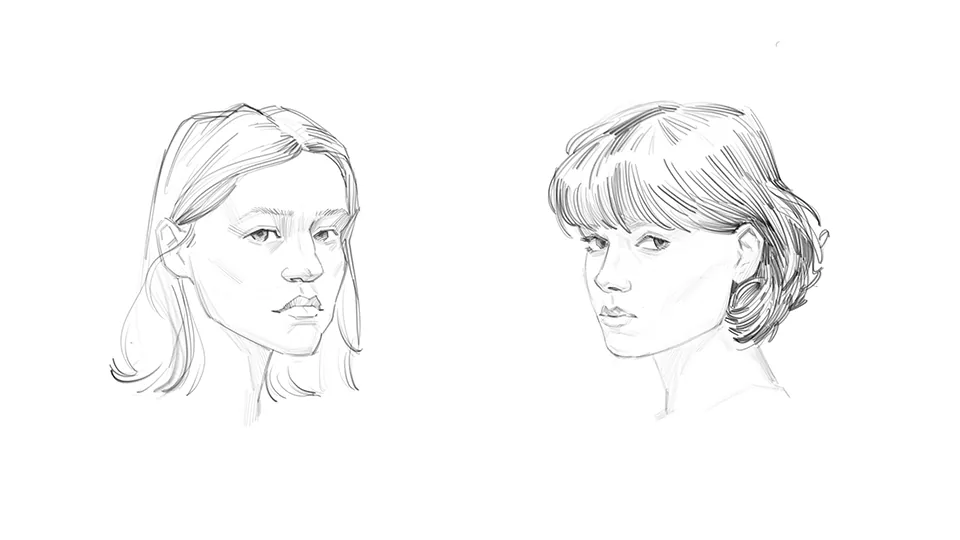 In general, when drawing a female portrait, you need to convey a more rounded and smooth character: smoothness and roundness are the main features in a woman's portrait, distinguishing them from men.
However, if we draw an older woman, we should not completely avoid the characteristic features caused by aging. Sooner or later, wrinkles and folds appear — this is also a form, albeit secondary. Maturity and old age are beautiful, but do not count all the folds in the drawing, and thereby spoil the mood of your nature, reminding her of the essence of being. Work more carefully, giving only a hint of details, giving the drawing a similarity with the nature.
Special attention should be paid to hair. A woman has a more rounded hairline and, unlike men, practically does not shift with age. Hair rather clearly repeats the volume of the skull, and if they are long, then the hair falling down is solved by the silhouette and given a generalized volume. If this stage is done, you can highlight a few strands, guided by a sense of composition, understanding rhythms and plasticity. The graphic technique of hair should differ in the direction of greater contrast, so that the face remains soft and neat against their background.
In general, when drawing a female portrait, you need to convey a more rounded and smooth character: smoothness and roundness are the main features in a woman's portrait, distinguishing them from men.
However, if we draw an older woman, we should not completely avoid the characteristic features caused by aging. Sooner or later, wrinkles and folds appear — this is also a form, albeit secondary. Maturity and old age are beautiful, but do not count all the folds in the drawing, and thereby spoil the mood of your nature, reminding her of the essence of being. Work more carefully, giving only a hint of details, giving the drawing a similarity with the nature.
Special attention should be paid to hair. A woman has a more rounded hairline and, unlike men, practically does not shift with age. Hair rather clearly repeats the volume of the skull, and if they are long, then the hair falling down is solved by the silhouette and given a generalized volume. If this stage is done, you can highlight a few strands, guided by a sense of composition, understanding rhythms and plasticity. The graphic technique of hair should differ in the direction of greater contrast, so that the face remains soft and neat against their background.
Drawing a portrait of a child
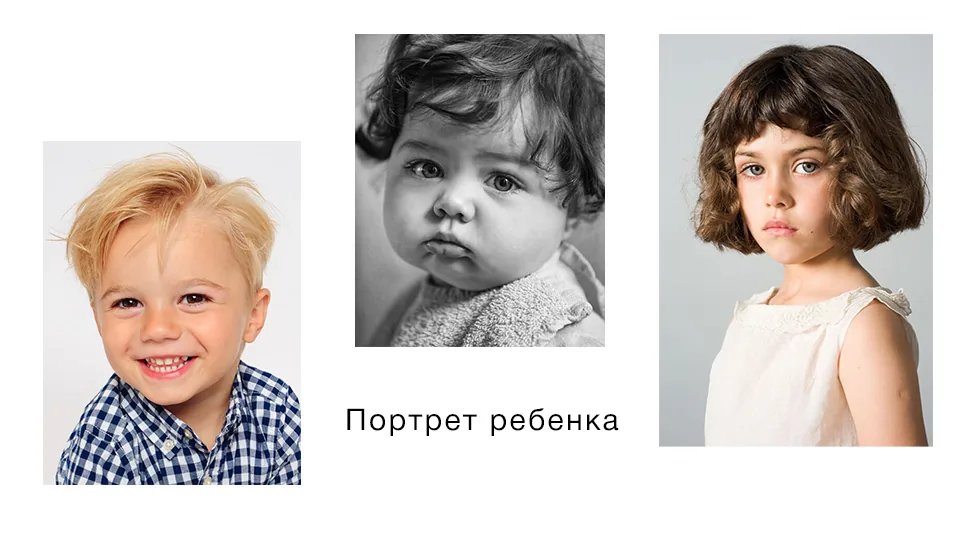 If you tried to draw children, you know that it's not that easy. Children are mobile, cheerful, more emotional, the proportions of a child's face are significantly different from the proportions of an adult face. To draw a child, you need to think like a child, be open and kind. Having adjusted to the frequency of childhood and remembering how you were relaxed, you can start drawing.
The child's skull is formed and changes during growth, cartilage has not yet been formed and, especially, facial muscles are not developed. For this reason, when drawing children, it is worth considering their age, because children grow quickly, and the proportions of a two-year-old child's face and a three-year-old child's face will be different.
If you tried to draw children, you know that it's not that easy. Children are mobile, cheerful, more emotional, the proportions of a child's face are significantly different from the proportions of an adult face. To draw a child, you need to think like a child, be open and kind. Having adjusted to the frequency of childhood and remembering how you were relaxed, you can start drawing.
The child's skull is formed and changes during growth, cartilage has not yet been formed and, especially, facial muscles are not developed. For this reason, when drawing children, it is worth considering their age, because children grow quickly, and the proportions of a two-year-old child's face and a three-year-old child's face will be different.
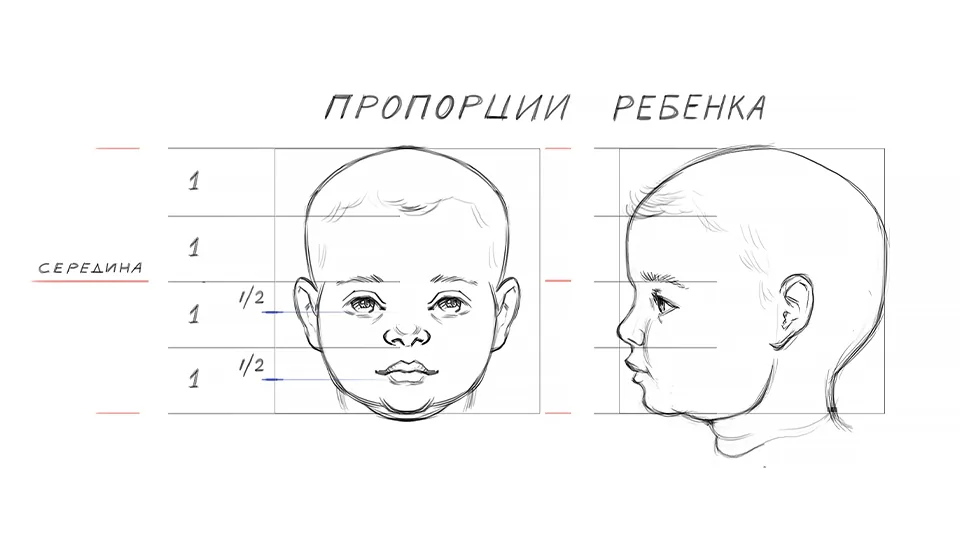 In the diagram, we see that the proportions of the facial module in infants are smaller relative to the entire head than in an adult. The mark of the middle line in height will be the place where we will draw the eyebrows (in an adult, the eyes are located in the middle). Further, having marked the face according to the scheme, it should turn out that the segment from the hairline to the top of the head is equal to three such segments: the height of the head can be divided into four parts, the lower three are our facial module, and the older the child, the smaller it becomes.
Children's faces are round, muscles and bones are not developed, the jawbone, cheekbones and переносица are relatively small. Cartilages are only in the process of formation, so the noses of young children are often snub-nosed, the переносица is round and not very рельефная. The upper lip is longer than the lower one, the chin is poorly developed, so it does not protrude, looks rounded and is located immediately under the lips. But the iris of the child's eyes is almost fully developed, so children's eyes look much larger in proportion to the face and are located farther apart.
Characteristic facial features of children are not very pronounced — try to convey this in the drawing. The distance between the parts of the face in the vertical is small, so the face seems wide. The middle line of the lips in young children is located in the middle between the chin and the base of the nose, and the older the child, the higher this line (in an adult, the middle line of the lips reaches 2\3 of the segment). The eye line can also be marked in the middle of the segment from the base of the nose to the eyebrows, and with age this line подтягивается closer to the eyebrows. Young children often have a second chin noticeable, as the fatty layer on the child's body is predominant, so the general character of the child's face looks puffy. The neck shapes are not visible as such, it takes shape and becomes visible as the child grows up. The hair of young children is sparse.
In the diagram, we see that the proportions of the facial module in infants are smaller relative to the entire head than in an adult. The mark of the middle line in height will be the place where we will draw the eyebrows (in an adult, the eyes are located in the middle). Further, having marked the face according to the scheme, it should turn out that the segment from the hairline to the top of the head is equal to three such segments: the height of the head can be divided into four parts, the lower three are our facial module, and the older the child, the smaller it becomes.
Children's faces are round, muscles and bones are not developed, the jawbone, cheekbones and переносица are relatively small. Cartilages are only in the process of formation, so the noses of young children are often snub-nosed, the переносица is round and not very рельефная. The upper lip is longer than the lower one, the chin is poorly developed, so it does not protrude, looks rounded and is located immediately under the lips. But the iris of the child's eyes is almost fully developed, so children's eyes look much larger in proportion to the face and are located farther apart.
Characteristic facial features of children are not very pronounced — try to convey this in the drawing. The distance between the parts of the face in the vertical is small, so the face seems wide. The middle line of the lips in young children is located in the middle between the chin and the base of the nose, and the older the child, the higher this line (in an adult, the middle line of the lips reaches 2\3 of the segment). The eye line can also be marked in the middle of the segment from the base of the nose to the eyebrows, and with age this line подтягивается closer to the eyebrows. Young children often have a second chin noticeable, as the fatty layer on the child's body is predominant, so the general character of the child's face looks puffy. The neck shapes are not visible as such, it takes shape and becomes visible as the child grows up. The hair of young children is sparse.
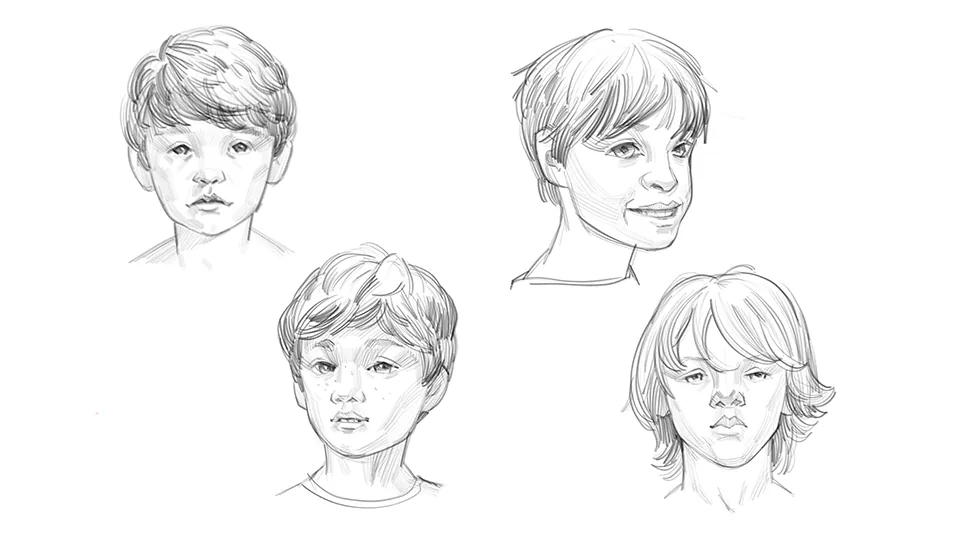 With the growth of the child, his puffiness decreases, the neck appears, the face stretches out, although the eyebrows are still higher above the eyes than in adults. Closer to adolescence, gender differences begin to form: noticeable character appears in the outlines of boys' faces, distinguishing them from girls, girls' eyebrows become more expressive and go down closer to the eyes. Teenagers' eyes still look big.
Drawing a portrait of an elderly person
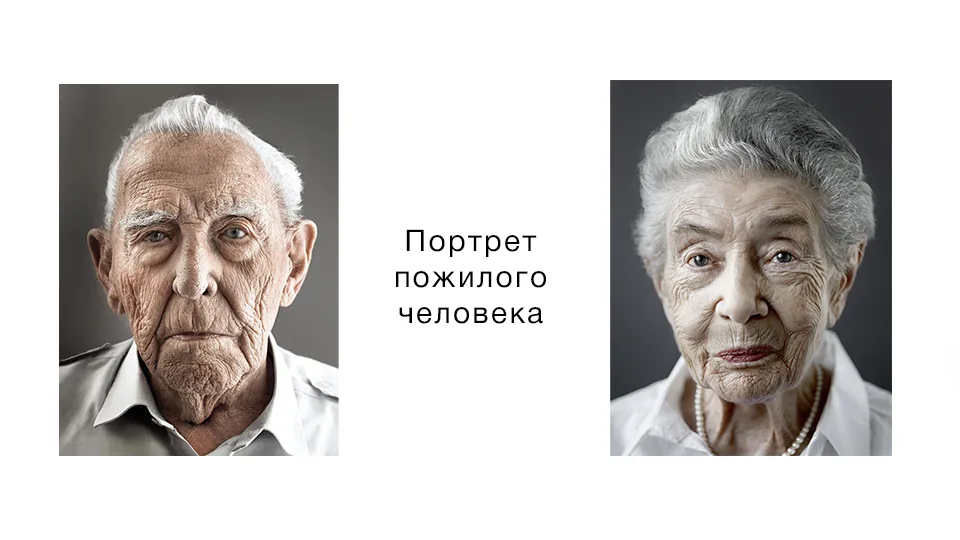 As artists, we categorically cannot agree with the expression "old age is not joy". After all, in portraits of elderly people there is so much inspiration for an artist — time seems to bake the destinies on people's faces. The face can tell the story of life, the conditions of the person's environment, tragedy, or perhaps a carefree existence and the luck to live a happy life.
Do not rush to draw all the folds and wrinkles that attract us so much as artists. Act according to the plan: first we draw the general proportions and outlines of the head, identify the anatomy of the skull, then we outline the volumes of the parts of the face and after that we can proceed to smaller volumes, detailing the drawing.
Muscles become exhausted with age and, together with the skin, begin to "slide" from the bones, forming folds. The protrusions of the cheekbones and chin are more visible, and in general the face looks more bony. The cartilage of the nose and ears become larger with age, the earlobe also becomes larger, and the tip of the nose hangs down a lot, becoming hooked. The cartilage of the nose can show its relief, dividing the tip of the nose into two lobules. Flesh hangs from both sides of the chin and lower jaw, making the outlines of the face not so characteristic.
As artists, we categorically cannot agree with the expression "old age is not joy". After all, in portraits of elderly people there is so much inspiration for an artist — time seems to bake the destinies on people's faces. The face can tell the story of life, the conditions of the person's environment, tragedy, or perhaps a carefree existence and the luck to live a happy life.
Do not rush to draw all the folds and wrinkles that attract us so much as artists. Act according to the plan: first we draw the general proportions and outlines of the head, identify the anatomy of the skull, then we outline the volumes of the parts of the face and after that we can proceed to smaller volumes, detailing the drawing.
Muscles become exhausted with age and, together with the skin, begin to "slide" from the bones, forming folds. The protrusions of the cheekbones and chin are more visible, and in general the face looks more bony. The cartilage of the nose and ears become larger with age, the earlobe also becomes larger, and the tip of the nose hangs down a lot, becoming hooked. The cartilage of the nose can show its relief, dividing the tip of the nose into two lobules. Flesh hangs from both sides of the chin and lower jaw, making the outlines of the face not so characteristic.
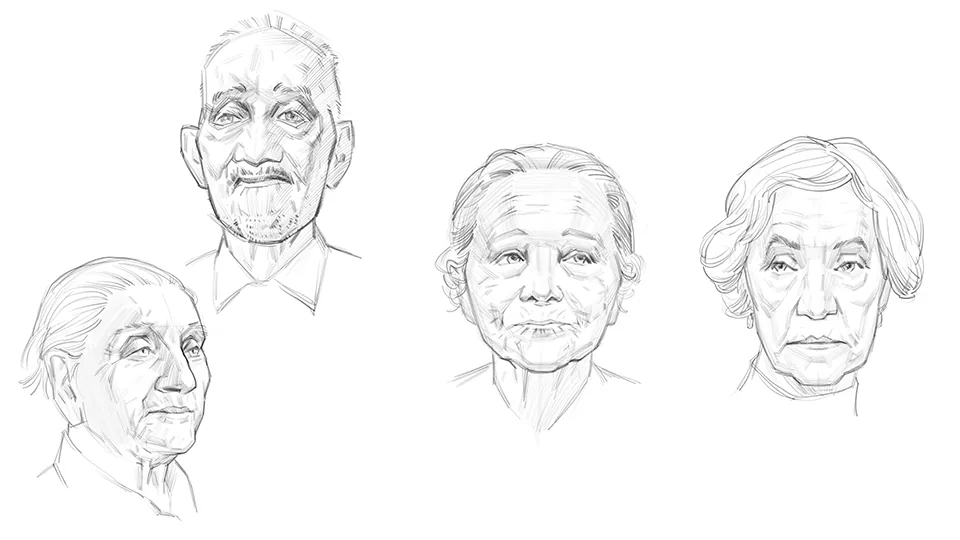 The eyelids "get heavier", the skin around the eyes sinks, revealing the outlines of the eye sockets more strongly. Bags appear under the eyes and more noticeable folds in the corners of the eyes. Lips decrease in volume, become wrinkled and hollow, and lines appear in the corners pointing down to the chin, giving the face a dissatisfied look. The skin above the eyelids sags, and the eyebrows are closer to the eyes. Eyes become paler. There are noticeable folds on the forehead and between the eyebrows. The face is covered with active mimic wrinkles, especially the cheeks are covered with a wrinkled relief. Wrinkles appear on the переносице, which age the face.
Hair turns gray and becomes sparse. Eyebrows also become sparse, but can remain dark, and often look more curly on male faces. The hairline changes for everyone in different ways, but it goes back, especially noticeable in men. The skin coarsens and acquires a dark shade, pigment spots appear.
The eyelids "get heavier", the skin around the eyes sinks, revealing the outlines of the eye sockets more strongly. Bags appear under the eyes and more noticeable folds in the corners of the eyes. Lips decrease in volume, become wrinkled and hollow, and lines appear in the corners pointing down to the chin, giving the face a dissatisfied look. The skin above the eyelids sags, and the eyebrows are closer to the eyes. Eyes become paler. There are noticeable folds on the forehead and between the eyebrows. The face is covered with active mimic wrinkles, especially the cheeks are covered with a wrinkled relief. Wrinkles appear on the переносице, which age the face.
Hair turns gray and becomes sparse. Eyebrows also become sparse, but can remain dark, and often look more curly on male faces. The hairline changes for everyone in different ways, but it goes back, especially noticeable in men. The skin coarsens and acquires a dark shade, pigment spots appear.
Video lessons "How to draw a portrait of a person"
Related materials
Article
How to draw armor
December 27, 2024
Tutorial
How to draw lips
August 15, 2024
Article
What to start drawing with?
December 20, 2024
Article
How to draw hands correctly
October 14, 2024
Article
3 tips for a beginner character artist. How to draw emotions
September 18, 2023
Tutorial
How to draw hair with a pencil
July 30, 2026