
TutorialUpdated: September 6, 2026
Drawing stones
In short
To draw a rock you go from silhouette and large planes — form first, then shadows, then the texture of the surface and the work with hues. Cliffs, rock piles and canyons are assembled from this, and natural backgrounds in concept art from those.

2D artist
Stones are compositions made of stones; their shapes and textures are among the key elements in creating complex landscapes and striking background images. If you learn to draw cliffs, piles of stones, and canyons, you will be able to masterfully depict natural landscapes required in illustrations, concept art, and background design.
This lesson will teach you not only the basic techniques but also deepen your knowledge of textures, shapes, environment, and light and shadow modeling to create detailed and lively compositions with stones.
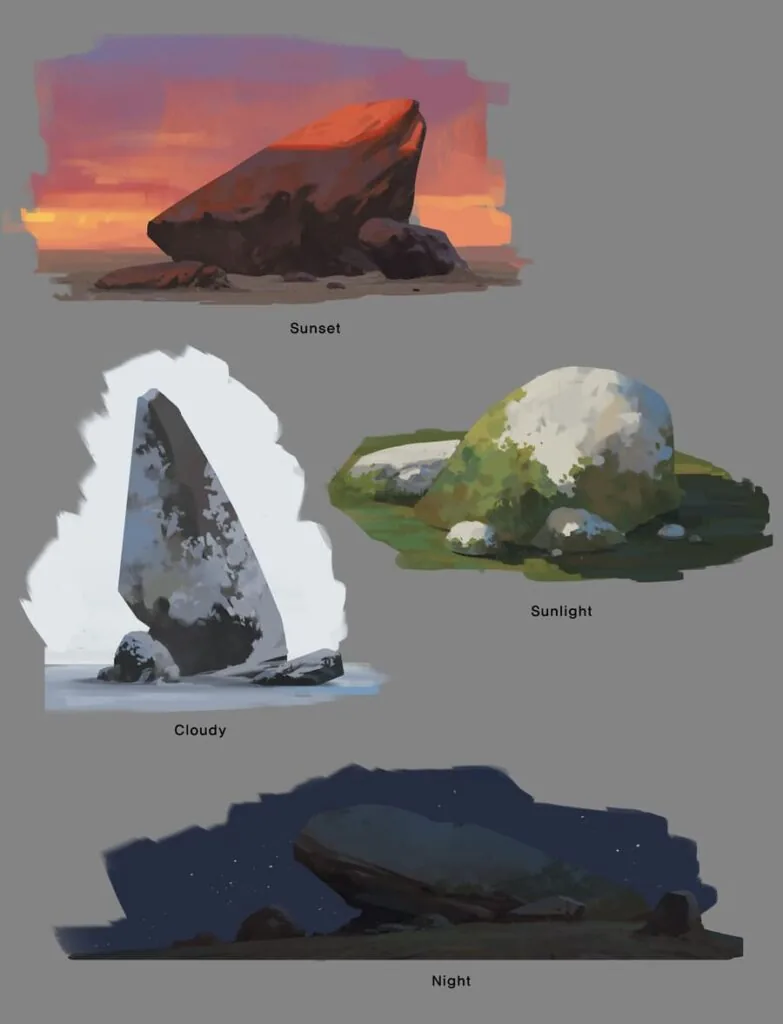
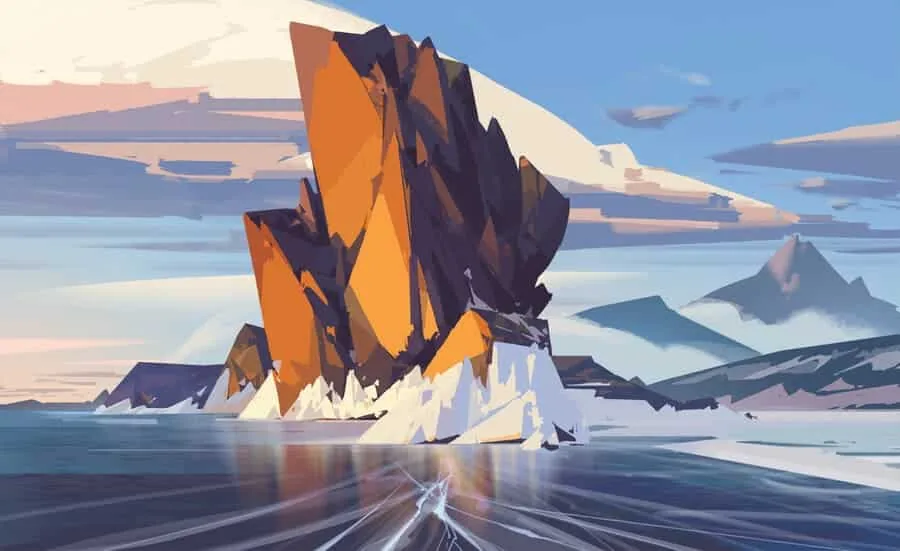
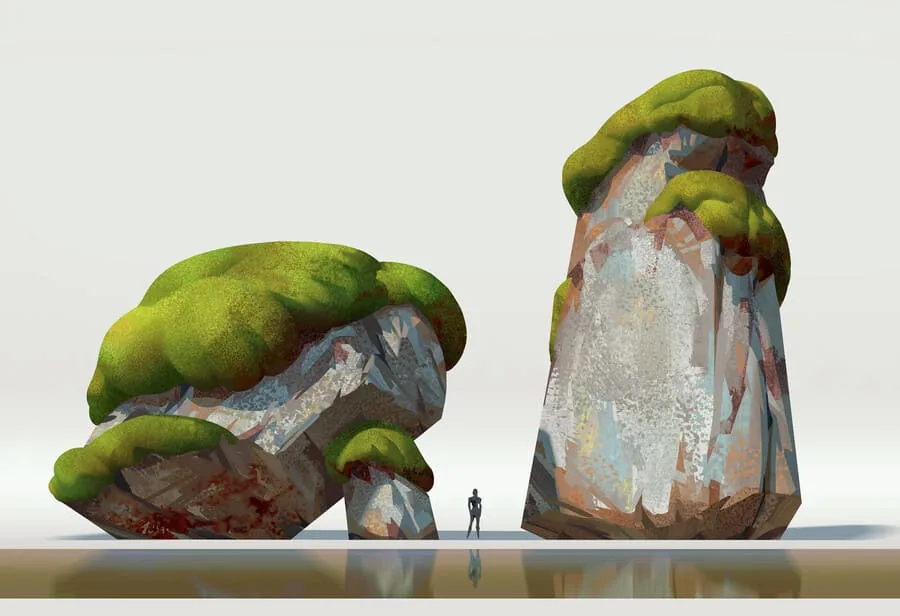
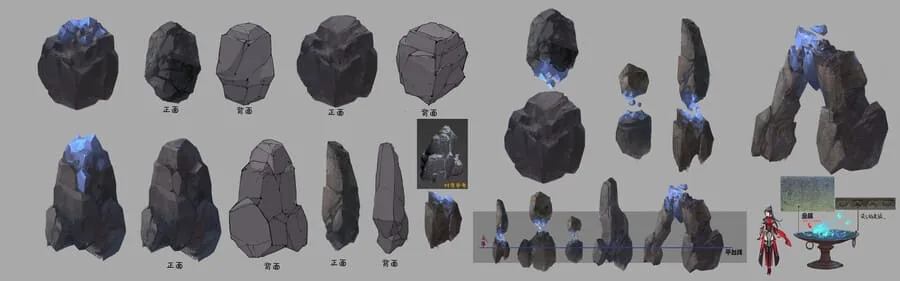
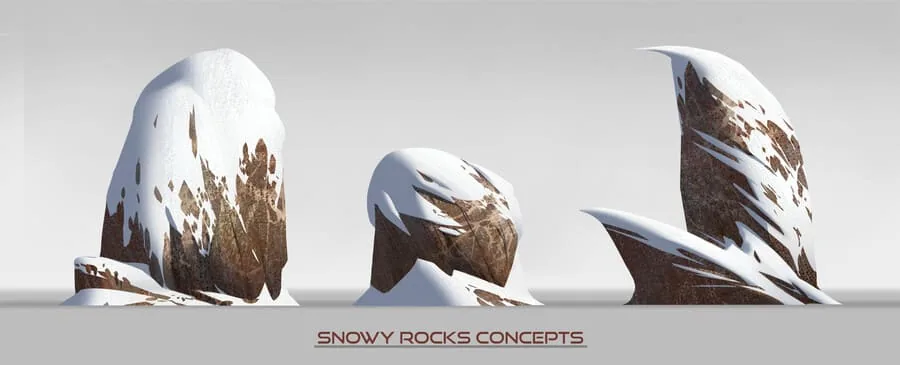
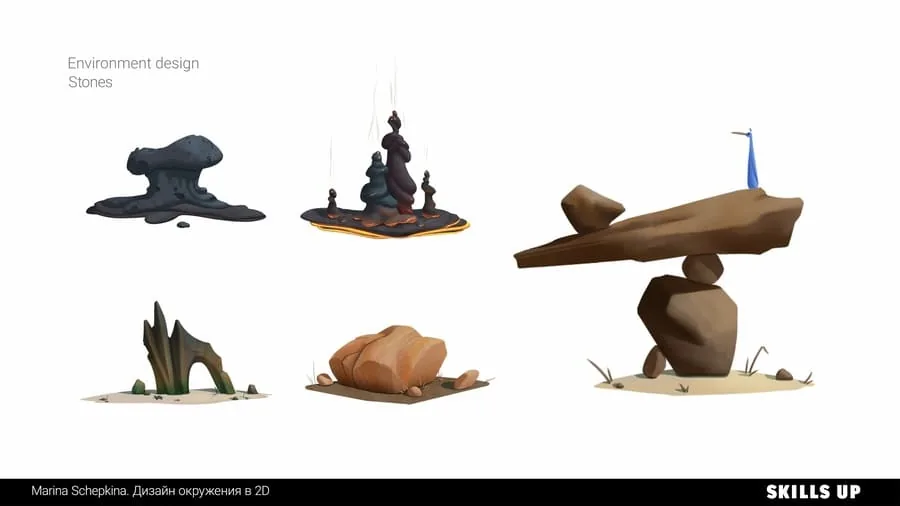
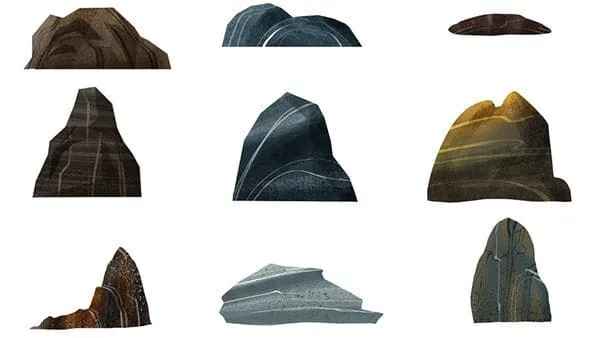
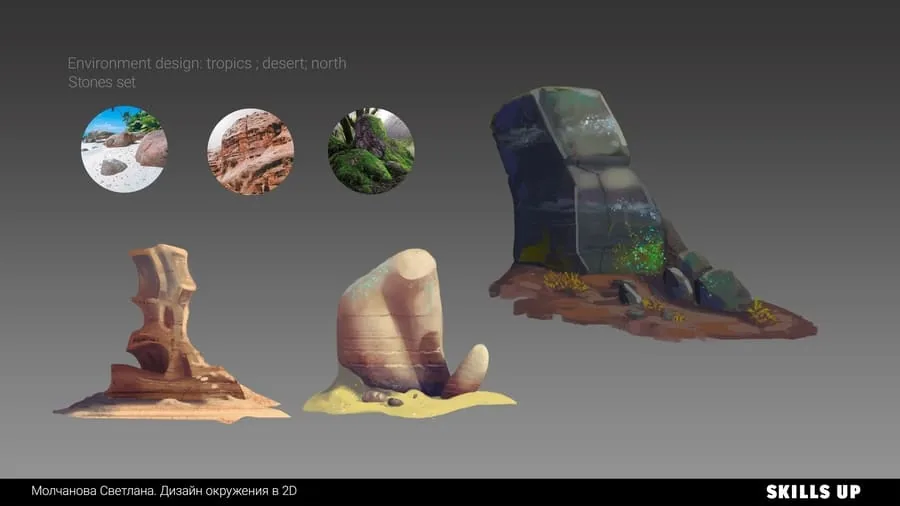
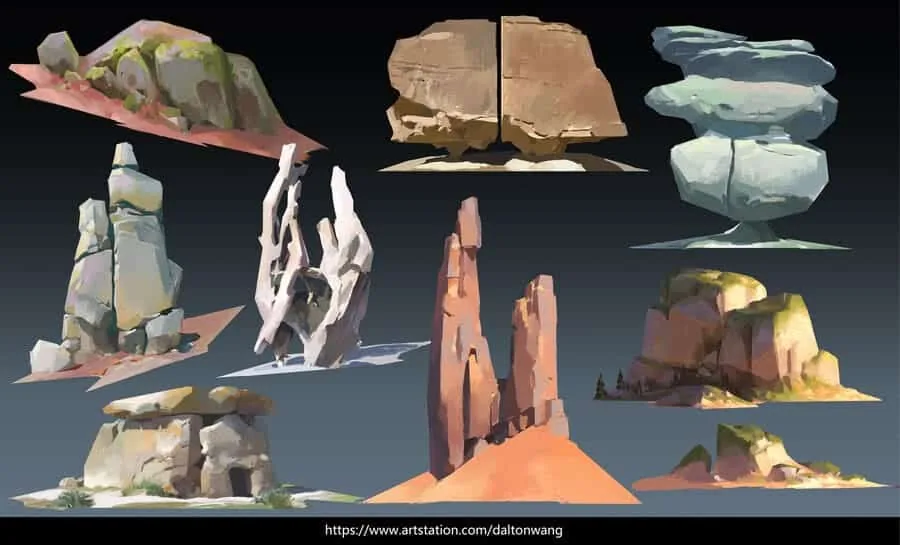
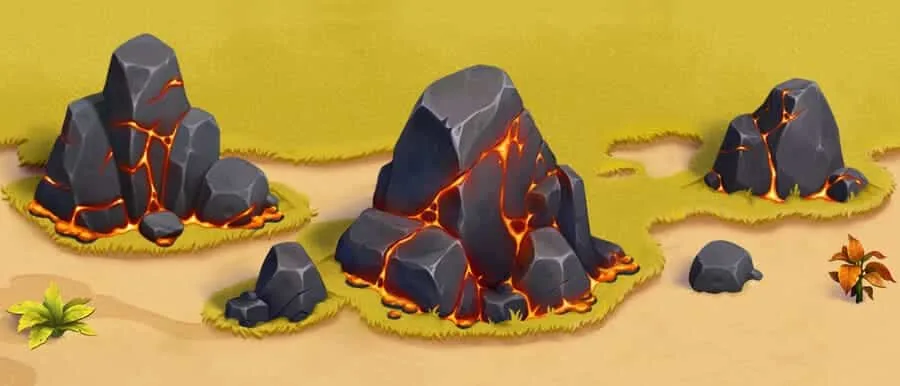
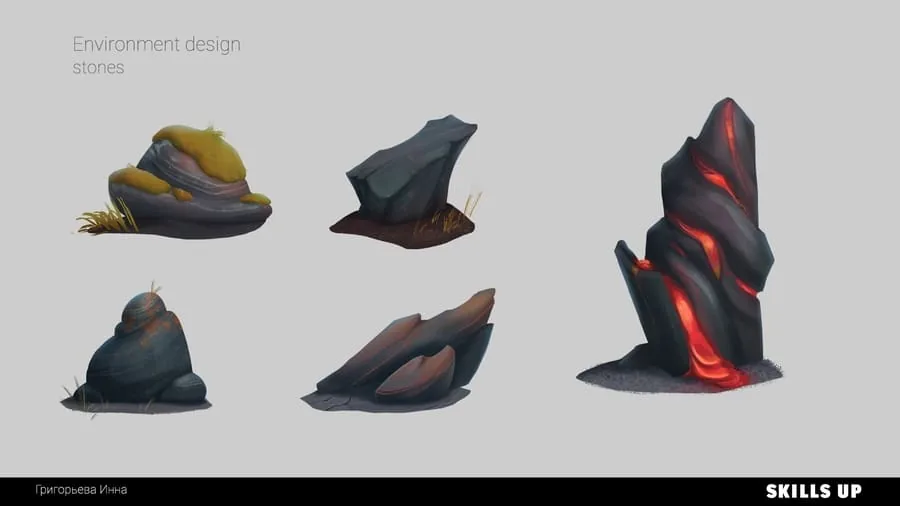
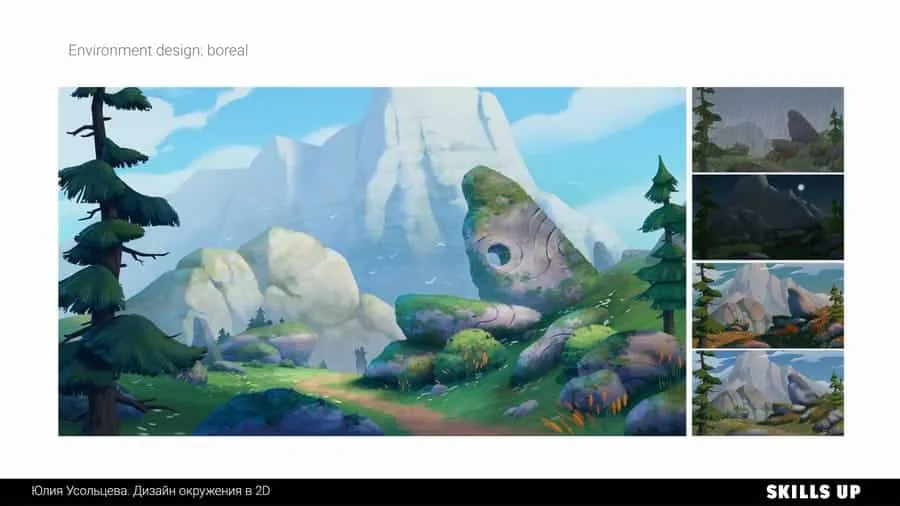
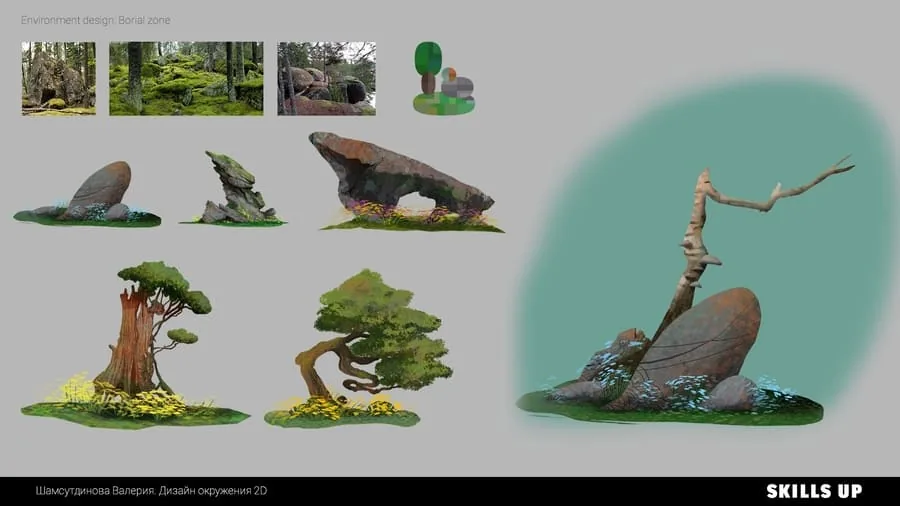
Shape of Stones
Shape is the basis of the silhouette of any object, and stones are no exception. Although stones are hard and massive, their structure is constantly influenced by natural forces: water, wind, temperature changes. This results in stones having diverse shapes and a unique appearance. Types of stone shapes:- Round: usually smoothed by water.
- Angular, chopped: forms created by erosion, rocks.
- Sharp, layered: with sharp angles, often formed when splitting arrays or in the form of crystals.
- Stalactite-like: elongated vertical forms, similar to columns.
Silhouette of a Stone
The silhouette of an object plays a key role in its recognizability. For stones, it is important to emphasize their characteristic through clearly drawn outlines. What to add to the silhouette:- Cracks and chips to emphasize the naturalness of the material.
- Moss and vegetation, creating a textural effect.
- Sharp or smoothed angles depending on the type of stone.
Shadows
Shadows and light help convey the volume and texture of an object. Stones have clear planes, each of which interacts with light in different ways. How to work with shadows:- Use hard brushes and selection to convey clear edges.
- For smooth surfaces, use soft brushes with transfer.
- Separate stones from each other using different levels of shadow brightness.
Textures of Stones
The texture of a stone consists of microcracks, dots, spots, and stripes. These elements give the stone uniqueness and character. Ways to create texture:- Use brushes with a textural effect to speed up the process.
- Add fine "noise" using brush settings or ready-made textures.
- Emphasize edges and protruding parts in light color.
Working with shades
Shades play an important role in creating an interesting image. They add depth, atmosphere, and emotion. How to add shades:- Use the Soft Light blending mode to work with colors.
- Select natural colors that match the environment (sandy, gray, greenish).
- Add additional shades to make the stone texture more живописной.
- Use the "gradation of color shades" parameter in the brush settings.
Adding environment
The environment helps to "bring to life" the stones and gives them a story. Around the stones, you can add:- Moss and vegetation: for wet and wooded landscapes.
- Tree roots: to show the connection with nature.
- Snow or sand: for winter or desert landscapes.
- Runes or symbols: to create a mysterious atmosphere.
- Cracks with water or lava: for a dramatic effect.
Final touches
After completing the main stages, pay attention to the details:- Add light highlights to emphasize lighting.
- Work out atmospheric perspective by softening distant objects.
- Use adjustment layers to refine the tone and color of the image.
Conclusion
Drawing stones is not only training in working with shape and texture but also an important step towards creating a realistic environment. By mastering this skill, you will be able to create complex and expressive landscapes that will impress viewers with their depth and elaboration. Practice regularly, experiment with shapes and textures, and your skill in drawing rocky landscapes will definitely grow!
Got the hang of form and tone of objects? Reinforce it on a fuller setup, how to draw a still life step by step, from composition to tone.
Related materials
Tutorial
How to draw a stone in a stylized form
September 18, 2023
Tutorial
How to draw a nut
September 18, 2023
Tutorial
How to draw hair with a pencil
July 30, 2026
Tutorial
How to draw a child?
January 13, 2025
Tutorial
How to draw a torso
December 18, 2024
Article
3 tips for a beginner character artist. How to draw emotions
September 18, 2023